
Valley of Roses Morocco
Valley of Roses Morocco: Family Travel Guide
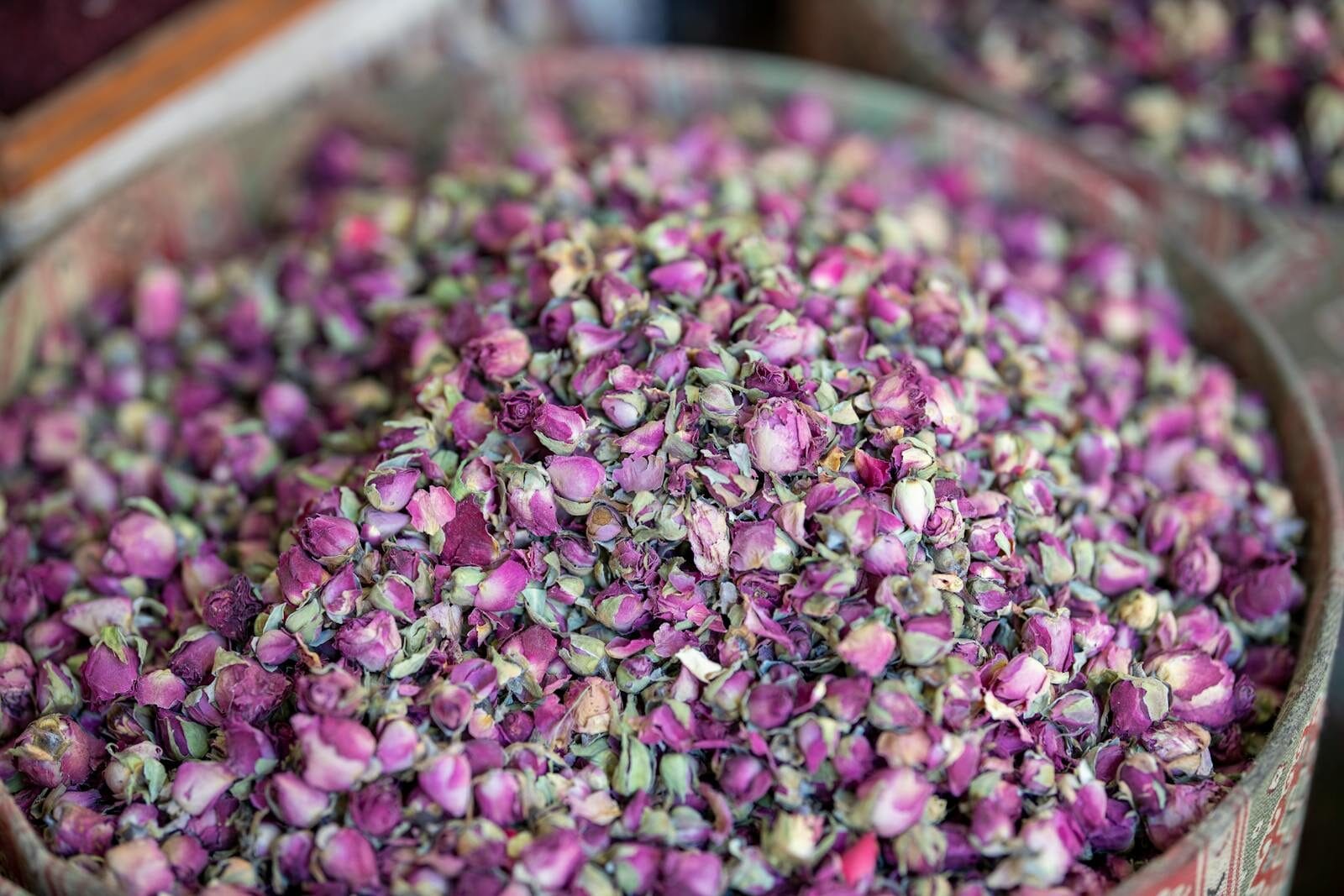
You leave Marrakech early. The road climbs through the Tizi n’Tichka pass, drops down past Aït Ben Haddou and Ouarzazate, and a few hours later the dry hills suddenly open into something you were not expecting in southern Morocco. Pink hedges. Long fields of green crops cut by stone walls. A small town with the smell of rose water drifting out of every doorway. You have arrived in the Valley of Roses Morocco, and within twenty minutes the kids are picking petals off a low bush at the side of the road.
The Valley of Roses Morocco sits in a strange and beautiful pocket between the Atlas Mountains and the desert. Most travelers blast through it on the way to the Sahara without realizing what they are passing. Families who slow down here usually end up calling it the unexpected highlight of their trip.
This guide covers everything you actually need: where the valley sits on a map, when the roses bloom, what families can do beyond just taking photos, where to sleep, how to get there, and how to fit it into a larger Morocco trip without exhausting your kids.
5-Day Marrakech to Merzouga Family Tour
- Explore Morocco with your kids stress-free! Private transport, kid-friendly hotels, and safe meals included. Plan Your Family Tour
- Experience the Atlas Mountains and Sahara Desert with hands-on fun for kids and comfort for parents. Customize Your Adventure
- Enjoy Morocco’s coasts and cities at a calm pace. Perfect for families with young children. Book Your Relaxed Tour
Where Is the Valley of Roses Morocco on the Map?
The Valley of Roses Morocco runs along the M’Goun River and the western reach of the Dadès River, in the southern foothills of the High Atlas Mountains. Administratively, it sits in the Drâa-Tafilalet region, Tinghir Province. The whole valley stretches for more than 50 kilometers between rose-covered villages, with the small town of Kalaat M’Gouna acting as the unofficial capital.
How to Read a Morocco Valley of Roses Map
If you pull up a Morocco Valley of Roses map, three reference points matter most. First, find Marrakech in the center of the country. Second, find Ouarzazate, southeast of Marrakech across the Atlas. Third, look for a small town called Kalaat M’Gouna (sometimes spelled Kelaat M’Gouna or El Kelaa M’Gouna), about 90 kilometers further east. That town is your gateway. From there, a now-paved road runs roughly 30 kilometers north into the valley itself, ending near the village of Bou Tharar.
Key Towns and Driving Distances
Here are the distances families usually care about. Marrakech to Kalaat M’Gouna is around 330 kilometers, a five to six hour drive. Ouarzazate to Kalaat M’Gouna is 90 kilometers, about an hour and a half. Skoura, the famous palm oasis, is only 50 kilometers away, roughly an hour by car. From Kalaat M’Gouna to Merzouga and the Sahara dunes, expect about five hours of driving. The Dadès Gorges sit just a short detour to the north, and the Todra Gorges are a logical next stop on most southern Morocco itineraries.
The town itself sits at roughly 1,450 meters of elevation, which keeps temperatures pleasant in spring even when the desert below is heating up. That altitude also means cool mornings, so families should always pack a layer regardless of the season.
A Brief History of Roses in This Corner of the Atlas
The Valley of Roses Morocco has a story that nobody can fully verify, which somehow makes it more fun to tell over dinner with the kids.
The Damask Rose's Long Journey
The flower growing here is Rosa damascena, the Damask rose, also called the Rose of May. It originally comes from ancient Syria. One legend says a Berber merchant brought cuttings home from Damascus centuries ago. Another says pilgrims returning from Mecca carried the seeds. A more documented version credits French settlers in the early 20th century with formally planting the species across the valley after spotting how well the soil and climate matched its needs.
Whatever the truth, the roses thrived. They like the cold winter nights, the warm dry days, and the irrigation channels that families have maintained here for generations. Today the species is so woven into local life that almost no one in the valley remembers a time before it.
From Family Plots to a National Industry
Each spring, the valley produces between 3,000 and 4,000 tonnes of fresh roses. The picking is still done largely by hand, mostly by women and girls who walk into the fields before dawn while the petals still hold their oils. The roses are sold to small cooperatives in Kalaat M’Gouna, where they get distilled into rose water, essential oil, soap, perfume, and creams.
The Festival of Roses (Moussem des Roses) was officially established in the 1960s as a way to celebrate the harvest and promote the local industry. Six decades later it draws tens of thousands of visitors and supports thousands of families across the valley. Roses here are not a tourist gimmick. They are a real economy that pays for school supplies, weddings, and new roofs.
Best Time to Visit Valley of Roses Morocco
Timing your trip is the single most important decision you will make about the Valley of Roses Morocco. Get the window right and you walk through pink hedges in full bloom. Get it wrong and you see a pretty valley with no flowers.
April to Mid-May for Peak Bloom
The roses begin opening in late April and reach peak bloom in the first two weeks of May. By late May or early June, the petals are gone and the harvest is over. If your family wants the visual the postcards promise, aim for the first half of May. Mornings are best because the petals close as the sun gets high and the heat strips out their fragrance.
Roses Festival 2026 Dates
The annual festival usually falls in the second week of May, lasting three to four days. For 2026, multiple Morocco tour operators are listing the event around May 6 to 9, 2026, though final dates are confirmed only a few weeks ahead because organizers wait to see how the harvest is progressing. If you build your trip around the festival, give yourself at least a one-day buffer on either end.
Visiting Outside Festival Season
If you cannot make May work, do not skip the valley. From mid-March through April you will see the green crops, the kasbahs, and the dramatic rock formations even if the roses are not in full color yet. October and November bring cool, comfortable hiking weather. Summer (June through August) is hot and dry and not ideal for kids walking the trails. Winter is cold but quiet, with snow on the surrounding peaks for striking photos.
Things to Do in Valley of Roses Morocco
The Valley of Roses Morocco is small, but there is more to do than the average traveler realizes. Here is what actually fills a family day.
Walk the M'Goun Valley Trail
A gentle walking trail follows the river through the heart of the valley. Long sections are flat enough for kids and grandparents. The trail passes mud-brick villages, terraced gardens, working irrigation channels, and rose fields you can stop and photograph. A half-day walk between two villages is doable for most families with light snacks and water.
Visit a Working Distillery
Several small distilleries in and around Kalaat M’Gouna welcome visitors. Watch fresh petals get loaded into copper stills, then see the rose water collect drop by drop in glass jars. Kids find it surprisingly engaging because the smell is so strong and the equipment looks like a science experiment. Most distilleries sell directly, with prices far better than tourist shops.
Explore Berber Villages and Kasbahs
The valley is dotted with traditional Berber villages built from rammed earth (pisé). Walk through the lanes, accept the occasional invitation for mint tea, and stop at one of the old kasbahs. Kasbah Amridil in Skoura, just down the road, is the most famous in the region and worth a half day of its own.
Drive the Kalaat to Bou Tharar Road
The 30 kilometer drive from Kalaat M’Gouna to Bou Tharar is one of the most scenic short drives in southern Morocco. The road is now paved, so a regular rental car handles it without any issue. Expect frequent stops for photos.
Ready to Start Your Morocco Journey?
Let us help you design a smooth, affordable, and memorable journey crafted by local travel experts who know Morocco best.
The Rose Festival: What Actually Happens Day by Day
If you visit the Valley of Roses Morocco during the festival, here is the rhythm of the days.
- Day one is usually the official opening. Local dignitaries arrive, a ceremony marks the start of the harvest, and the small souks around the central square fill with cooperatives selling rose water, oils, and crafts. Music starts in the late afternoon and runs into the night.
- Day two brings traditional Amazigh dancing in the streets, drumming groups from across the region, and food stalls serving tagines and fresh-baked bread. This is usually the calmest day to walk around with younger kids.
- Day three is the biggest. The Rose Queen is selected from young women representing villages across the valley, and the parade of decorated floats moves through town with flower petals showering the crowd. If you only attend one day, this is the one.
- Day four, when the festival runs that long, winds down with smaller cultural events, regional cooperatives wrapping up their stands, and lower crowds. Good for shopping without rush.
Crowds are heaviest in the early afternoon. Families with strollers or younger kids often have a better time arriving before 10 AM, leaving by 1 PM, and returning briefly for the evening music.
A Family Day in the Valley of Roses Morocco
A typical good day for a traveling family looks something like this. Wake up at your kasbah hotel around 7. Eat a slow breakfast on the rooftop, where you can usually see the rose fields from above. Drive into the valley by 9, before tour buses arrive. Walk a flat one-hour section of the M’Goun trail, with a cooperative visit and a distillery stop built in. Lunch at a family restaurant in Kalaat M’Gouna, usually a chicken tagine with preserved lemons or a vegetable couscous. Afternoon nap or pool time back at the hotel. Late afternoon, drive the road toward Bou Tharar for golden hour photos. Dinner back at the kasbah.
That structure works for kids aged four and up. Younger toddlers do better with shorter walking sections and longer pool breaks.
Plan Your Family Adventure Through the Valley of Roses
At Morocco Family Vacation, we build custom private Morocco tours designed around real families. Our Valley of Roses Morocco itineraries pair the right hotel for your kids’ ages with a local guide who knows which distilleries welcome children, which trails work for short legs, and which restaurants understand picky eaters. From the medinas to the Sahara, every detail is handled. Plan your family adventure today and travel with people who treat your trip the way they would their own.
Where to Stay in and Around the Valley of Roses Morocco
Kalaat M’Gouna itself has limited accommodation, mostly small guesthouses and three-star kasbah hotels. For families looking for more comfort, several smarter options sit within an hour’s drive.
- In the valley itself: Kasbah Itran is one of the better-known guesthouses, with rooftop views over rose fields and simple but clean rooms. Several smaller family-run kasbahs have opened in recent years with Wi-Fi and basic pools.
- In Skoura (one hour away): A cluster of upscale kasbah hotels offer a great compromise. You sleep in luxury surrounded by palm groves, then drive into the valley for activities each morning. Skoura also has its own kasbahs and a calmer pace, which works well for families who want a base.
- In Ouarzazate (1.5 hours away): This is the easiest pick if you need a four or five star hotel with a real pool, kid-friendly menus, and reliable Wi-Fi. Most of the bigger international brands have outposts here. The trade-off is more driving each day.
- In the Dadès Valley (40 minutes north): A handful of stylish boutique kasbahs make this a great option if you also plan to spend a day in the Dadès Gorges.
During festival weekend, book your hotel at least three months in advance. Even basic rooms in Kalaat M’Gouna sell out, and prices double.
Food, Tea, and Local Life
The food in the Valley of Roses Morocco is straightforward Berber fare with a few rose-flavored twists you only find here. Expect generous tagines with chicken, lamb, or vegetables, plenty of fresh bread, and the inevitable mint tea poured from a height into small glasses. Some restaurants and cooperatives serve rose-petal jam, rose-water pastries, or even rose-scented tea, and these are worth ordering at least once.
Family meals in the valley are an experience. Many small restaurants have low couches around shared tables, kids are welcomed without question, and meal times move at the pace of the cook in the kitchen rather than the clock. Bring patience and a book for the kids on the first night.
If your family eats meat, ask for tagine kefta (meatball) or chicken with preserved lemon and olives. Vegetarians do well here too, since cooked vegetable tagines and lentil stews are core to local cooking.
A small handful of Berber phrases goes a long way. “Azul” is hello, “tanmirt” is thank you, and “bismillah” is what people say before eating. Kids pick these up faster than parents and locals love hearing them try.
How to Get to the Valley of Roses Morocco
For most families, the journey starts in Marrakech. There are three realistic routes.
- By private car or driver from Marrakech. The classic route runs over the Tizi n’Tichka pass (2,260 meters), then through Aït Ben Haddou and Ouarzazate before continuing east. Total driving time is five to six hours. Hire a private driver if you have kids, or if anyone in the family gets carsick on switchbacks.
- By air to Ouarzazate. Ouarzazate has a small domestic airport (OZZ) with regular flights from Casablanca. Renting a car at the airport and driving the remaining 90 kilometers east shaves several hours off the journey. This is the fastest option for short trips.
- As part of a multi-day tour. The most family-friendly approach is to make the Valley of Roses Morocco a stop on a four to ten day southern Morocco loop that includes Aït Ben Haddou, Skoura, the Dadès Gorges, the Todra Gorges, and Merzouga. A private driver-guide handles all the logistics, letting parents focus on the kids rather than navigating mountain passes.
Public buses also serve Kalaat M’Gouna, but for families they are not realistic. Schedules are limited, comfort is basic, and luggage handling is a chore.
Practical Travel Tips for Families
The Valley of Roses Morocco is family friendly, but there are a few specifics worth knowing in advance.
Health, Altitude, and Hydration
The valley sits around 1,400 meters. Altitude is rarely an issue at this height for most kids, but combined with dry air and bright sun, dehydration sneaks up fast. Carry more water than you think you need. Pack sealed bottled water for the kids, and reapply sunscreen even when it does not feel hot.
What to Pack
Pack layers. Spring mornings can dip below 10°C, while afternoons climb into the mid-20s. Bring a light fleece or jacket for early starts, plus sun hats for everyone. Closed shoes work better than sandals in the rose fields because the bushes have thorns. A small daypack for snacks, water, and tissues is a parent’s best friend on the trail.
Buying Real Rose Products
This is where many tourists get burned. Real rose water is clear, not pink. Pink-tinted “rose water” is usually colored with food dye and watered down. Real rose essential oil is expensive (often 200 to 400 MAD for a tiny vial), and anything cheaper than that is almost certainly synthetic. Buy from women’s cooperatives when possible, where prices are fair and the money goes directly back to the producers. Ask to smell before buying. Real Damask rose oil has a deep, slightly green floral note that synthetic versions cannot replicate.
How Valley of Roses Morocco Fits a Bigger Itinerary
Most families do not visit the Valley of Roses Morocco on its own. They fold it into a longer southern Morocco loop. Here is what works.
A four day loop from Marrakech can cover the High Atlas, Aït Ben Haddou, the Valley of Roses, and the Dadès Gorges before returning. A seven to nine day trip extends that to include the Todra Gorges and the Sahara dunes at Merzouga, which is the version most families pick. A ten to twelve day version adds Fes at the end, traveling north through Midelt and Ifrane.
For families with limited time, the valley pairs best with Skoura and Aït Ben Haddou as a three-night southern detour from Marrakech. For families with two weeks, the full southern circuit is unbeatable.
Need Help with Transportation in Morocco?
Book a reliable private driver for your Morocco family adventure today – personalized routes designed just for you, and get 30% off as a first-time visitor!
Quick Takeaways
- The Valley of Roses Morocco runs along the M’Goun River, with Kalaat M’Gouna as its main town, about 330 km east of Marrakech.
- Best time to visit is late April to mid-May, with peak bloom in early May.
- The Rose Festival in 2026 is expected May 6 to 9. Confirm dates closer to the event.
- Stay in Skoura, Ouarzazate, or the Dadès Valley for better family accommodation.
- Book hotels at least three months ahead during festival weekend.
- Real rose water is clear, not pink. Buy from cooperatives for the best price and quality.
- Pack layers, closed shoes, and more water than you expect to drink.
- Combine with Aït Ben Haddou, the Dadès and Todra Gorges, and the Sahara for the full southern Morocco experience.
Conclusion: A Slower Way to See Southern Morocco
The Valley of Roses Morocco is a place that rewards travelers who slow down. You can drive through it in two hours and see almost nothing. Spend two nights, walk a section of the trail, visit a distillery, sit on a kasbah rooftop at dusk, and the place starts to make sense. By the time you leave, your kids will be asking when you can come back.
For families looking for an experience beyond the standard medina-and-desert circuit, the Valley of Roses Morocco delivers something rare: a working agricultural region that has welcomed visitors without losing what makes it itself. The kids learn where rose water actually comes from. Parents get the kind of slow, sensory days that vacations are supposed to be about.
At Morocco Family Vacation, we design custom private family Morocco tours that build this kind of slower, more meaningful travel into your itinerary. From kid-friendly kasbah stays to local guides who turn distillery visits into adventures, every detail is set up to fit your family. Plan your family adventure today and discover why so many travelers say the Valley of Roses Morocco was the part of their trip they did not expect to love most.
─── Your questions, our answers.
Frequently Asked Questions
Our dedicated team is here to answer your Morocco Family Travel questions and ensure a smooth, memorable journey through Morocco.
What are the best things to do in Valley of Roses Morocco?
The top family activities in the Valley of Roses Morocco include walking the M’Goun trail, visiting a working rose distillery, exploring Berber villages and old kasbahs, attending the Rose Festival in May if your dates line up, and driving the scenic Kalaat M’Gouna to Bou Tharar road. Pair any of these with a stop at Kasbah Amridil in Skoura for a full and varied day.
When is the best time to visit Rose Valley Morocco?
The best time to visit Rose Valley Morocco is from late April to mid-May, when the Damask roses reach peak bloom. The annual Rose Festival usually takes place in the second week of May, with 2026 dates expected around May 6 to 9. Outside that window, March, April, October, and November still offer pleasant weather and beautiful landscapes, just without the rose blooms.
Is the Valley of Roses Morocco good for families with kids?
Yes. The Valley of Roses Morocco is one of the more family-friendly regions in southern Morocco. The terrain is gentle enough for kids to walk, the distilleries are interactive and engaging, and the Berber villages are calm. Just plan for layers, plenty of water, and keep walks reasonably short on the first day to let everyone adjust to the altitude.
How do I get to the Valley of Roses Morocco from Marrakech?
The most common route is a private car or driver from Marrakech via the Tizi n’Tichka pass, Aït Ben Haddou, and Ouarzazate, taking five to six hours total. You can also fly into Ouarzazate (OZZ) from Casablanca and rent a car for the remaining 90 kilometers. Most families build the valley into a multi-day southern Morocco tour rather than visiting as a standalone day trip.
Where is the Valley of Roses Morocco on a map?
On a Morocco Valley of Roses map, look about 330 kilometers east of Marrakech and 90 kilometers east of Ouarzazate. The town of Kalaat M’Gouna is the central reference point, sitting in the Drâa-Tafilalet region in southern Morocco, between the High Atlas and the Sahara. The valley itself extends roughly 50 kilometers along the M’Goun River from Kalaat M’Gouna toward the village of Bou Tharar.

Kate Carter
Family Travel Blogger
Kate Carter is a mom and travel blogger who fell in love with Morocco’s culture and warmth. Through Morocco Family Vacation, she shares tips and stories to help travelers enjoy authentic, stress-free experiences. Join us along the way.
Table of Contents
Our Services
-
Private Family Tours
-
Custom Itineraries
-
Sahara Desert Tours
-
Chefchaouen & Northern Morocco Tours
-
Luxury Desert Camping
-
Multi-Day Tours (2–16 Days)
-
Atlas Mountains Trips
-
Cooking Classes & Market Visits
-
Photography & Heritage Tours
-
Airport Transfers & Private Transport
-
Custom Birdwatching Tour in Morocco
-
24/7 Tour Support & booking Flexibility

At Morocco Family Vacation, we create custom Morocco tour packages designed around your interests and travel style. As a dedicated and independent travel agency, we specialize in private Morocco tours offering memorable desert adventures, cultural experiences, and family friendly itineraries while delivering attentive, personalized service from start to finish.
Popular Tours
Latest Posts





#Morocco in February
#Morocco weather in February
#February temperatures in Morocco
#Weather in Morocco in February
#Morocco travel guide February