What Is a Riad in Marrakech?
What Is a Riad in Marrakech? Complete Guide for Travelers
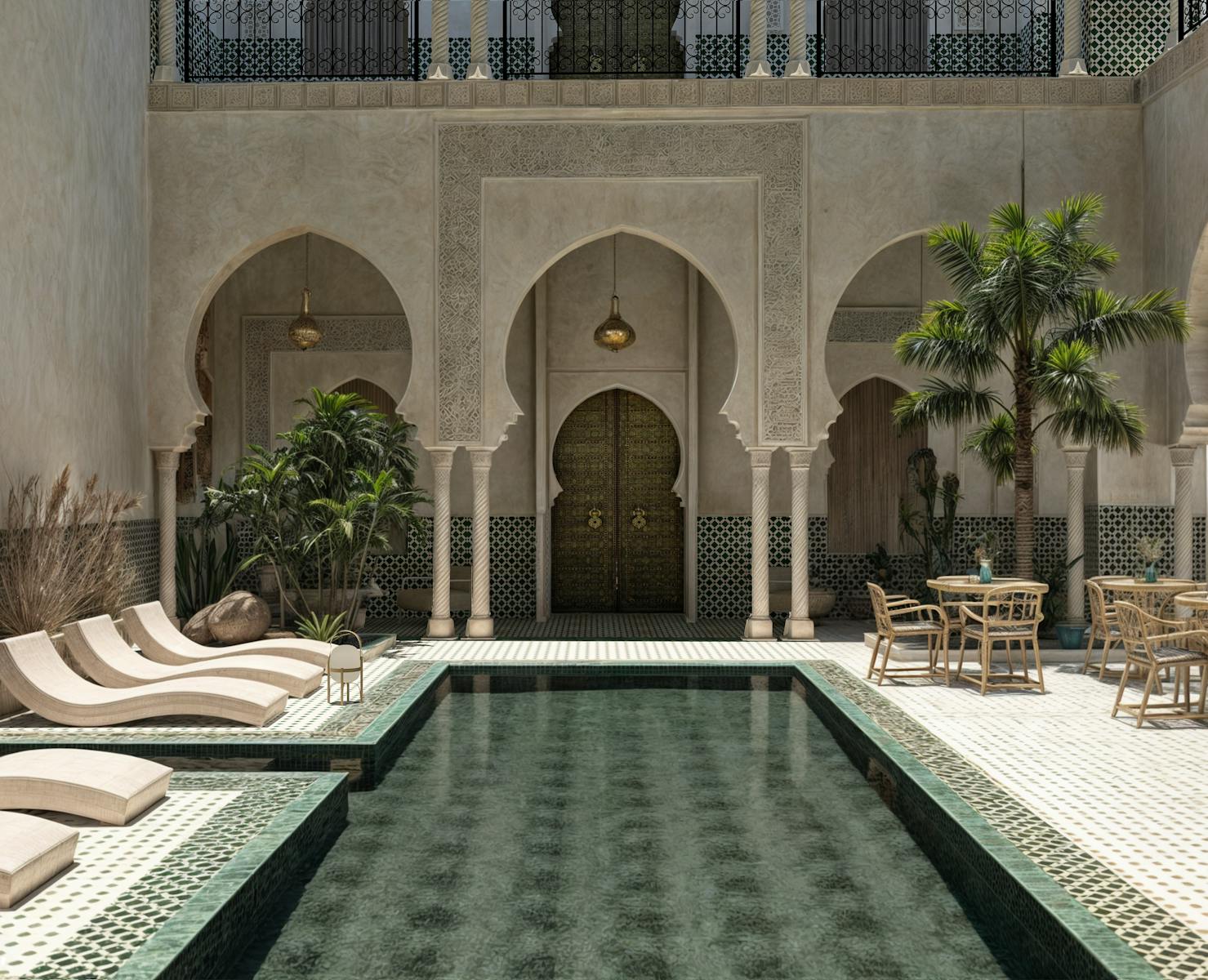
A riad Marrakech travelers see advertised online is usually a traditional Moroccan house that has been converted into a small guesthouse or boutique accommodation. Its defining feature is an interior courtyard or garden, with rooms arranged around it rather than facing the street.
The word riad comes from the Arabic riyad, associated with gardens. Traditional riads were designed around privacy, shade, natural light and an inward-facing living space. Today, many have been restored as places for travelers to stay, particularly inside the medinas of Marrakech and Fes.
For families, couples and first-time visitors, staying in a riad can be a very different experience from staying in a modern hotel. However, a riad is not automatically the best choice for everyone. Location, stairs, room layout, air conditioning, heating and access by car all matter.
Quick answer: What is a riad?
- A riad is traditionally a Moroccan house organized around an interior courtyard or garden.
- The rooms generally face inward toward the courtyard rather than outward toward the street.
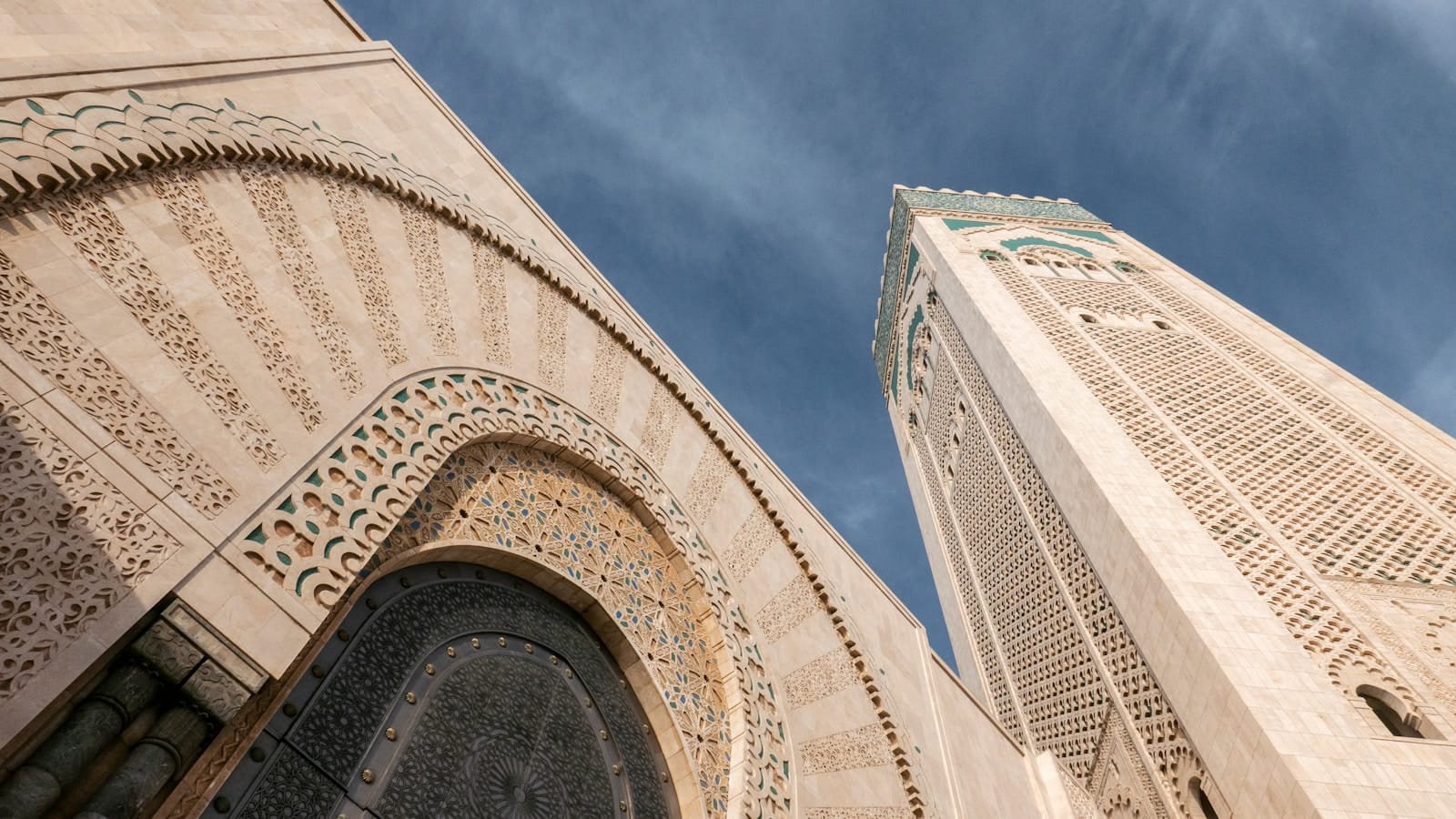
- Many traditional riads feature zellige tilework, carved plaster, painted or carved wood and a fountain.
- Most tourist riads in Marrakech are located inside or close to the historic Medina.
- Many old riads have been converted into small hotels or guesthouses.
- Riads are usually smaller and more individual than conventional hotels.
- Families should check stairs, room configuration, pool safety, heating and vehicle access before booking.
What is the meaning of riad?

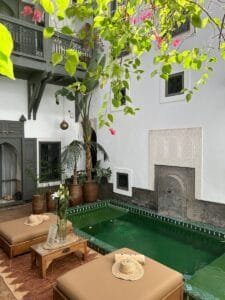
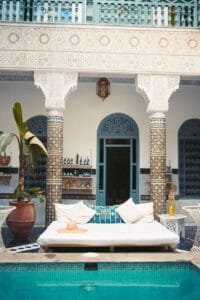
The meaning of riad comes from the Arabic word riyad, generally translated as “gardens.” The traditional architectural idea is therefore closely connected with a planted interior space.
There is an important distinction between the traditional architectural meaning and the way the word is used by the tourism industry today.
A traditional riad is a house organized around a central garden or courtyard. A dar is another term for a traditional Moroccan house and can have a courtyard without necessarily having a garden. In accommodation listings, however, the terms are sometimes used loosely.
The important feature for a traveler is the inward-facing design: you may enter through a relatively plain exterior door and find a courtyard, fountain, plants and rooms arranged around the inside.
When did riads start appearing in Morocco?
There is no single year when riads suddenly appeared in Morocco. The architecture developed over centuries as Moroccan urban houses evolved under Islamic and Andalusian architectural influences.
Marrakech itself was founded by the Almoravids in 1070–1072 and became an important political, economic and cultural center. Its historic Medina developed into a dense urban environment containing houses, palaces, gardens, souks and religious buildings.
This means it would be misleading to say that modern tourist riads are centuries-old hotels. The buildings that travelers stay in today may be historic private houses that were later restored and converted into accommodation.
The concept of inward-facing homes is much older than the modern riad tourism industry. What changed in recent decades is the restoration and conversion of many traditional Medina houses into guesthouses and boutique hotels.
What does riad architecture look like?
Riad architecture is designed around the idea of turning the house inward.
From the outside, a traditional property may have plain walls and limited openings toward the street. Inside, the courtyard becomes the center of the building.
Rooms can be arranged around several sides of the courtyard, sometimes over two or more floors. A staircase may lead to upper galleries and eventually to a rooftop terrace.
Common architectural features include:
- Central courtyard or garden
- Fountain or small pool
- Zellige tilework
- Carved plaster
- Wooden ceilings and doors
- Decorative arches
- Thick walls
- Rooftop terraces
- Rooms facing the courtyard
The architecture also fits the traditional urban environment of Marrakech. UNESCO describes the Medina as a historic living city containing traditional houses, narrow lanes, souks, artisan activities and other architectural elements. Restoration work has helped maintain traditional materials and crafts such as zellige, plasterwork and carved or painted wood.
What is riad zellige tile?
Riad zellige tile is one of the decorative details you may notice immediately when entering a traditional Moroccan property.
Zellige is Moroccan mosaic tilework made from individually shaped and glazed pieces. Artisans arrange the pieces into geometric patterns, often around fountains, walls, floors, columns and doorways.
The patterns can look highly complex, but the decoration is not limited to appearance. Zellige is part of Morocco’s long tradition of architectural craftsmanship.
UNESCO specifically notes zellige among the traditional crafts associated with restoration and conservation in the Medina of Marrakech.
Not every riad has the same amount of zellige. Some have heavily decorated courtyards and bathrooms, while others use simpler materials and focus more on plaster, wood or painted surfaces.
Book Your Family Adventure Now — Limited Spots Available!
Book Your Family Adventure Now — Limited Spots Available!
Why are riads built around a courtyard?
The courtyard serves several purposes.
First, it provides a private central space within the house. Instead of opening the main living areas directly onto a busy street, the building concentrates activity toward the interior.
Second, the courtyard brings natural light into rooms that may have few windows facing the outside.
Third, shaded areas, plants and water can make the central space more comfortable during hot weather.
This design is particularly relevant in Marrakech, where summer temperatures can become very high. Traditional architecture therefore combines privacy, climate considerations and social space rather than treating decoration as a separate feature.
What is the difference between a riad and a hotel?
The biggest difference is the type of building and the way it is organized.
A riad is normally a converted traditional house with a courtyard at its center. A conventional hotel is generally purpose-built for accommodation and tends to have larger communal facilities, corridors, elevators and standardized rooms.
| Riad | Hotel |
|---|---|
| Traditional house or riad-style building | Purpose-built accommodation |
| Usually centered around a courtyard | Usually organized around corridors and common areas |
| Often smaller | Can have dozens or hundreds of rooms |
| Frequently inside the Medina | Often found in modern districts and resort areas |
| Rooms may all be different | Rooms are usually more standardized |
| May have limited vehicle access | Usually easier for cars and taxis |
| Often has a rooftop terrace | May have larger pools, restaurants and other facilities |
Neither option is automatically better.
A riad may suit travelers who want to stay close to the Medina and experience traditional architecture. A hotel can be more convenient for families needing elevators, large pools, parking, accessible rooms or extensive on-site facilities.
Need Help with Transportation in Morocco?
Book a reliable private driver for your Morocco family adventure today – personalized routes designed just for you, and get 30% off as a first-time visitor!
Is it better to stay in a hotel or riad in Marrakech?
For many first-time visitors, a well-located riad is a good way to experience the historic side of Marrakech. But the answer depends on your travel needs.
A riad may be better if you want:
- A smaller property
- A traditional courtyard
- Easy walking access to parts of the Medina
- Moroccan architectural details
- A quieter place to return to after sightseeing
- A more individual accommodation experience
A hotel may be better if you need:
- An elevator
- Easy vehicle access
- Large family rooms
- Extensive swimming-pool facilities
- A gym or large restaurant
- More standardized services
- Easier access for travelers with mobility limitations
For families, the decision deserves extra attention. Some riads have narrow staircases, small rooms or no elevator. Others have excellent family suites and pools.
Before booking, ask whether the room is on the ground floor, whether the property has stairs, how far the vehicle can approach the entrance and whether the swimming pool is suitable for children.
Where are riads located in Marrakech?
Many of the city’s traditional riads are concentrated in the Medina, the historic walled part of Marrakech with kids .
Areas around places such as Dar el Bacha, Mouassine, the Kasbah and the Mellah contain many traditional properties. Your exact location matters because Medina streets can be narrow and some are inaccessible to regular vehicles.
This can mean that a taxi or private driver drops you at a nearby accessible point and you walk the remaining distance to the riad.
For families with luggage or young children, it is worth confirming the walking distance from the nearest vehicle-accessible point before booking.
What should families check before booking a riad?
A beautiful courtyard does not necessarily mean the property will work well for your family.
Check these details before paying:
Room configuration: A family room may mean one large room with extra beds rather than two separate bedrooms.
Stairs: Traditional buildings can have several levels and narrow staircases.
Pool: If the riad has a plunge pool, ask about its depth and whether there are safety arrangements for children.
Heating and air conditioning: Marrakech can be very hot in summer but cool at night during winter. Do not assume an old building will have the same climate-control setup as a modern hotel.
Location: Ask exactly where the driver can stop and how far you need to walk with luggage.
Noise: A riad beside a busy souk or nightlife area can be less peaceful than one on a quieter residential lane.
Breakfast: Confirm whether breakfast is included and whether the property can accommodate children’s dietary preferences.
What is the difference between a riad and a Kasbah?
A riad and a kasbah are different types of traditional Moroccan architecture.
A riad is primarily an urban courtyard house, commonly associated with historic cities such as Marrakech and Fes.
A kasbah traditionally refers to a fortified residence or citadel. Kasbah-style buildings are particularly associated with southern Morocco, where fortified earthen architecture can be found along historic routes and in areas around Ouarzazate and the Draa Valley.
The settings are therefore usually different.
If you are staying in Marrakech’s Medina, a riad is the accommodation type you are more likely to encounter. On a route through southern Morocco toward the Sahara, you may encounter traditional kasbahs and kasbah-style guesthouses.
Are riads good for families?
Yes, the right riad can work very well for families, but it is important to choose the property rather than simply choosing the accommodation type.
A courtyard gives families a place to relax between visits to the Medina, while some properties have family suites, pools and rooftop dining.
Morocco Family Vacation’s existing Marrakech family guide also recommends considering private courtyards and family-friendly accommodation when traveling with children.
However, families with strollers or mobility concerns may prefer a hotel or a riad with ground-floor rooms and easy access. A traditional building can be charming while still being impractical for a particular family.
What should you expect when staying in a riad?
Do not expect every riad to operate exactly like a large hotel.
Many have a small reception area and a limited number of rooms. Staff may know guests personally and meals may be served in the courtyard, dining room or rooftop.
Your room may also be quite different from another room in the same property because traditional buildings were not originally designed with identical hotel rooms.
The experience can be more intimate, but it can also mean fewer facilities. Some properties do not have elevators, large restaurants, gyms or extensive room-service menus.
That is why reading the practical details before booking is more useful than choosing solely from photographs.
Is staying in a riad worth it in Marrakech?
For travelers interested in Moroccan architecture and the historic Medina, a good riad is often worth considering.
The main advantage is that the accommodation itself becomes part of the Marrakech experience. You are not simply sleeping near the historic center; you may be staying inside a restored traditional house.
But location and facilities matter more than the word “riad” on the booking page.
For a family, choose a property that matches your actual needs first. A ground-floor family room, air conditioning, a safe pool and easy luggage access may be more valuable than elaborate decoration.
For a couple or solo traveler who prioritizes architecture and being inside the Medina, a smaller traditional riad may be an excellent fit.
Conclusion: What is a riad in Marrakech?
A riad is traditionally a Moroccan house built around a central courtyard or garden, with the building designed mainly around its private interior rather than the street outside. Its architecture can include zellige, carved plaster, woodwork, fountains and rooftop terraces.
Today, many riads in Marrakech operate as guesthouses or boutique hotels, particularly in the historic Medina.
The best choice depends on the traveler. A riad can provide a memorable setting and convenient access to the old city, while a modern hotel may be more practical for families who need elevators, larger rooms, parking or extensive facilities.
If you are traveling with children, do not choose based on photographs alone. Check the room layout, stairs, pool, climate control, access and exact location before booking.
─── Your questions, our answers.
Frequently Asked Questions
Our dedicated team is here to answer your Morocco Travel questions and ensure a smooth, memorable journey through Morocco.
What is a riad in Marrakech?
A riad is traditionally a Moroccan house built around a central courtyard or garden. Today, many Marrakech riads have been restored and converted into guesthouses or boutique hotels, particularly inside the Medina.
What does the word riad mean?
Riad comes from the Arabic riyad, associated with gardens. The term traditionally refers to a house organized around an interior garden or courtyard.
When did riads start appearing in Morocco?
There is no single date when riads began. The architectural tradition developed over centuries as Moroccan urban houses evolved, with Marrakech’s historic urban development beginning under the Almoravids in the 11th century. Modern tourist riads are often historic homes that were later restored and converted into accommodation.
What is the difference between a riad and a hotel?
A riad is traditionally a courtyard house, often converted into a small guesthouse. A hotel is generally purpose-built and offers more standardized rooms and facilities. Hotels may be more practical for accessibility and larger family facilities, while riads offer a more traditional setting.
What is the difference between a riad and a Kasbah?
A riad is an urban courtyard house usually found in historic cities such as Marrakech and Fes. A kasbah is traditionally a fortified residence or citadel, particularly associated with southern Morocco.
Is a riad suitable for families?
Yes, but families should check the room configuration, stairs, pool, heating, air conditioning and vehicle access before booking. Some riads are excellent for families, while others are better suited to couples or adults.
Is it better to stay in a hotel or riad in Marrakech?
Neither is universally better. A riad is a strong choice if you want traditional architecture and a Medina location. A hotel may be better if you need elevators, larger rooms, parking, extensive facilities or easier vehicle access.

Kate Carter
Family Travel Blogger
Kate Carter is a mom and travel blogger who fell in love with Morocco’s culture and warmth. Through Morocco Family Vacation, she shares tips and stories to help travelers enjoy authentic, stress-free experiences. Join us along the way.
Table of Contents
Our Services

At Morocco Family Vacation, we create custom Morocco tour packages designed around your interests and travel style. As a dedicated and independent travel agency, we specialize in private Morocco tours offering memorable desert adventures, cultural experiences, and family friendly itineraries while delivering attentive, personalized service from start to finish.