
Morocco Electrical Plug Type
Morocco Electrical Plug Type: Complete Travel Guide (2026)
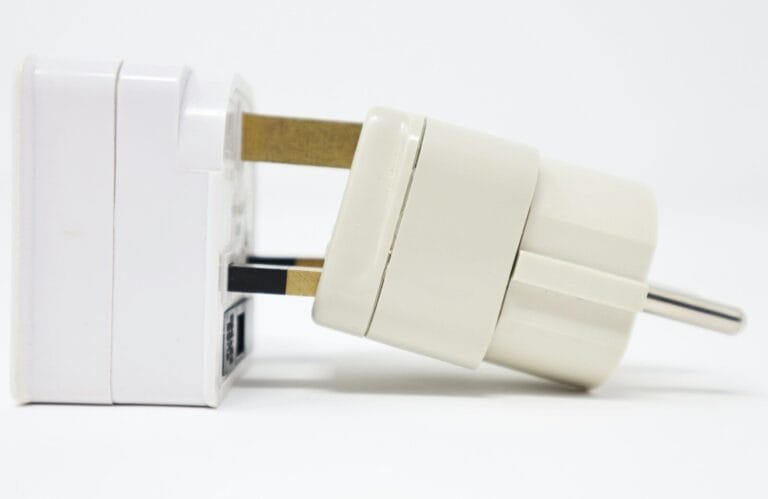
When planning a trip, most travelers focus on flights, hotels, and activities but one small detail can quickly turn into a big inconvenience: the Morocco electrical plug type. Arriving in a new country with a dead phone and no way to charge it is not something anyone wants to experience, especially when navigating unfamiliar cities like Marrakech or Fes.
Morocco follows the European electrical system, which means its outlets, voltage, and plug shapes may be different from what you use at home. Whether you’re traveling from the United States, the United Kingdom, or elsewhere, understanding the Morocco electrical plug type is essential for keeping your devices powered and your trip running smoothly.
This guide covers everything you need to know from plug types and voltage compatibility to adapters, converters, and real-world travel tips. It’s designed for travelers, families, and anyone who wants a stress-free experience in Morocco without worrying about charging their devices.
- Explore Morocco with your kids stress-free! Private transport, kid-friendly hotels, and safe meals included. Plan Your Family Tour
- Experience the Atlas Mountains and Sahara Desert with hands-on fun for kids and comfort for parents. Customize Your Adventure
- Enjoy Morocco’s coasts and cities at a calm pace. Perfect for families with young children. Book Your Relaxed Tour
⚡ Quick Answer — Morocco Electrical Plug Type
Morocco uses Type C and Type E electrical plug types with a standard voltage of 220V and frequency of 50Hz.
- Plug types: Type C (Europlug) & Type E (French grounded)
- Voltage: 220 volts
- Frequency: 50Hz
- Adapter needed: Yes for US, UK, Canada, Australia travelers
Most modern devices support dual voltage and will work with just a plug adapter.
Morocco Electrical Plug Type Explained (Type C & Type E)
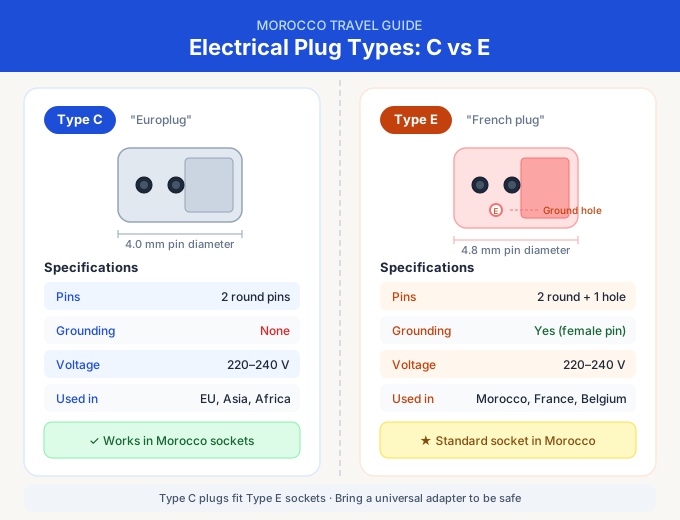
The Morocco electrical plug type follows European standards and includes two main socket types: Type C and Type E.
Type C (Europlug)
- Two round pins
- No grounding
- Common in older buildings and traditional riads
Type E (French Plug)
- Two round pins + earth pin
- Grounded for safety
- Found in modern hotels and apartments
Key Insight:
Type C plugs fit into Type E sockets, making them widely compatible across Morocco.
In practice, this means you’ll likely encounter both types during your trip, especially if you’re staying in different types of accommodations.
Voltage and Frequency in Morocco
The Morocco electrical plug type works alongside a standard electrical system of:
- 220V voltage
- 50Hz frequency
This is the same system used in most European countries
Why This Matters
If your device isn’t compatible with 220V, it could be damaged instantly.
Check Your Device Label
Look for:
- “Input: 100–240V, 50/60Hz”
If you see this, your device is dual voltage and safe to use in Morocco with just an adapter.
Do You Need an Adapter for Morocco?
In most cases, yes.
The Morocco electrical plug type is different from many countries:
You NEED an adapter if you're from:
- United States (Type A/B)
- United Kingdom (Type G)
- Canada
- Australia
You DON’T need one if you're from:
- Most European countries
A universal adapter is the best option, especially if you travel frequently.
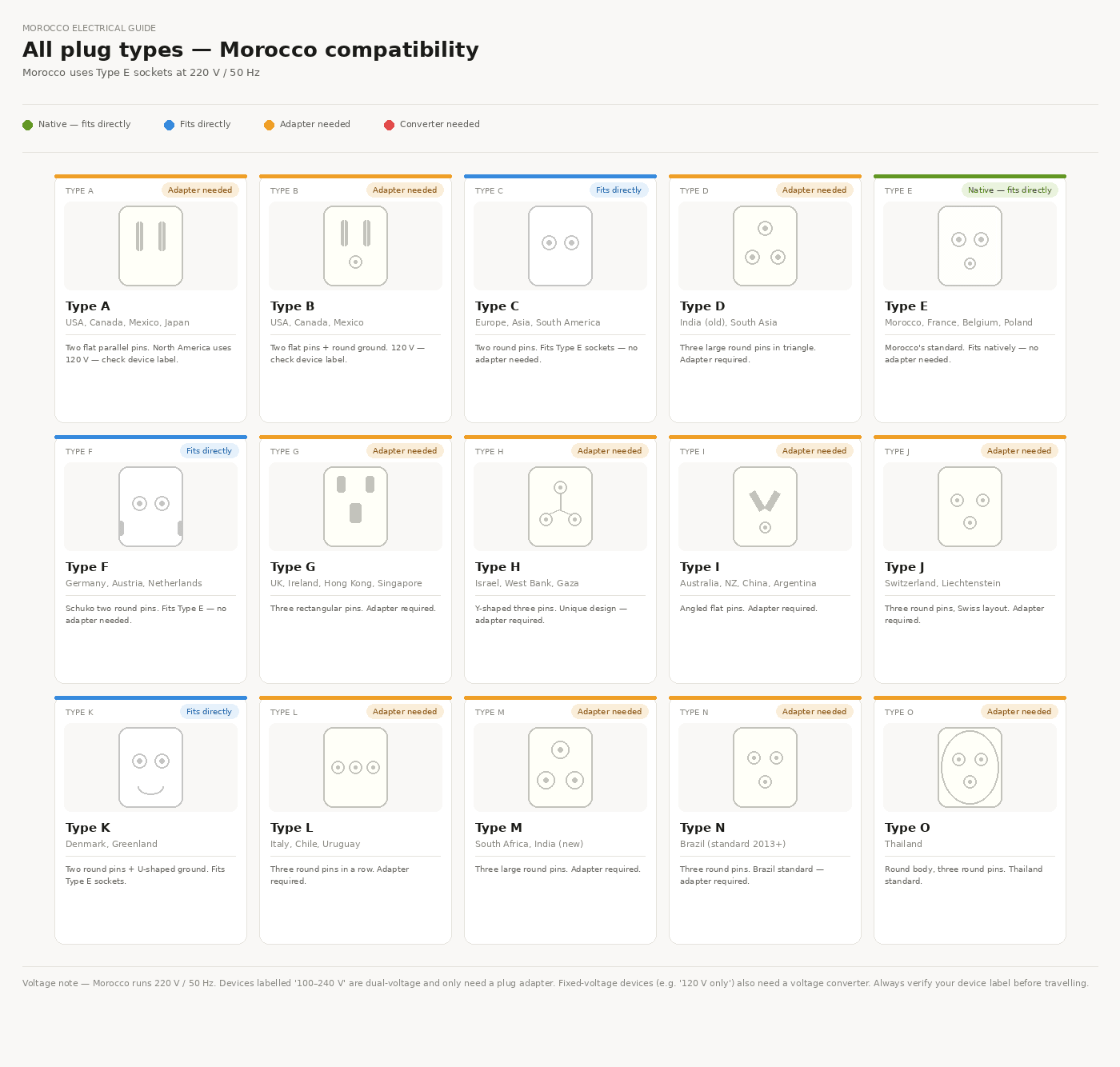
What plug adaptor do I need for Morocco?
To use your devices in Morocco, you will need a Type C or Type E plug adapter. Morocco uses the same two-round-pin system commonly found across much of Europe. If your device has a different plug shape such as flat pins from the United States or the UK’s rectangular pins you’ll need a travel adapter to fit Moroccan outlets. The standard voltage in Morocco is 220–240V, so you should also check if your device supports dual voltage (usually labeled “100–240V”). Most modern electronics like phone chargers and laptops are compatible, but appliances like hair dryers may require a voltage converter in addition to an adapter.
Is Morocco a European plug?
Morocco does not have its own unique plug system; instead, it uses European-style plugs, specifically Types C and E. These are the same plug types found in many continental European countries such as France, Spain, and Germany. So while Morocco is not in Europe, its electrical outlets are compatible with European plugs. This makes it convenient for travelers coming from Europe, as they usually won’t need an adapter. However, travelers from countries like the United States, the United Kingdom, or others with different plug types will still need an appropriate adapter to use their devices safely.
What does plug type C look like?
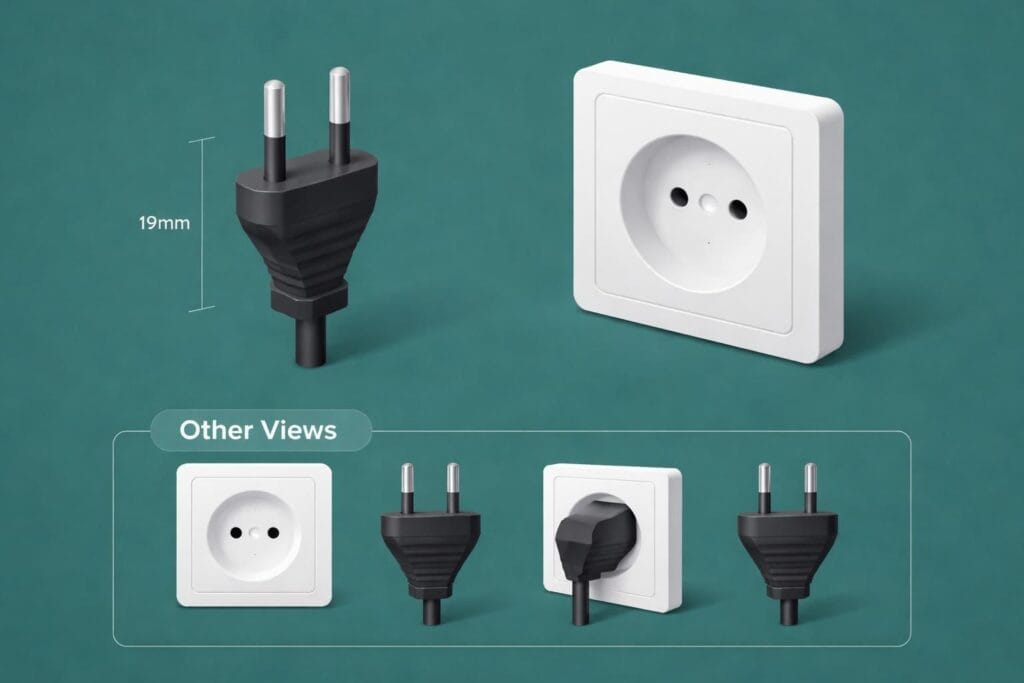
Plug Type C, often called the “Europlug,” is one of the most common plug types used worldwide. It has two round metal pins that are parallel and evenly spaced, with no grounding pin. The plug itself is usually small, lightweight, and fits into most European-style outlets, including those in Morocco. It’s commonly used for low-power devices like phone chargers, laptops, and small electronics. Because of its simple design, Type C plugs can fit into both Type C and Type E sockets, which are the standard in Morocco, making it very versatile for travelers.
Adapter vs Converter — Important Difference
Understanding this difference is critical when dealing with the Morocco electrical plug type.
- Adapter → Changes plug shape only
- Converter → Changes voltage
When You Need a Converter
- Device says “120V only”
- Common with:
- Hair dryers
- Curling irons
- Older appliances
When You DON’T
- Phones
- Laptops
- Cameras
Smart Tip:
Instead of carrying a bulky converter, consider buying travel-friendly dual-voltage devices.
Ready to Start Your Morocco Journey?
Let us help you design a smooth, affordable, and memorable journey crafted by local travel experts who know Morocco best.
Which Devices Work in Morocco?
Works with Adapter Only
- Smartphones
- Laptops
- Tablets
- Cameras
- Power banks
- Wireless headphones
Needs Converter
- Hair dryers
- Straighteners
- Kitchen appliances
The Morocco electrical plug type is compatible with most modern electronics, making travel easier than many expect.
What Plug Types Do Moroccan Hotels Use?
Most accommodations use the standard Morocco electrical plug type, but there are slight differences:
Modern Hotels & Apartments
- Type E sockets
- Reliable electricity
Traditional Riads
- Often Type C
- Limited outlets
Practical Insight:
Even in high-end riads, you may only find 1–2 sockets per room.
Electricity in Rural Morocco
The Morocco electrical plug type remains the same, but power availability can differ.
In Remote Areas
- Limited electricity
- Generator or solar power
- Charging may be restricted
Common Locations
- Sahara desert camps
- Atlas Mountains villages
Bring:
- Power bank
- Fully charged devices
Where to Buy a Plug Adapter for Morocco
Best Option — Buy Before Your Trip
The smartest move is to get your adapter before you leave. This gives you:
- Better quality options
- Certified safety (look for CE or RoHS)
- Lower prices compared to tourist areas
- Peace of mind the moment you land
Travelers who prepare in advance avoid the hassle of searching for adapters after arrival—especially after a long flight.
Buying an Adapter in Morocco
If you forget, don’t worry the Morocco electrical plug type adapters are easy to find in cities.
Electronics Stores in Major Cities
In places like Marrakech, Casablanca, and Rabat, you’ll find reliable electronics shops with a variety of adapters.
Head to modern districts (Ville Nouvelle areas) for better quality products.
Shopping Malls
Large malls such as Morocco Mall or Menara Mall often carry branded adapters and travel accessories.
Prices are reasonable, and quality is usually better than small street shops.
Supermarkets & Hypermarkets
Chains like Marjane sell basic adapters at affordable prices.
These are fine for charging phones and simple devices.
Where to Avoid Buying
Adapters sold at airports especially in Marrakech Menara Airport or Mohammed V International Airport are often:
- 2–3× more expensive
- Limited in quality
- Not always reliable for high-power devices
Smart tip:
If you must buy one at the airport, use it as a temporary solution and upgrade later in the city.
Smart Charging Tips for Travelers
Traveling with multiple devices? The Morocco electrical plug type setup can be optimized.
Recommended Setup
- Universal adapter
- Multi-port USB charger
- Power strip (220V compatible)
Families benefit most from a shared charging station.
Electrical Safety Tips
- Always check voltage compatibility
- Avoid overloaded sockets
- Use surge protection
- Don’t leave devices charging overnight
Older properties may have loose sockets use caution.
Morocco vs Other Countries
| Country | Plug Type | Voltage |
|---|---|---|
| Morocco | C, E | 220V |
| USA | A, B | 120V |
| UK | G | 230V |
| Europe | C, E, F | 220–230V |
Need Help with Transportation in Morocco?
Book a reliable private driver for your Morocco family adventure today – personalized routes designed just for you, and get 30% off as a first-time visitor!
Quick Takeaways
- Morocco uses Type C and Type E electrical plug types
- Standard electricity is 220V / 50Hz
- Most travelers need a plug adapter
- Phones and laptops usually work without converters
- Hair tools may require voltage converters
- Rural areas may have limited power access
Conclusion
Understanding the Morocco electrical plug type is a small step that makes a big difference in your travel experience. With Type C and Type E plugs and a 220V system, Morocco follows European standards that may be unfamiliar to some travelers but easy to prepare for.
Most modern devices will work perfectly with just an adapter, making it simple to stay connected throughout your journey. Still, checking your device compatibility before traveling is essential to avoid damage or inconvenience.
For families and travelers exploring cities, deserts, and mountains, reliable power means access to navigation, communication, and memories captured along the way. A simple adapter, a power bank, and a little preparation go a long way.
Before your trip, take a few minutes to prepare your electrical essentials and you’ll be ready to enjoy Morocco without interruptions.
─── Your questions, our answers.
Frequently Asked Questions
Our dedicated team is here to answer your Morocco Travel questions and ensure a smooth, memorable journey through Morocco.
Do I need a voltage converter for a U.S. hairdryer in Morocco?
Only if it’s single-voltage. Check the label; if it isn’t 100-240V, pair it with a sturdy converter before using power plugs in morocco.
Are USB-C hubs safe to use with Moroccan sockets?
Yes, as long as the hub is certified and you plug it into an adapter rated for Type C/E outlets. Avoid overloading to keep power plugs in morocco cool and stable.
What’s the best adapter for families staying in riads?
Look for adapters with built-in surge protection, multiple USB ports, and sliding safety shutters ideal for family use around power plugs in morocco.
Is Morocco the same as the EU plug?
Yes, Morocco uses the same plug types as many European Union countries, mainly Type C and Type E. This means that travelers coming from most of Europe can use their devices without needing an adapter. The voltage system is also the same—220–240 volts with a frequency of 50Hz—which ensures compatibility for European electronics. However, it’s important to note that not all EU countries use exactly the same plug type (for example, the UK uses Type G), so travelers from those countries will still need an adapter. Overall, Morocco is largely compatible with standard continental European plugs.
Does Morocco have American outlets?
No, Morocco does not use American-style outlets. In the United States, plugs have two flat pins (Type A or B), which are not compatible with Moroccan sockets. Moroccan outlets are designed for round-pin plugs (Type C and E), so American devices cannot be plugged in directly. Additionally, Morocco uses a higher voltage (220–240V) compared to the US (110–120V). While most modern electronics like phone chargers and laptops support dual voltage, some devices like hair tools may not. In those cases, you may need both a plug adapter and a voltage converter.
What adapter do I need for Morocco from US?
If you are traveling from the United States to Morocco, you will need a Type C or Type E plug adapter. This adapter will allow your US plug (with flat pins) to fit into Moroccan outlets (with round pins). In addition to the adapter, you should check whether your devices support dual voltage (100–240V). Most electronics like smartphones, tablets, and laptops do, so they will work without a converter. However, for devices that are not dual voltage such as some hair dryers or electric appliances you may also need a voltage converter to avoid damaging your equipment.

Kate Carter
Family Travel Blogger
Kate Carter is a mom and travel blogger who fell in love with Morocco’s culture and warmth. Through Morocco Family Vacation, she shares tips and stories to help travelers enjoy authentic, stress-free experiences. Join us along the way.
Table of Contents
Our Services
-
Private Family Tours
-
Custom Itineraries
-
Sahara Desert Tours
-
Chefchaouen & Northern Morocco Tours
-
Luxury Desert Camping
-
Multi-Day Tours (2–16 Days)
-
Atlas Mountains Trips
-
Cooking Classes & Market Visits
-
Photography & Heritage Tours
-
Airport Transfers & Private Transport
-
Custom Birdwatching Tour in Morocco
-
24/7 Tour Support & booking Flexibility
At Morocco Family Vacation, we create custom Morocco tour packages designed around your interests and travel style. As a dedicated and independent travel agency, we specialize in private Morocco tours offering memorable desert adventures, cultural experiences, and family friendly itineraries while delivering attentive, personalized service from start to finish.
Popular Tours
Latest Posts


#Morocco in February
#Morocco weather in February
#February temperatures in Morocco
#Weather in Morocco in February
#Morocco travel guide February