
Currency in Morocco: What Locals Wish Tourists Knew
The Short Answer: Moroccan Dirhams
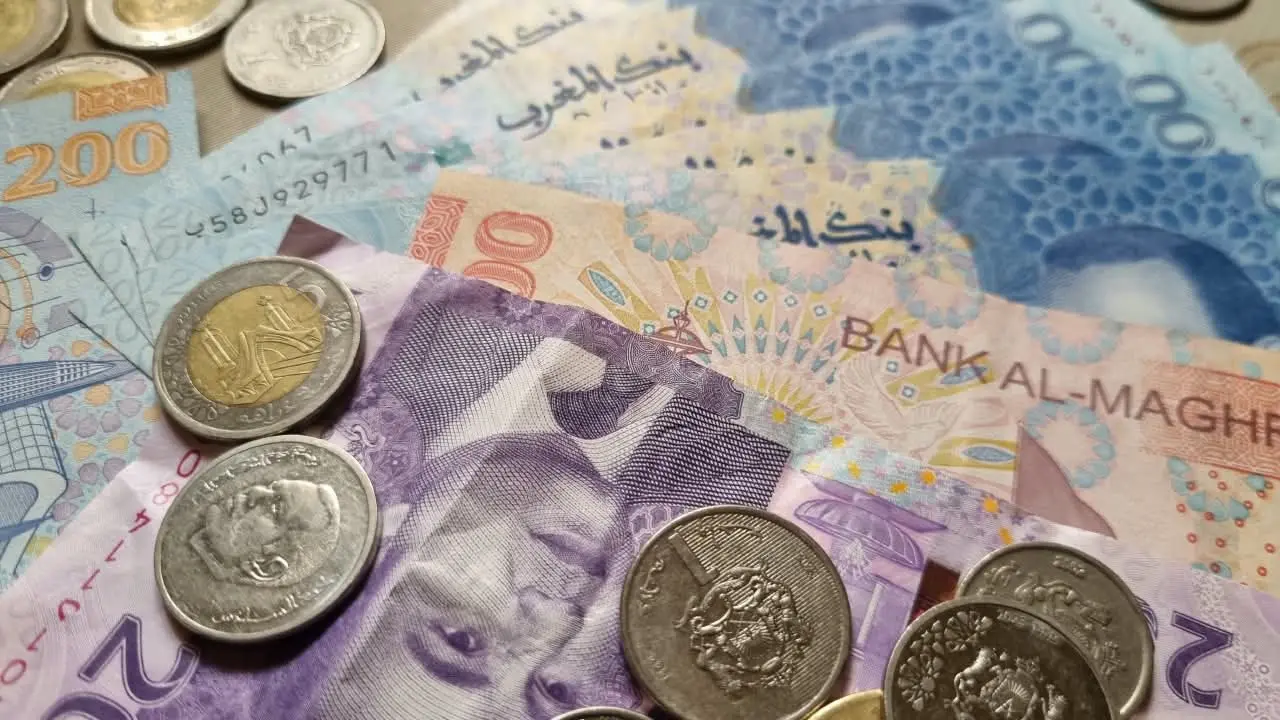
The currency in Morocco is the Moroccan dirham. You will see it written as MAD (the international code) or DH (the short form on price tags and menus). It is the same in Marrakech, Fes, Agadir and everywhere else in the country.
For families, the real question is usually not “what is it called?” but “how do we get it, and how much do we need?” Morocco runs on a mix of cards and cash. Cards work in hotels, many restaurants and bigger shops, but tips, taxis, souk purchases and small cafés are still mostly paid in cash. The most common mistake is changing a large amount at the airport, where rates are usually worse than in town.
This guide covers what to bring, where to get dirhams, what to tip, and how to handle money with children and teenagers.
Quick Takeaways
- The currency is the Moroccan dirham (MAD or DH), and you will need it for most everyday payments.
- Use a card as your main method and carry cash as a backup. Plan for both, because either can fail on a given day.
- Avoid changing large amounts at the airport. Bank ATMs and city exchange offices generally give better value.
- If an ATM or card machine asks whether to charge you in dirhams or your home currency, choose dirhams.
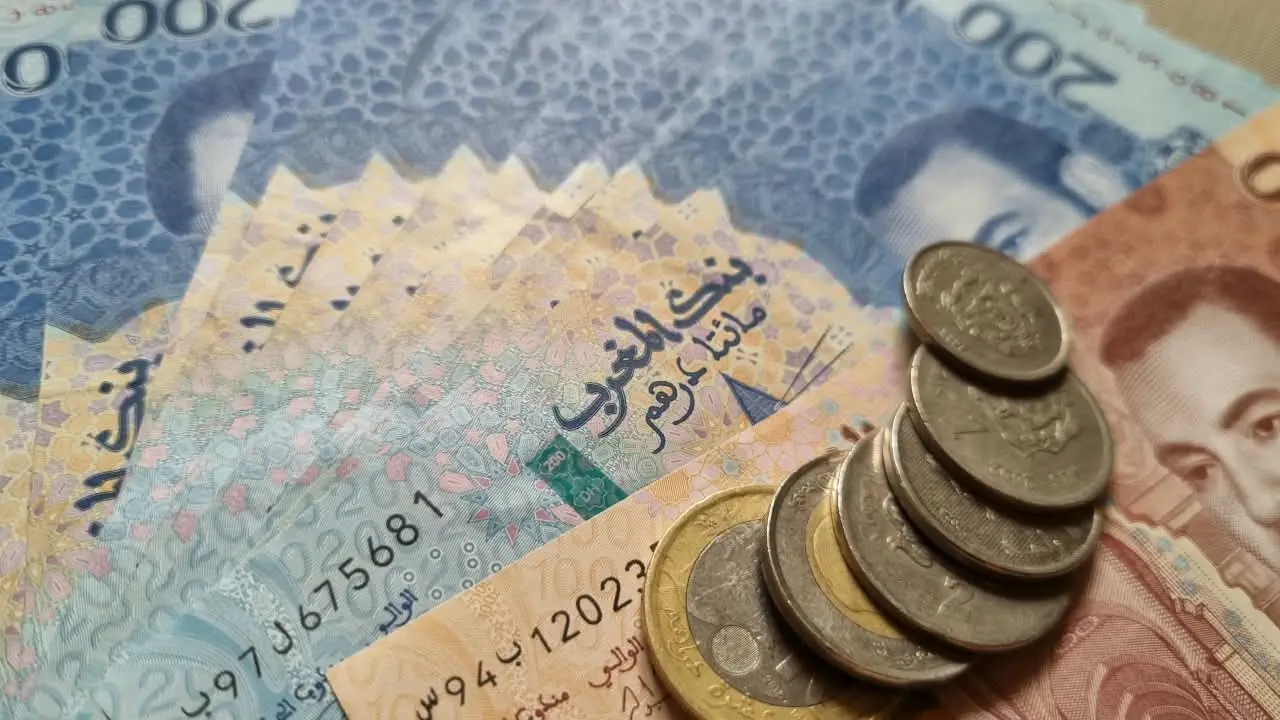
- ATMs often hand out 200 dirham notes, which are hard to spend on small purchases. Break them early at supermarkets, petrol stations or your hotel desk.
- Tips are mostly given in cash. Drivers, guides, riad staff, camp staff and restaurant servers all expect something, so keep small notes ready.
- Keep your exchange receipts. You will need them if you want to convert leftover dirhams back before you leave.
The Moroccan Dirham: What It Is and How It Looks
What the currency is called
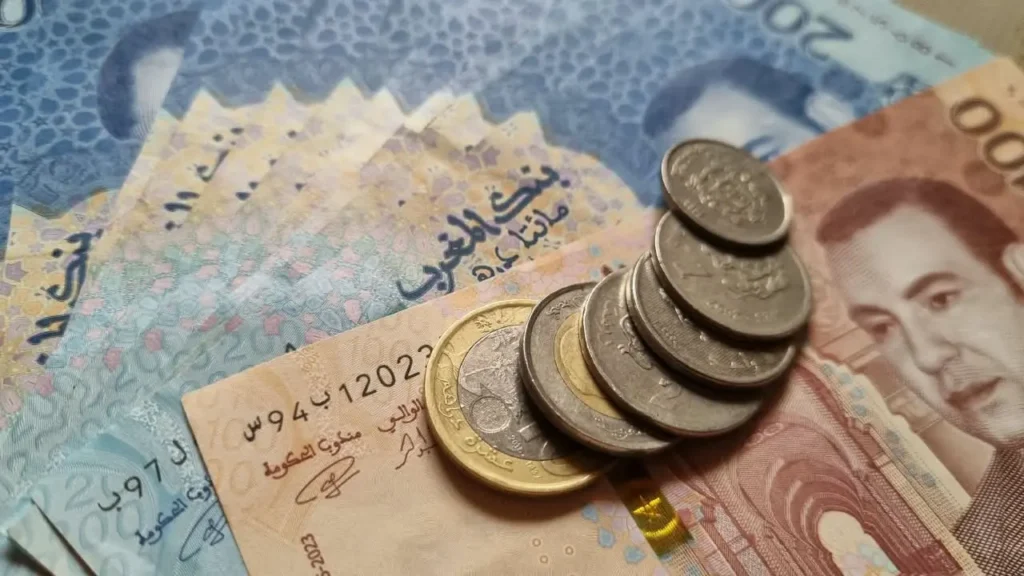
One dirham is divided into 100 centimes. Banknotes come in several denominations, with 200 dirhams the largest in everyday use, and there are coins for smaller amounts.
Prices in shops, restaurants and taxis are quoted in dirhams. You may also hear prices in “rials” in markets, which is an older way of counting that some older vendors still use.
Because the dirham is the only currency you will spend in everyday life, think of dollars, euros and pounds as money you convert, not money you spend.
Can You Pay in US Dollars or Euros?
Foreign currency versus dirhams
Short answer: yes but the best plan is to pay in dirhams. Some tourist-facing businesses, such as certain tour operators or luxury hotels, may quote or accept euros or dollars. Even then, the exchange rate is set by the seller, not by you, so it is rarely your best option.If you do bring cash to exchange, travelers from the US often wonder whether dollars or euros are better.
The Euro currency typically demonstrates superior exchangeability and enjoys marginally greater recognition among local merchants compared to the United States dollar, despite both currencies being subject to unfavorable exchange rates when utilized for direct transactions.What matters more is that notes are clean and undamaged, because exchange offices can refuse worn or torn bills.
How to Get Dirhams
Bank ATMs
For most families this is the simplest route. Look for ATMs attached to a bank branch, such as Attijariwafa Bank, Banque Populaire or Bank of Africa (formerly BMCE).
An ATM inside or next to a branch is safer than a freestanding machine on a busy square. If the machine keeps your card, you can walk into the branch for help during opening hours. Try to withdraw during the day.
City exchange offices
Official exchange offices in cities offer rates that are usually clearer and better than the airport. Exchange offices and banks ask for identification, so bring your passport. They should give you a receipt for the transaction. Keep it, because you may need it later. Compare the rates at two offices if they are close together.
Airport kiosks and why most people avoid them
The airport is where many first-time visitors lose money. The rates at airport counters are generally less favorable than the ones you will find in town. Exchange only a small amount if you need immediate cash, and withdraw or exchange the rest later.
If a private driver is meeting your family at arrivals, there is rarely a rush. You can get dirhams after you reach your hotel.
Buying dirhams before you travel
Dirhams are difficult to get outside Morocco, so most travelers get them after landing. The Office des Changes, Morocco’s foreign exchange authority, states that importing and exporting dirhams is prohibited, with one tolerance: travelers may carry up to 2,000 dirhams in banknotes when entering or leaving. Do not plan on buying dirhams at home and bringing them in.
Checking the Exchange Rate Without Getting Confused
Before your trip, look up the current rate from a reliable source so you know what to expect. Bank Al-Maghrib, the central bank, publishes daily reference rates for the dirham on its website, along with buy and sell rates for foreign banknotes, which are a useful benchmark for what an exchange office should offer.
The rate you see in a currency app is the mid-market rate, which is not the rate you will actually receive. Banks, exchange offices and card providers add a margin or fee. A useful habit is to compare the amount you receive in dirhams with what the mid-market rate would give you. The gap tells you how much the service really costs.
Rates move daily, so use today’s figure rather than something remembered from an older article. This article deliberately gives no exchange rate for that reason.
ATM Fees, Limits and the Currency Prompt
There can be two layers of fees. The Moroccan bank may charge a fee for using its machine, and your own bank may add a foreign transaction fee or an international ATM fee. Local fees on foreign cards commonly fall somewhere between 20 and 50 dirhams per withdrawal, often around 35, and the amount varies by bank and machine. Check the screen before you confirm.
Many ATMs also cap each withdrawal. A limit of around 2,000 dirhams per transaction is the most common, and some machines allow up to about 4,000. A machine may also limit how many transactions you can make in a day. Withdrawing small amounts again and again means paying the fee each time, so withdraw what you realistically need for a few days and check your own bank’s daily limit before you travel.
One more trap: when you withdraw or pay by card, the machine may ask whether you want to be charged in your home currency or in dirhams. Choose dirhams, as the payments company Wise also advises. If you accept the home-currency option, the local provider sets the conversion rate, and it is usually worse than the one your bank would apply. Some machines may not show this question at all, so check your banking app afterward to see what you were charged.
Cards in Morocco: Where They Work and Where They Don’t
Cards from the US and Europe generally work well at hotels, malls, upscale restaurants and most bank ATMs. Do not rely on them everywhere. Taxis, small cafés, market stalls, tips and many budget guesthouses are commonly cash only.
Travelers using UnionPay cards have a more specific situation. UnionPay’s own page says its cards can be used for cash withdrawals at all Attijariwafa Bank ATMs in Morocco, and at merchants showing the UnionPay or local CMI sign. For UnionPay holders, Attijariwafa is the machine to look for.
The practical answer is to carry both: at least two cards (ideally on different networks) and a cash reserve. Whether you lean more on cards or cash is your choice, but a backup for the day a machine is out of order or a terminal is down is not optional.
The Small-Change Problem
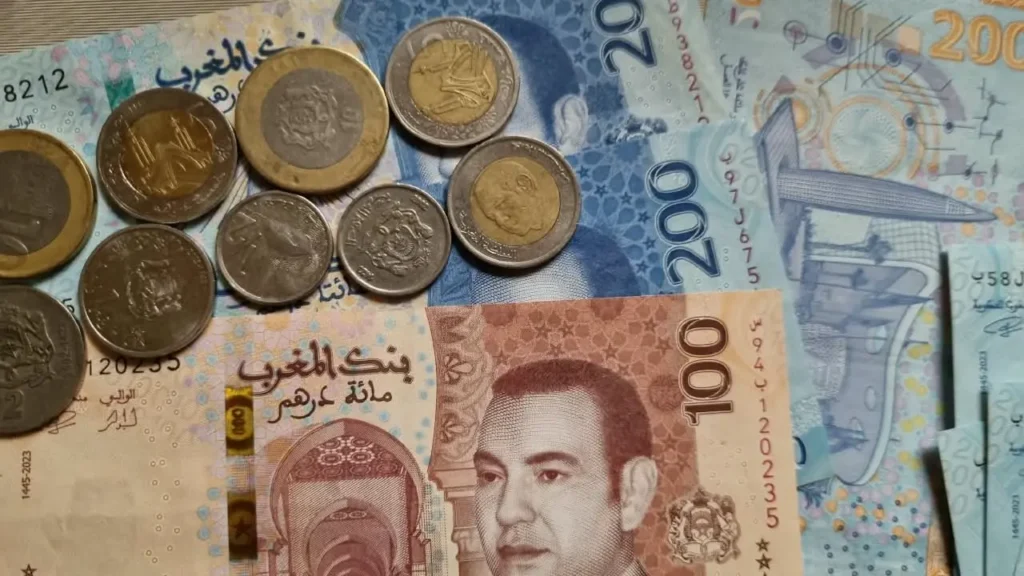
Why 200 dirham notes cause trouble
ATMs commonly load 200 dirham notes, and sometimes 100s, especially when you withdraw larger amounts. A 200 dirham note is hard to use for small purchases. Small shopkeepers, petit taxi drivers and tip recipients often cannot or will not give change for it. Our guide on how to take a taxi in Marrakech covers fares and paying in more detail.
A family may want roughly 300 to 800 dirhams a day in small notes and coins, depending on how much you expect to spend on meals, tips and shopping. Break large notes whenever you can, for example at a supermarket, when you pay a hotel or riad bill, or after a sit-down meal. Keep your coins, because they disappear fast. If you want smaller notes from an ATM, try an odd amount such as 400 or 600 dirhams instead of a round 500 or 1,000, though it is never guaranteed.
Tipping Basics
Drivers and guides
Tipping is not legally required, but it is part of how service is rewarded, and people working in tourism often rely on it. The ranges below are common guidance, not fixed rules.
Private driver: around 100 to 200 dirhams per day, given in cash at the end of the trip.
Licensed guide: around 150 to 250 dirhams per day for a full day, or 20 to 50 dirhams for a short site visit.
If your guide or driver is booked through a tour company, ask the company what is expected. Customs differ between companies.
Riads, camps and restaurants
For riads and desert camps, the usual approach is a single tip left for the team at checkout, rather than handing out small amounts to each person. Common guidance is around 50 to 100 dirhams per night.
At restaurants, around 10 percent of the bill is common, left in cash on the table, with a little less at simple cafés.
Paying in the Souks
Bargaining in a traditional souk is a friendly social custom, not a fight. Ask the price before you touch or take something, agree the amount clearly, and pay in dirhams.
A common rule of thumb is to start by offering roughly 30 to 40 percent of the first price, then move up slowly while the seller comes down. Greet the seller warmly, keep a smile, and never raise your voice. If the price stays too high, thank them politely and walk away. Sellers will often call you back with a better price. Bargain only in traditional souks, since shops, supermarkets and restaurants use fixed prices.
Locals often see negotiation as a conversation, not a trick. An insultingly low offer can feel disrespectful to an artisan who has spent hours on the piece, and rushing or acting impatient misses the point of the exchange. Families with teenagers should talk about this before entering a market. A calm “no, thank you” is always acceptable.
Money Safety With Kids and Teens
Violent crime is uncommon, but pickpocketing happens in crowded places, including the medina alleys and busy squares. Keep money in more than one place rather than carrying everything in one wallet, and give one parent a smaller “daily” stash for quick payments so you are not pulling out a thick wallet in public.
Backpacks are better worn on the front in dense crowds. Children and teenagers should not keep phones or cash in open back pockets.
In markets, vendors sometimes hand an item to a teenager, such as a bracelet, and then ask for payment. Teach older children to politely decline to hold things, and set a budget in advance if they want to buy something.
Cash for Remote Areas
Outside big cities, ATMs are fewer and card machines are less common. Four- and five-star desert camps and guesthouses usually accept cards, while budget camps and small guesthouses often take cash only. Before heading into the Atlas Mountains, the Dades Valley or the Sahara, withdraw enough cash in the last larger town for meals, tips and small purchases.
Do not assume you can top up on the way. A machine out of cash or a power cut can happen at any time.
Leftover Dirhams Before You Fly Home
Many travelers end up with extra dirhams. Under Office des Changes rules, banks and licensed exchange offices can buy back leftover dirhams from non-residents when the dirhams came from foreign currency exchanged earlier in the trip. You will need to show proof, such as an exchange slip in your name that is less than six months old, or your customs import declaration. Without the declaration, the Office des Changes sets a ceiling of 20,000 dirhams per person.
In practice, this means keeping every exchange receipt. An older Office des Changes circular also accepted ATM withdrawal receipts as proof, but rules and counter practice change, so ask the counter before you rely on it. To avoid the question, withdraw only what you expect to use.
Common Money Mistakes
Besides changing too much at the airport, these are the mistakes that cost travelers money most often:
- Choosing home currency at a card terminal instead of dirhams.
- Relying only on cards for small daily purchases.
- Forgetting that the dirham is a closed currency, then trying to buy or sell large amounts abroad.
- Bringing home unspent dirhams that are hard to exchange.
- Accepting a petit taxi fare without asking for the meter.
- Withdrawing small amounts repeatedly and paying the ATM fee each time.
- Skipping negotiation in the souks, or tipping far above or below the usual amounts.
What to Ask Your Tour Operator About Money
If you are booking one of our private family tours in Morocco, or any other operator’s, ask which expenses are included and which you will pay yourself. Useful questions include: Are entrance fees included? Are meals included? How much do you recommend for tips? Does the driver accept cards? What cash do we need on remote days?
A reliable operator should answer these clearly. If you are traveling independently, do the research above before you go. If you are booking with a local company, ask them and rely on their answers.
Pre-Trip Money Checklist
Tell your bank when you are traveling. Carry at least two cards on different networks, and make sure you know your PIN. Check what foreign transaction fees your cards charge. Pack a small reserve of euros or dollars for emergencies, and plan to get dirhams after landing. Keep your cash split between family members, and take a photo of your card numbers and bank phone numbers stored somewhere other than your wallet.
Conclusion
Currency in Morocco is simple once you know the basics. You will spend dirhams, so get them from a bank ATM or a city exchange office rather than at the airport. Use cards where they are accepted, and keep cash for tips, small purchases and the places where cards do not work. Break large notes early, keep receipts, and keep your family’s money split across pockets.
Morocco Family Vacation helps families create special, private trips across Morocco that are tailored just for them. We focus on making travel experiences that fit your family’s specific needs and interests. If you want help planning your family’s trip to Morocco, feel free to contact us ,Our team is ready to design a customized travel plan that matches what your family loves.
─── Your questions, our answers.
Frequently Asked Questions
Our dedicated team is here to answer your Morocco Travel questions and ensure a smooth, memorable journey through Morocco.
Should I bring US dollars or euros to exchange in Morocco?
Most everyday places want dirhams, so a card plus ATM withdrawals is usually simpler than carrying a lot of foreign cash. A small reserve of euros or dollars is a sensible emergency backup, and euros are often the easier of the two to exchange.
Are there fees for using international debit cards at Moroccan ATMs?
Often yes. Local fees on foreign cards commonly fall between 20 and 50 dirhams per withdrawal, and many ATMs cap each withdrawal at around 2,000 dirhams, though some allow more. Your own bank may add fees too, so check before you travel.
Can I change leftover dirhams back before flying home?
Often yes, within limits. Banks and licensed exchange offices can buy back leftover dirhams if you can show proof, such as an exchange slip in your name that is less than six months old. Keep every receipt, and ask the counter what it accepts.
How do I check the current exchange rate between US dollars and Moroccan dirhams?
Use a reliable currency converter or your bank’s app for the mid-market rate, then compare it with the rate offered at the ATM or exchange office. The central bank, Bank Al-Maghrib, also publishes official rates.
Do cards work in Marrakech and Agadir?
In most hotels, bigger restaurants and shops, yes. For taxis, small cafés, souk stalls and tips, expect to need cash. Carry both.

Kate Carter
Family Travel Blogger
Kate Carter is a mom and travel blogger who fell in love with Morocco’s culture and warmth. Through Morocco Family Vacation, she shares tips and stories to help travelers enjoy authentic, stress-free experiences. Join us along the way.
Table of Contents
Our Services
-
Private Family Tours
-
Custom Itineraries
-
Sahara Desert Tours
-
Chefchaouen & Northern Morocco Tours
-
Luxury Desert Camping
-
Multi-Day Tours (2–16 Days)
-
Atlas Mountains Trips
-
Cooking Classes & Market Visits
-
Photography & Heritage Tours
-
Airport Transfers & Private Transport
-
Custom Birdwatching Tour in Morocco
-
24/7 Tour Support & booking Flexibility

At Morocco Family Vacation, we create custom Morocco tour packages designed around your interests and travel style. As a dedicated and independent travel agency, we specialize in private Morocco tours offering memorable desert adventures, cultural experiences, and family friendly itineraries while delivering attentive, personalized service from start to finish.

One Response