Do You Need to Wear a Headscarf in Morocco? 2026
Headscarf in Morocco: The Short Answer
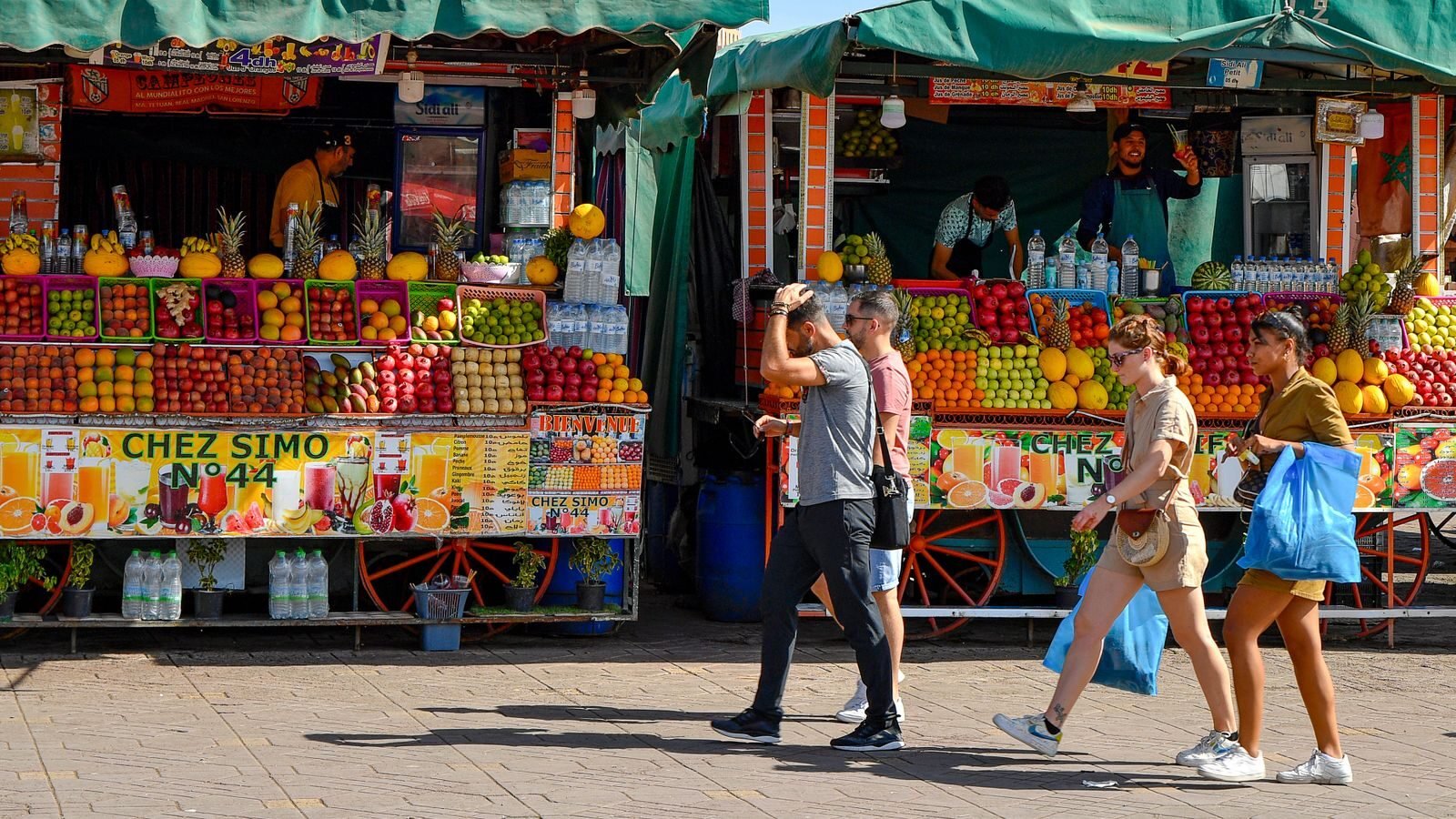
No, female tourists generally do not need to wear a headscarf in public in Morocco. There is no general requirement for women visiting the country to cover their hair while walking through cities, shopping in markets, eating at restaurants or sightseeing.
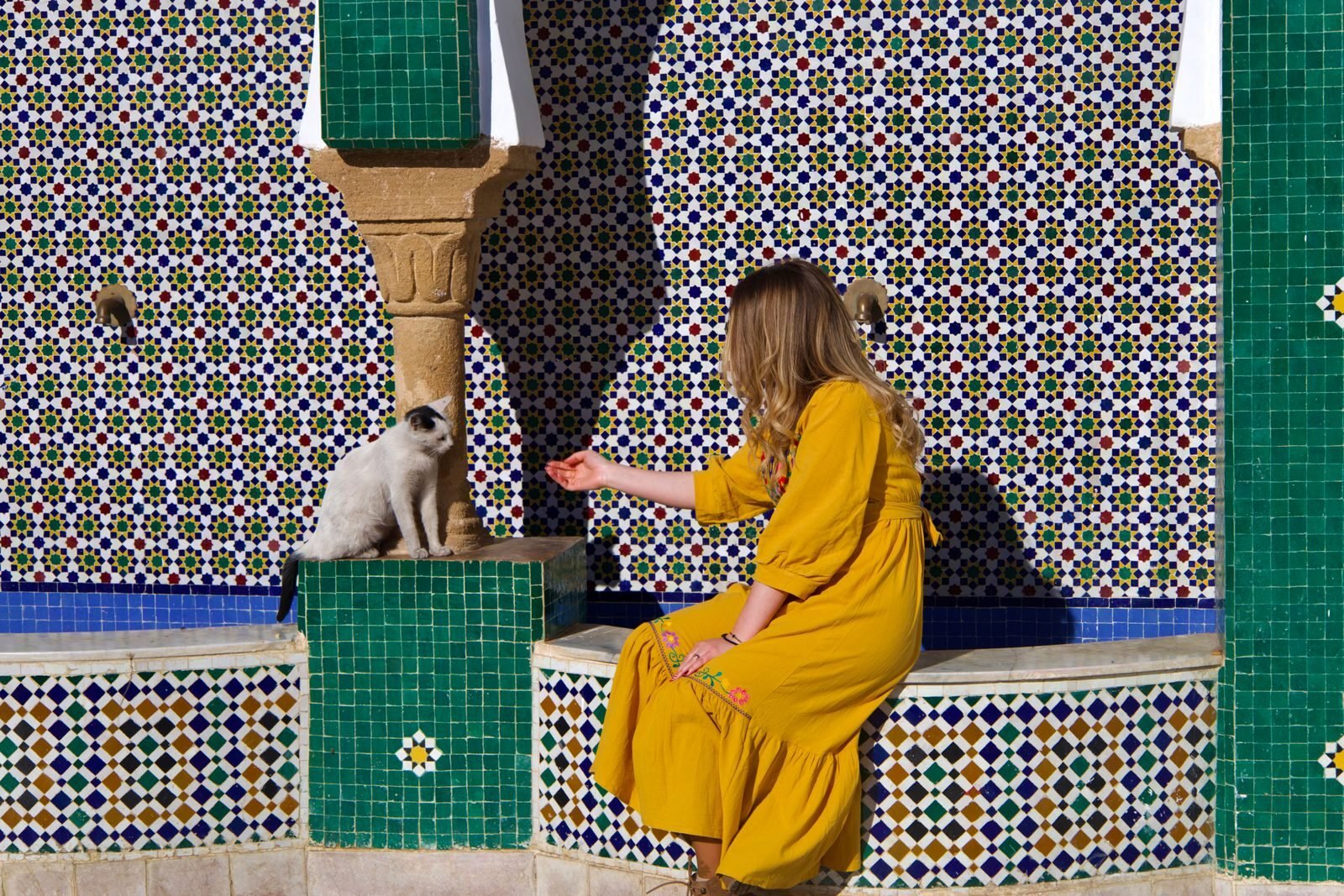
Morocco is a Muslim majority country, but women dress in different ways. You will see Moroccan women wearing hijabs, traditional clothing and modern Western outfits, alongside international visitors with uncovered hair.
If you are planning a family holiday, you do not need to make wearing a headscarf part of your everyday travel routine. However, carrying a lightweight scarf is useful for sun protection, windy conditions and certain religious or cultural visits. It is also sensible to dress a little more modestly when visiting rural communities.
Quick Takeaways
Female tourists do not generally need to cover their hair in public.
Wearing a hijab is a personal choice, not a general requirement for visitors.
Modest clothing can be a considerate choice in rural villages and traditional settings.
Check the specific entry rules before visiting a mosque or religious site.
A lightweight scarf can protect you from sun, wind and desert dust.
Teenage daughters follow the same general guidance as adult female tourists.
You can travel comfortably in Morocco without wearing a headscarf every day.
Is a Headscarf Required by Law in Morocco?
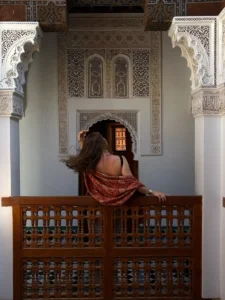
No general law requires female tourists to wear a headscarf in public in Morocco. Visitors can walk around cities, explore tourist attractions and visit restaurants with their hair uncovered.
It is important to distinguish the country’s general laws from the rules of an individual religious site. A mosque or shrine may have its own visitor requirements, and visitors should follow the instructions provided at the entrance.
For current travel advice, consult the UK government’s Morocco travel guidance, which explains the importance of respecting local traditions and religious customs.
Do Moroccan Women Have to Wear a Hijab?
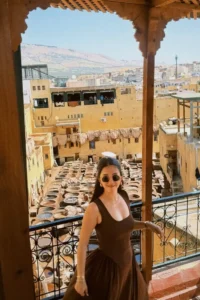
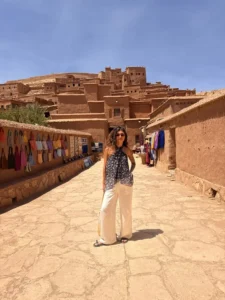
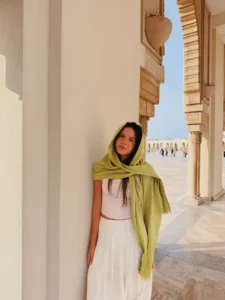
No, Moroccan women do not all dress the same way. Some choose to wear a hijab for religious or personal reasons, while others leave their hair uncovered.
You will notice this variety in cities such as Marrakech, Casablanca and Rabat. Clothing choices also vary between individuals, generations and communities.
A visitor does not need to copy the clothing choices of local women to show respect. Understanding the setting and behaving considerately are more useful than assuming that every woman in Morocco follows one dress style.
When Should Female Tourists Cover Their Hair?
Visiting Mosques and Religious Sites
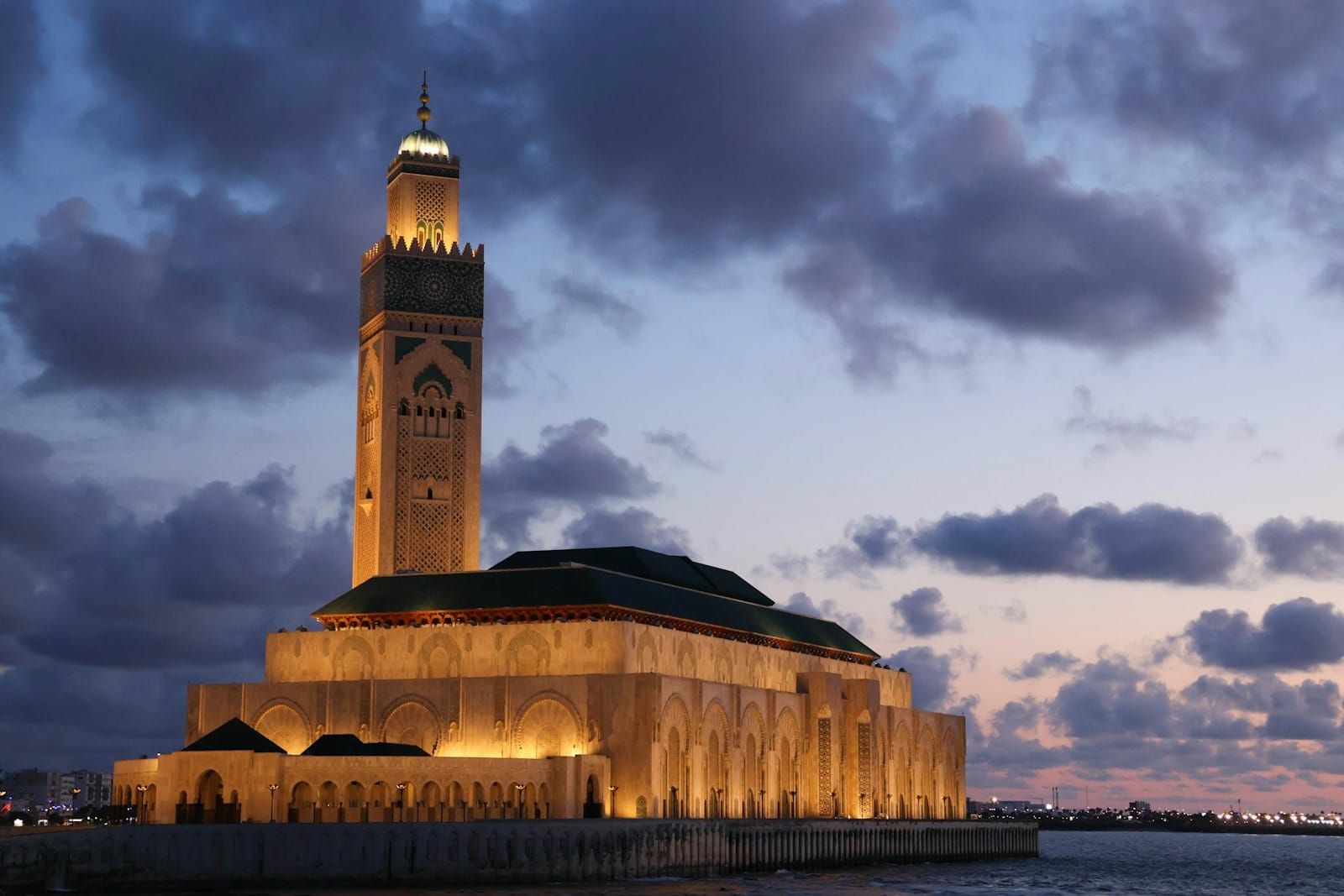
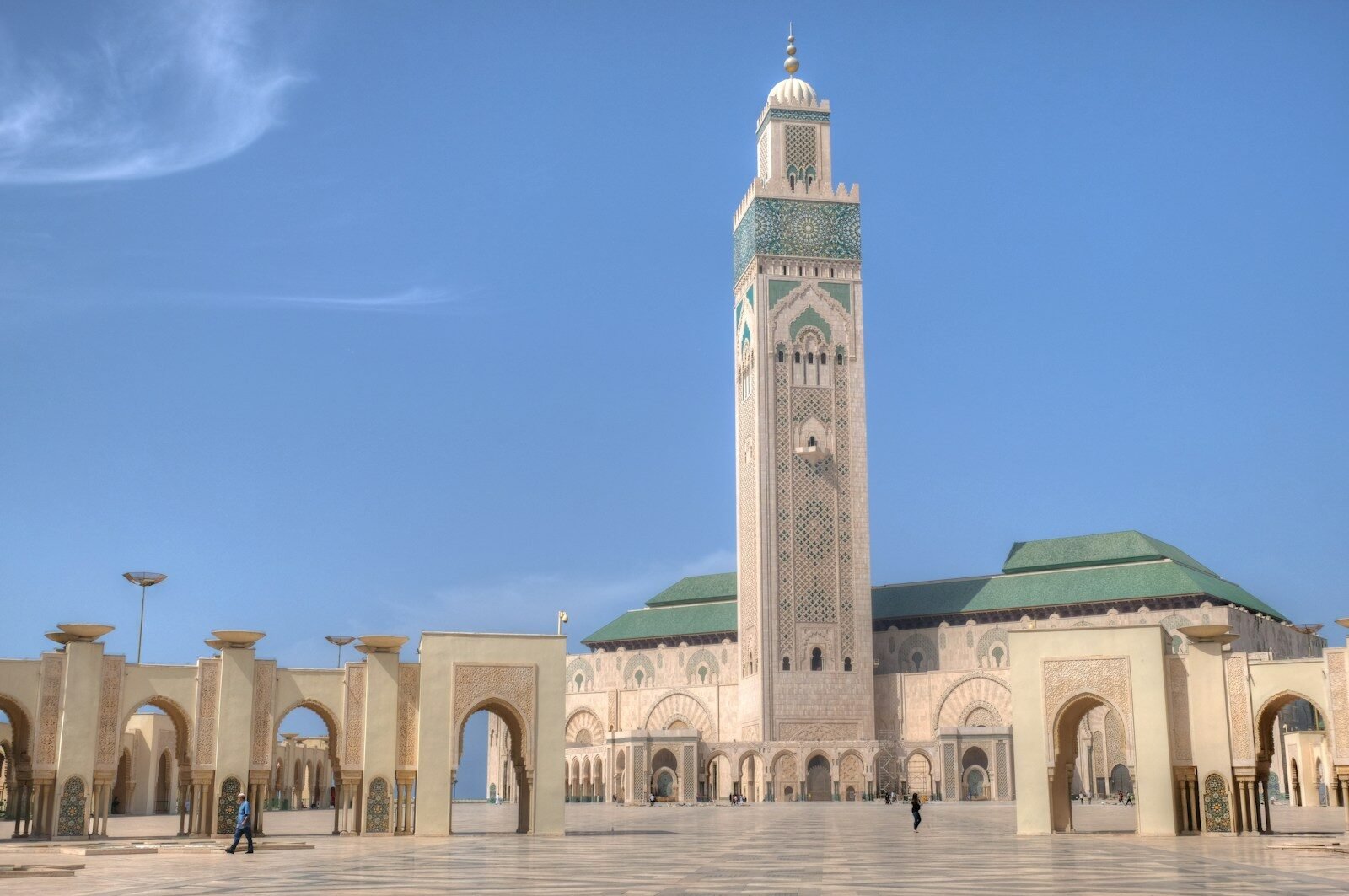
Most mosques in Morocco are not open to non Muslim visitors, although there are exceptions, including guided visits to Hassan II Mosque in Casablanca.
Do not assume that every mosque requires women to cover their hair. Check the rules for the particular site before visiting.
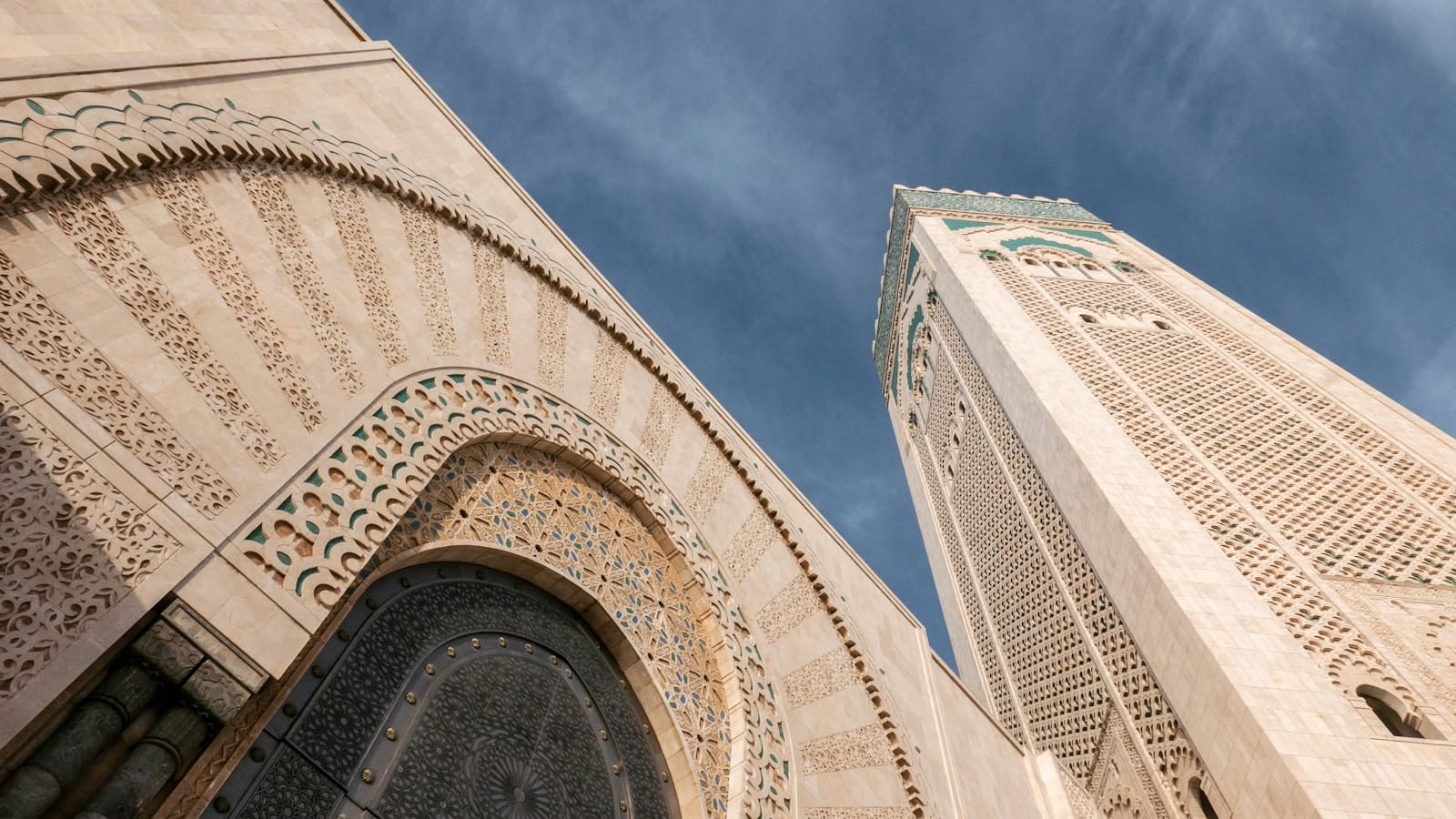
For example, the official Hassan II Mosque visitor information requires clothing that covers the shoulders and torso and extends below the knees. Its published rules do not explicitly list hair covering as a requirement.
A scarf is still worth carrying if you plan to visit religious places where a head covering is requested.
Visiting Shrines and Mausoleums
Requirements vary between religious sites. Some places may have stricter expectations about clothing or visitor access than others.
Before entering, look for posted instructions or ask a member of staff. Covering your shoulders and dressing modestly is a sensible starting point, but do not assume that a scarf alone makes every site accessible to visitors.
Checking Site Specific Rules Before Visiting
If a particular site is important to your itinerary, check its official visitor information in advance. This avoids confusion and helps you decide what clothing to bring.
Remember that a headscarf is not a general requirement for sightseeing throughout Morocco.
Can You Walk Around Morocco Without a Headscarf?
Yes. You can explore Moroccan cities, walk through public streets, visit shops and eat at restaurants without covering your hair.
In everyday settings, modest clothing is a practical choice, particularly if you prefer not to draw attention to your outfit. This does not mean that every woman must dress identically or that uncovered hair is disrespectful.
If you are comfortable wearing trousers, jeans, a casual dress or a short sleeved top, you do not need to add a headscarf simply because you are in Morocco.
Headscarf Advice for Marrakech, Casablanca and Rabat
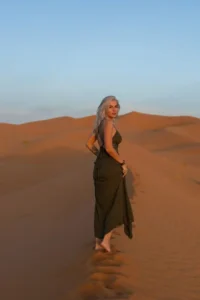
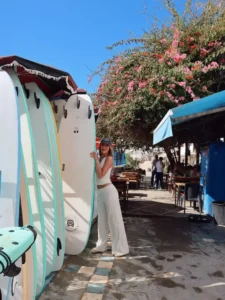
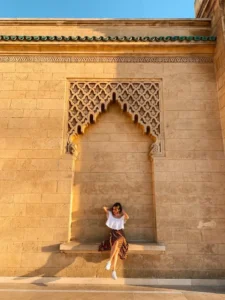
In major cities such as Marrakech, Casablanca and Rabat, you will encounter a wide range of clothing styles. Local residents and visitors may wear traditional outfits, contemporary clothing or a combination of both.
You can explore these cities without covering your hair. A scarf can be useful as an optional accessory, but you do not need to wear it throughout the day.
Keep in mind that cities are not uniform. A modern shopping district, a busy medina and a religious site can have different social expectations. Adapt to the setting rather than assuming that one clothing rule applies everywhere.
Should You Wear a Headscarf in Rural Morocco?
A headscarf is not automatically required in rural Morocco. However, communities outside major tourist centres can be more conservative, so dressing a little more modestly is a considerate approach.
For example, you might choose a top that covers your shoulders and a comfortable pair of trousers or a longer skirt when visiting a small village in the Atlas Mountains.
You do not have to cover your hair to demonstrate respect. A scarf is simply an option if you feel more comfortable wearing one or want an extra layer.
Local customs vary, so avoid assuming that every village follows the same expectations.
What Should You Know Before Packing a Scarf?
You do not need to pack several headscarves for a trip to Morocco. One lightweight, comfortable scarf is usually enough if you want a versatile option.
A scarf can serve several purposes:
Covering your shoulders when you want an extra layer.
Protecting your neck and head from strong sunlight.
Providing warmth during a cool or windy evening.
Protecting your face from dust during desert excursions.
Covering your hair if a particular religious site requests it.
Choose a fabric that feels comfortable in the season you are travelling. Cotton and other lightweight fabrics can work well in warm weather, while a warmer wrap may be useful in cooler months.
How to Wear a Headscarf in Morocco
Simple Ways to Cover Your Hair When Appropriate
If a site requests a head covering, place the scarf over your head and arrange it comfortably around your hair. You can bring the ends over your shoulders or secure them loosely so the fabric stays in place.
The precise style is not important for ordinary tourist visits. Follow any instructions provided by the site and choose an arrangement that feels comfortable.
Choosing a Comfortable Scarf for Travel
A lightweight rectangular scarf is easy to fold into a day bag and can be reused as a shawl or sun covering.
Avoid buying a special scarf solely because you believe all women must wear one in Morocco. It is an optional travel item, not an everyday obligation for female tourists.
Do Teenage Girls Need to Wear a Headscarf?
No. Teenage girls visiting Morocco do not generally need to wear a headscarf in public.
Parents can follow the same basic guidance they would use for themselves: choose comfortable clothing, be considerate of local customs and check visitor requirements before entering religious sites.
There is no need to make teenage daughters wear a hijab simply because the family is visiting a Muslim majority country. If a daughter chooses to wear a scarf, that is a personal clothing choice.
For families travelling with children of different ages, comfort and suitability for the day’s activities matter more than following a single dress style.
Is a Headscarf Needed in the Sahara Desert?
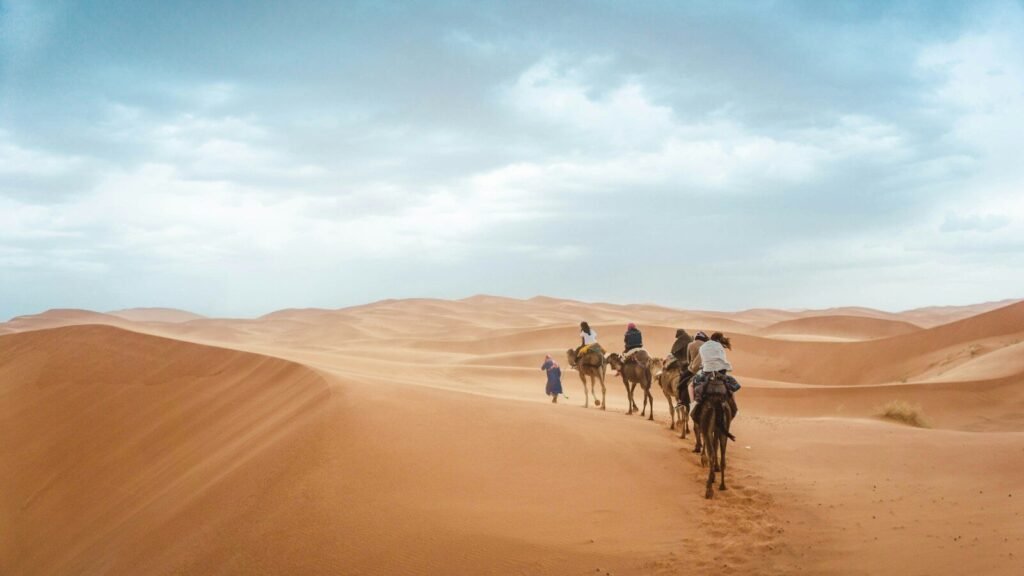
No, a headscarf is not required simply because you are visiting the Sahara. However, it can be particularly useful in desert conditions.
Wind can blow sand and dust around, while direct sunlight can make long outdoor excursions uncomfortable. A scarf can help protect your head, neck and face when conditions call for it.
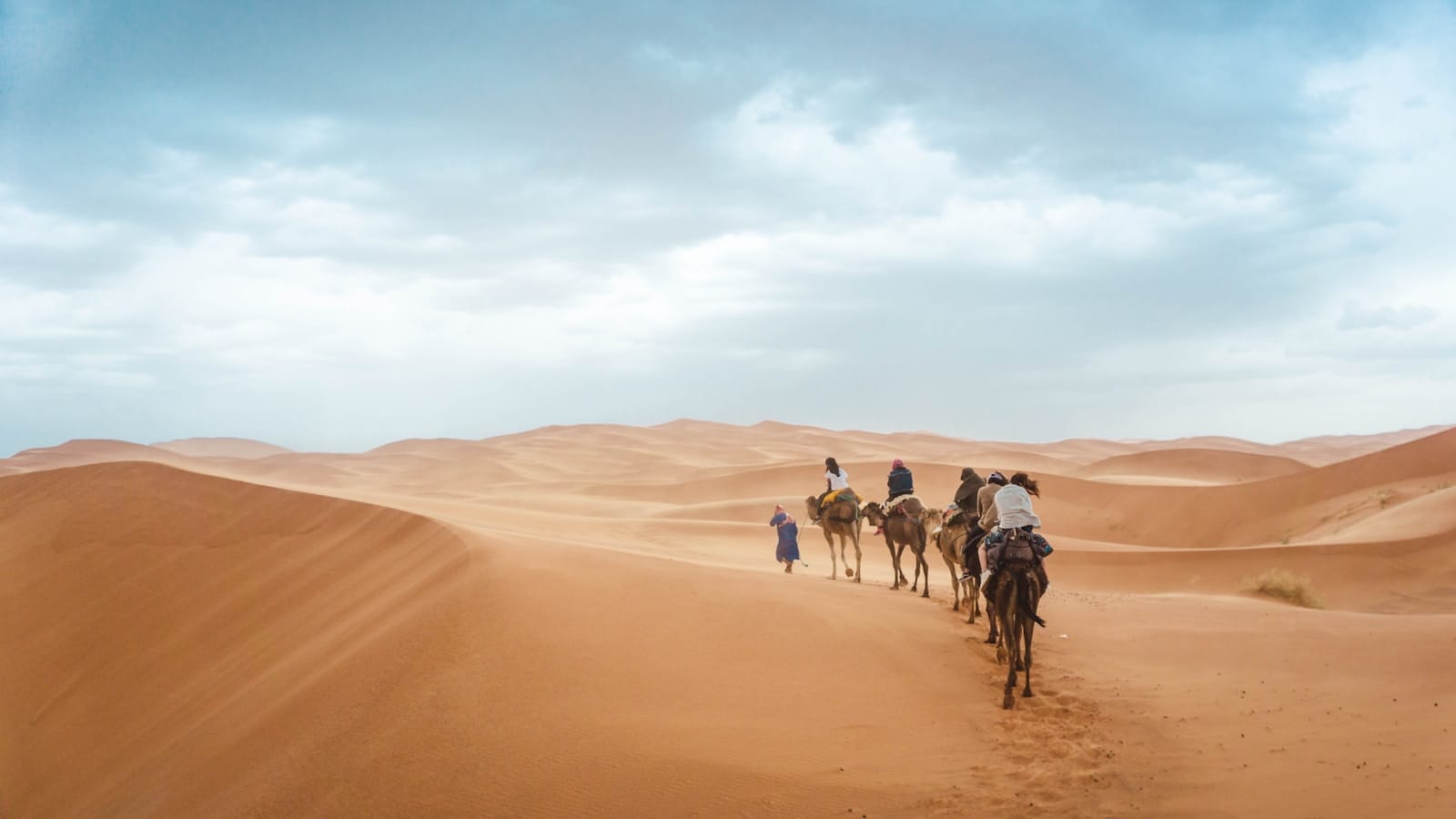
If you are taking a camel ride or spending time among the dunes near Merzouga, consider bringing a lightweight scarf alongside sunglasses, sunscreen and suitable clothing. A traditional desert wrap is one option, but an ordinary scarf can also be useful.
Should You Wear a Headscarf in the Atlas Mountains?
A headscarf is not generally required when visiting the Atlas Mountains. The more important consideration is the weather.
Mountain temperatures can change with altitude, season and time of day. A scarf or warm neck covering can provide extra comfort when it is windy or cold.
When visiting rural villages, modest clothing is a considerate choice. You can cover your shoulders with a shirt or light jacket without covering your hair.
Headscarf Etiquette During Ramadan and Religious Holidays
During Ramadan and religious holidays, visitors should be mindful that these periods have particular significance for many Moroccans.
You do not generally need to start wearing a headscarf simply because it is Ramadan. However, modest clothing and respectful behaviour are sensible, especially when visiting religious areas or attending a cultural event.
If you are visiting a mosque, shrine or organised religious gathering, check the specific expectations beforehand. The rules of the location matter more than assuming that every woman must cover her hair throughout the country during a religious holiday.
For wider guidance, read the UK government’s advice on local laws and customs in Morocco.
Common Headscarf Mistakes Tourists Can Avoid
One common misconception is that women must put on a headscarf as soon as they arrive at a Moroccan airport. This is not the general rule.
Other mistakes include assuming that every mosque is open to non Muslim visitors, believing that all religious sites have identical dress requirements, or thinking that a woman with uncovered hair is automatically disrespectful.
You also do not need to buy a particular style of scarf before travelling. If you decide that you want one, you can bring one from home or look for one locally.
The simplest approach is to distinguish everyday public life from specific religious settings and follow the guidance provided at each location.
What Can Women Wear If They Prefer Not to Cover Their Hair?
Women who prefer not to cover their hair have plenty of clothing options for sightseeing in Morocco.
Comfortable trousers, jeans, skirts, dresses and tops are all options. In traditional neighbourhoods and rural communities, you may feel more comfortable choosing clothing that covers your shoulders and knees, but that does not mean you must cover your hair.
Breathable fabrics are helpful in warm weather, while a light jacket or extra layer can be useful in the evening or at higher elevations.
For a broader clothing guide, read What to Wear in Morocco as a Woman.
How to Prepare for a Comfortable Family Trip
Families do not need a separate headscarf rule for every destination on their itinerary. A practical approach is to pack comfortable everyday clothing and carry one scarf if someone wants an extra layer or expects to visit a religious site.
Parents can explain to children and teenagers that clothing customs vary between places. The goal is not to make everyone dress the same way, but to help the family understand when local expectations may differ.
If your itinerary includes city sightseeing, rural villages, mountain excursions and desert activities, think about weather protection as well as cultural etiquette. A flexible wardrobe makes it easier to adjust without overpacking.
Morocco Family Vacation helps families plan private trips around their interests, pace and practical needs. If you would like help organising your family’s route, you can contact Morocco Family Vacation to discuss a customised itinerary.
Conclusion
Female tourists do not generally need to wear a headscarf in Morocco. You can walk around cities, explore markets and enjoy everyday sightseeing with your hair uncovered.
A scarf is useful to carry, especially for sun and wind protection or when visiting a religious site that requests a head covering. Dressing a little more modestly in rural communities is also a considerate choice, but it does not mean that women must wear a hijab.
For families, the same general advice applies to teenage daughters. Check the rules of individual religious sites, pack clothing suited to the weather and enjoy your trip without worrying that a headscarf is compulsory everywhere.
Morocco Family Vacation helps families plan private trips tailored to their interests, pace and practical needs. If you would like help planning a family trip across Morocco, you can explore our Morocco family tours and find an itinerary that suits your family.
Frequently Asked Questions
Our dedicated team is here to answer your Morocco Family Travel questions and ensure a smooth, memorable journey through Morocco.
Do female tourists need to wear a hijab in Morocco?
No. Female tourists do not generally need to wear a hijab or cover their hair in public in Morocco. A scarf can be useful for practical reasons or when a particular religious site requests a head covering.
Can women show their hair in Morocco?
Yes. Women can walk around public streets, shops, restaurants and tourist attractions with their hair uncovered. Wearing a headscarf is a personal choice for tourists.
Do women need a headscarf to visit Hassan II Mosque?
The mosque’s published visitor rules require clothing that covers the shoulders and torso and extends below the knees. The published rules do not explicitly list hair covering as a requirement. Check the mosque’s official visitor information before your visit.
Should women wear a headscarf in rural Morocco?
A headscarf is not generally required, but dressing modestly can be a considerate choice in more conservative communities. Covering your shoulders and choosing comfortable trousers or a longer skirt are practical options.
How should you wear a headscarf in Morocco?
If you want or need to cover your hair for a particular visit, place a lightweight scarf over your head and arrange it comfortably around your hair and shoulders. Follow the specific site’s instructions and choose a style that stays in place.
Table of Contents
-
Private Family Tours
-
Custom Itineraries
-
Sahara Desert Tours
-
Chefchaouen & Northern Morocco Tours
-
Luxury Desert Camping
-
Multi-Day Tours (2–16 Days)
-
Atlas Mountains Trips
-
Cooking Classes & Market Visits
-
Photography & Heritage Tours
-
Airport Transfers & Private Transport
-
Custom Birdwatching Tour in Morocco
-
24/7 Tour Support & booking Flexibility
At Morocco Family Vacation, we create custom Morocco tour packages designed around your interests and travel style. As a dedicated and independent travel agency, we specialize in private Morocco tours offering memorable desert adventures, cultural experiences, and family friendly itineraries while delivering attentive, personalized service from start to finish.