Language in Morocco: What Languages Do People Speak?
What Language Is Mostly Spoken in Morocco?
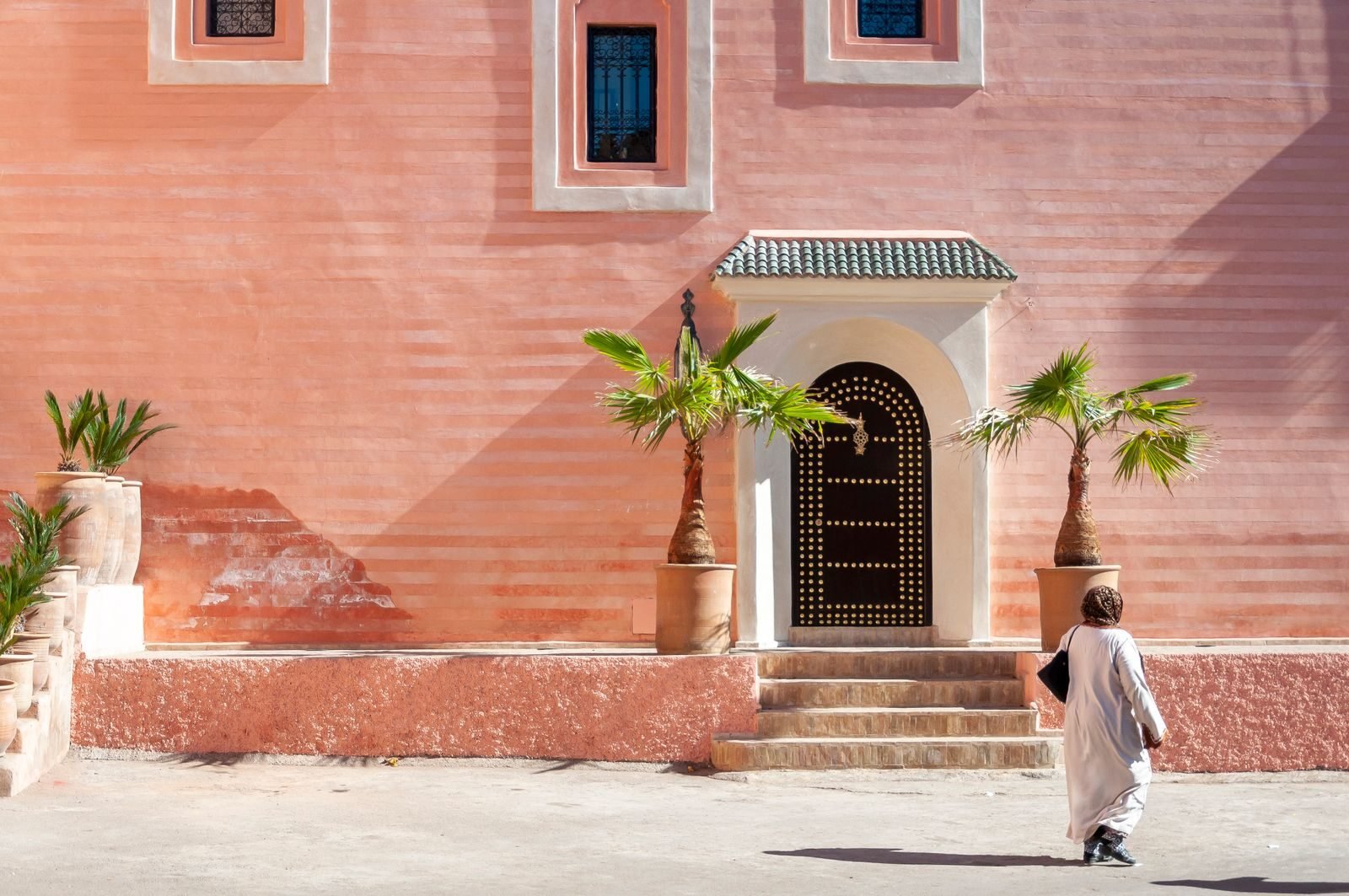
Moroccan Darija, often called Moroccan Arabic, is the most widely used language in daily conversation. People use it with family, friends, shopkeepers and colleagues.
According to Morocco’s 2024 General Population and Housing Census, 91.9% of the population uses Darija. The same census reports that 24.8% use Amazigh language varieties. These figures can overlap because a person may use both Darija and Amazigh.
You can consult the official 2024 census results platform and the High Commission for Planning’s key census figures for the published data.
Visitors are most likely to hear Darija in everyday conversations in cities such as Marrakech, Casablanca, Rabat and Fes. However, the language used at home can vary according to a person’s family background and region.
Quick Takeaways
Morocco has two official languages: Arabic and Amazigh.
Darija is the most widely used language in everyday conversation.
Amazigh includes different varieties, particularly Tachelhit, Central Atlas Tamazight and Tarifit.
French is widely used in professional settings and education, especially in urban areas.
Spanish is more common in some northern communities, while English is increasingly visible among younger people and in tourism.
Language use varies between cities, rural communities and regions. Not everyone speaks French or English.
Families visiting Morocco can usually manage in major tourist areas without speaking Arabic, although learning basic Darija is helpful.
What Is Moroccan Darija?
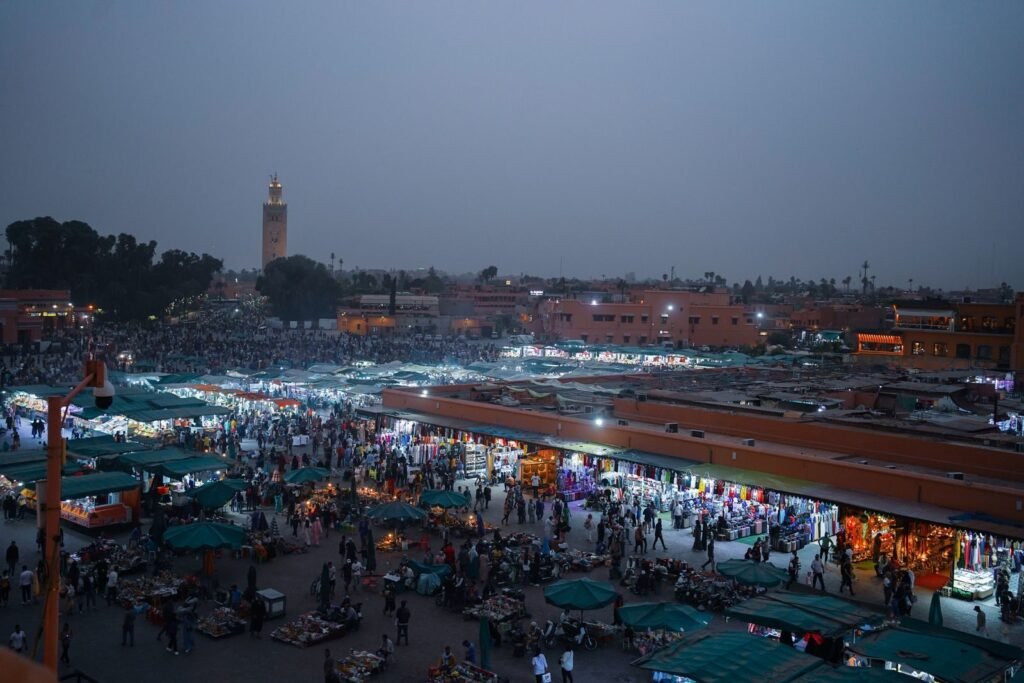
Darija is the everyday spoken variety of Arabic used across much of Morocco. It has its own vocabulary, expressions and pronunciation, influenced by the country’s history and contact with other languages, including Amazigh, French and Spanish.
Darija is different from Modern Standard Arabic. Although they share Arabic roots, the two are not used in exactly the same way. A person who has studied formal Arabic may recognise some words in Darija but still find fast, informal conversation difficult to follow.
Darija is mainly a spoken language. People also write it informally in messages and on social media, using Arabic script or Latin letters and numbers. There is no single spelling system used consistently by everyone.
For visitors, learning a few everyday expressions is more useful than trying to master the language before travelling.
Useful Darija phrases for visitors
| English | Darija |
|---|---|
| Hello | Salam |
| Thank you | Shukran |
| Please, if you would | Afak |
| Yes | Ah |
| No | La |
| How much? | Bshhal? |
| Excuse me | Smah liya |
| Goodbye | Bslama |
Pronunciation and spelling can vary. A friendly greeting or thank you is usually enough to begin a positive interaction.
Is Amazigh an Official Language in Morocco?
Yes. Amazigh is an official language of Morocco alongside Arabic. This status is recognised in Article 5 of the 2011 Constitution. The same article also refers to the protection of Hassani and other cultural and linguistic expressions used in Morocco.
You can read Article 5 in the text published by Morocco’s House of Representatives.
Amazigh, also written Tamazight or referred to as Berber in some English-language sources, is not one uniform spoken variety. Morocco has several Amazigh varieties, each with its own vocabulary and pronunciation.
The Royal Institute of Amazigh Culture, known as IRCAM, works on the promotion and study of Amazigh language and culture. Its official website and dictionary of Moroccan Amazigh varieties are useful resources for learning more.
Amazigh is part of daily life for many Moroccan families. Its visibility also extends to cultural activities, education and public life, although how frequently people use it varies by place and individual.
What Is the Difference Between Darija and Amazigh?
Darija and Amazigh are different languages, not two names for the same language.
Darija is a spoken variety of Arabic. Amazigh belongs to a separate language family and has its own vocabulary, grammar and linguistic history. A person who speaks Darija does not automatically understand Amazigh, and knowing one does not guarantee fluency in the other.
Amazigh can be written in Tifinagh, a script associated with the language. Depending on the context, other scripts may also appear in publications or informal writing.
The main practical difference for travellers is that Darija is widely used in everyday conversation throughout the country, while the Amazigh variety people speak can depend more strongly on their region and family background.
Where Is Amazigh Spoken in Morocco?
Amazigh is spoken in urban and rural communities across Morocco. The 2024 census identifies three major varieties in its published language figures: Tachelhit, Central Atlas Tamazight and Tarifit.
Tachelhit
Tachelhit is strongly associated with the Souss region and parts of southwestern Morocco, including areas around Agadir and the Anti-Atlas. Speakers also live elsewhere in the country, including in major cities.
Central Atlas Tamazight
Central Atlas Tamazight is associated with parts of the Middle Atlas and central Morocco. It is used in several communities across the region, although language use does not follow strict administrative boundaries.
Tarifit
Tarifit is associated with the Rif region in northern Morocco, including communities around parts of the northeastern Mediterranean coast.
These are broad geographical associations rather than fixed borders. Migration, family connections and city life mean that speakers of different varieties may live far from the areas most closely associated with them.
Is French Spoken in Morocco?
Yes. French is used in a range of professional, educational and commercial settings in Morocco. Depending on the institution and context, you may encounter it in business, some private schools, parts of higher education, administration, healthcare and urban services.
French is not one of Morocco’s two official languages, but it remains important in many professional environments. Its use varies by region, age, education and occupation.
The 2024 census reported that 57.7% of the literate population aged 10 and over could read and write French. This is a literacy measure, not a figure showing that the same percentage speaks French fluently.
French may be particularly useful when dealing with some businesses or services in larger cities. However, visitors should not assume that every Moroccan speaks it, or that it will always be the easiest language to use.
Is French Becoming More Popular Than Darija or Amazigh?
There is no sound basis for saying that French is replacing Darija in everyday conversation. Darija remains the most widely used language according to the 2024 census.
It is also important not to confuse literacy with everyday language use. Census figures about reading and writing French do not show how often people speak it at home, with friends or at work.
The same caution applies to Amazigh. The 2024 census provides useful information about language use, but one set of figures alone does not establish a long-term trend in whether a language is growing or declining. To assess change, researchers need comparable data across different census years and consistent definitions.
Morocco’s language landscape is better understood as multilingual: Darija is widely used in everyday communication, Amazigh remains central to many communities and families, and French continues to be used in particular educational and professional settings.
Is English Spoken in Morocco?
English is used by some Moroccans, including people working in tourism, hotels, restaurants and travel services. You may find English speakers in popular destinations such as Marrakech, Fes, Casablanca, Rabat, Tangier and Chefchaouen.
However, English ability varies. It may be easier to find English-speaking staff in visitor-oriented businesses than in a small shop, local market or rural community.
The 2024 census reported that 20.5% of the literate population aged 10 and over could read and write English. As with the French figure, this is a literacy statistic, not a direct measure of spoken fluency.
For families, it is sensible to prepare a translation app and save important information in writing. This can help when asking for directions, explaining dietary needs or communicating with someone who does not speak your preferred language.
Where Is Spanish Spoken in Morocco?
Spanish has a presence in parts of northern Morocco, reflecting historical and geographical connections with Spain. You may encounter Spanish speakers in areas around Tangier, Tetouan and other northern communities, as well as among people who have studied or worked with Spanish-speaking countries.
That does not mean Spanish is spoken by everyone in the north. Language ability varies between individuals, and Darija and Amazigh are also used in the region.
Spanish may be useful for some visitors travelling in northern Morocco, but it should not be treated as a substitute for Darija everywhere in the country.
What Languages Are Spoken in Morocco's Major Cities?
The language you hear can change between neighbourhoods, workplaces and family settings. The following is a practical overview, not a strict map of who speaks what.
Marrakech
Darija is widely used in everyday life. French and English may be understood by staff in visitor-oriented businesses, hotels and restaurants, but ability varies.
If you are planning a family visit, our guide to the best places to visit in Morocco with family can help you compare destinations and experiences.
Casablanca
Darija is widely used, and French is also common in many professional and commercial settings. As Morocco’s largest city and an important business centre, Casablanca brings together people from different regions and language backgrounds.
Rabat
Darija is common in everyday conversation. French is used in a range of professional and institutional settings, while Arabic is important in formal and public life.
Fes
Darija is widely used, with French also encountered in some services and professional environments. Amazigh speakers may also live and work in the city, as in other major Moroccan urban areas.
Tangier and northern Morocco
Darija is widely used, and Spanish may be more familiar to some people in northern areas than in other parts of the country. French and English are also used by some residents and tourism workers.
The Atlas Mountains and rural communities
Darija and Amazigh use varies from one community to another. In some villages, an Amazigh variety may be the main language spoken at home and in local interactions. Do not assume that every rural resident speaks French or English.
For help choosing destinations and planning the route, see our guides to Morocco with kids and two weeks in Morocco with family.
What Languages Are Used in Schools, Business and Public Life?
Different settings call for different languages, and the same person may use several languages during the day.
Everyday conversation: Darija is widely used, while Amazigh is the main language for many speakers in Amazigh-speaking communities.
Formal government and public communication: Arabic has an official role, and Amazigh also has official status under the Constitution.
Education: The language used depends on the school, subject and level. Arabic, Amazigh, French and other languages may appear in different parts of the education system.
Business: French is used in many professional environments, while Arabic and Darija are also important. English may be used in international or tourism-related work.
Tourism: The language depends on the destination, business and staff member. English, French, Spanish and other languages may be available, but none should be assumed in every interaction.
Morocco’s language policy and the implementation of Amazigh in public life are addressed through government initiatives. The Ministry of Digital Transition and Administrative Reform’s reference framework includes information on official recognition and measures to support Amazigh.
What Do Morocco's Language Statistics Tell Us?
The 2024 census offers a useful snapshot of language use and literacy. Its main national figures include:
Darija: used by 91.9% of the population.
Amazigh varieties: used by 24.8% of the population.
French literacy: 57.7% of the literate population aged 10 and over could read and write French.
English literacy: 20.5% of the literate population aged 10 and over could read and write English.
Hassani: used by 0.8% of the population, with higher proportions in southern provinces.
These numbers describe different measures. Darija and Amazigh figures refer to language use, while the French and English figures refer to reading and writing among the literate population aged 10 and over. They should not be compared as if they measured exactly the same thing.
For more detail, the official census platform provides tables and charts on local languages used, among other topics.
What Is Hassani, and Where Is It Spoken?
Hassani is associated with Morocco’s Saharan and southern cultural and linguistic context. Article 5 of the Constitution specifically refers to the preservation of Hassani as part of Morocco’s cultural identity.
The 2024 census reports that Hassani is used by 0.8% of the population nationally, with a greater presence in the southern provinces.
For most visitors on a first trip through cities such as Marrakech, Fes or Casablanca, Darija is more likely to be the everyday language they encounter. In southern areas, however, the language landscape can be different, reflecting local communities and cultural traditions.
Do You Need to Learn Arabic Before Visiting Morocco?
No. You can visit Morocco without speaking Arabic, especially if you stay in established tourist areas or arrange transport and accommodation in advance. But you should not expect everyone to speak English or French.
A few simple expressions can help you greet people politely and make basic interactions easier. A translation app can be useful for more complicated questions.
Families travelling with children may also benefit from keeping hotel details, addresses and important requests saved on a phone. If you are travelling between several cities, it helps to plan transport and accommodation clearly rather than relying on spontaneous conversations at every stop.
If you are deciding how long to spend in the country, our guides to the best time to visit Morocco with kids and the best time of year to visit Morocco can help with broader planning.
Practical Language Tips for Families Visiting Morocco
A little preparation can make communication easier, particularly when travelling with children or grandparents.
Learn a few Darija greetings. A simple hello or thank you is a useful start.
Do not assume everyone speaks French. It can be useful, but ability varies.
Use a translation app when needed. Download any language resources you may need before travelling if you expect limited internet access.
Save important addresses. Keep accommodation names and addresses available in text so you can show them when asking for directions.
Speak slowly and use short sentences. This can help when communicating across language differences.
Ask before assuming. Politely ask whether someone speaks English, French or another language you know.
Give children time to adjust. Hearing unfamiliar languages is part of travel. Encourage children to listen, try a greeting if they want to, and ask questions respectfully.
For families considering a private itinerary, Morocco Family Tours explains the type of travel planning available. You can also explore ideas for a family vacation in Morocco or a 14-day Morocco family holiday.
What Should Families Know About Language in Morocco?
For families travelling with children, language usually becomes a practical consideration when ordering food, asking for directions, arranging transportation or communicating with accommodation staff.
In major tourist destinations, English or French may be enough for many routine interactions. However, communication can be less predictable in smaller towns and rural areas.
Parents can help children learn a few polite expressions before the trip. It is also useful to keep accommodation details and destination names written down so they can be shown when verbal communication is difficult.
Grandparents and travelers who prefer a slower pace may appreciate having important arrangements confirmed in advance, especially when moving between destinations.
Language should not be a reason to avoid Morocco, but it is sensible to plan for occasional communication difficulties.
Common Misunderstandings About Moroccan Languages
Several assumptions can make the country’s linguistic landscape seem simpler than it really is.
Myth: Everyone in Morocco speaks French.
French is useful in many settings, but ability varies by person and location.
Myth: Darija and Standard Arabic are identical.
They are related, but differ in vocabulary, pronunciation and grammar. Everyday Darija can be difficult for visitors who only know formal Arabic.
Myth: Amazigh is spoken only in remote villages.
Amazigh speakers also live in cities, and the language remains important in contemporary Moroccan society.
Myth: English is now spoken everywhere.
English is growing in visibility, especially in tourism and among younger people, but visitors should not expect everyone to speak it.
Myth: Every region has only one language.
People often use more than one language, and the language used at home may differ from the language used at work or school.
Understanding these distinctions helps visitors approach conversations with realistic expectations and greater cultural awareness.
How to Plan a Morocco Trip Without Speaking the Local Languages
Start by considering the places you want to visit and the kind of support you prefer during your trip.
In major cities and established tourist areas, it is often possible to arrange accommodation, transport and activities in English or French. Outside those areas, you may need more preparation.
Save your accommodation addresses, keep booking confirmations accessible and learn a few basic Darija phrases. When travelling with children, allow extra time for communication and avoid making the itinerary unnecessarily rushed.
If you are visiting several regions, remember that language use can change along the route. The experience in a large city may differ from that in a mountain village or a smaller southern town.
Families who prefer help coordinating transportation, accommodation and activities can consider a private itinerary that takes their needs into account.
Conclusion: Understanding the Language in Morocco
The language in Morocco depends on the place and context, but Darija is the most widely used language in everyday conversation. Amazigh is also an official language and is spoken in different varieties across the country. French remains useful in many professional and commercial settings, while Spanish is encountered by some people in the north and English is used by some people in tourism and international settings.
The most important point for visitors is not to assume that one language works everywhere. A few Darija expressions, patience and a translation app can make communication easier, while planning accommodation and transport ahead of time can reduce unnecessary stress.
Morocco Family Vacation helps families plan private trips tailored to their interests, pace and practical needs. If you would like help planning a family trip across Morocco, you can explore our Morocco family tours and find an itinerary that suits your family.
Frequently Asked Questions
Our dedicated team is here to answer your Morocco Family Travel questions and ensure a smooth, memorable journey through Morocco.
What language is mostly spoken in Morocco?
Darija, or Moroccan Arabic, is the most widely used language in everyday conversation. The 2024 census reported that 91.9% of the population used Darija.
Is Amazigh an official language in Morocco?
Yes. Morocco’s 2011 Constitution recognizes Amazigh alongside Arabic as an official language.
Can tourists speak English in Morocco?
English is useful in many hotels, tourist businesses and popular destinations, but it is not spoken by everyone. Basic Darija phrases can help when English is not understood.
Is French more widely spoken than English in Morocco?
French remains more established in many professional and educational settings. The 2024 census reported higher literacy figures for French than for English, but literacy figures do not directly measure conversational ability.
Are Darija and Amazigh the same language?
No. Darija is Moroccan Arabic, while Amazigh refers to a different linguistic tradition that includes varieties such as Tachelhit, Central Atlas Tamazight and Tarifit.
Table of Contents
-
Private Family Tours
-
Custom Itineraries
-
Sahara Desert Tours
-
Chefchaouen & Northern Morocco Tours
-
Luxury Desert Camping
-
Multi-Day Tours (2–16 Days)
-
Atlas Mountains Trips
-
Cooking Classes & Market Visits
-
Photography & Heritage Tours
-
Airport Transfers & Private Transport
-
Custom Birdwatching Tour in Morocco
-
24/7 Tour Support & booking Flexibility
At Morocco Family Vacation, we create custom Morocco tour packages designed around your interests and travel style. As a dedicated and independent travel agency, we specialize in private Morocco tours offering memorable desert adventures, cultural experiences, and family friendly itineraries while delivering attentive, personalized service from start to finish.