
Hiking in the Atlas Mountains Morocco
Trails, Tea, and 4,000-Metre Peaks: A Real Look at the Atlas
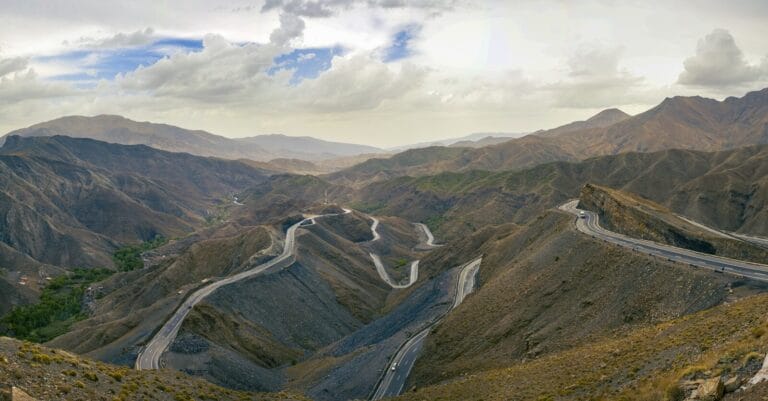
Most people picture Morocco as souks, spice stalls, and desert dunes. Then they look up. Behind Marrakech rises a wall of red and white peaks that climbs higher than anything else in North Africa, and once you spend a morning on those trails, the rest of the country starts to feel like a warm-up. Hiking in the Atlas Mountains Morocco is one of those trips that quietly rearranges your idea of what a family adventure can be. You can summit a 4,167-metre peak. You can also walk thirty minutes from a guesthouse to a goat farm where a grandmother pours mint tea into a glass from two feet above the rim.
This guide covers what the brochures skip: which routes work for which ages, what altitude really feels like at 3,200 metres, how much a guide actually costs, where to sleep, and why the best week of hiking in the Atlas Mountains Morocco might not involve Toubkal at all. Pour the tea. Lace the boots.
- Explore Morocco with your kids stress-free! Private transport, kid-friendly hotels, and safe meals included. Plan Your Family Tour
- Experience the Atlas Mountains and Sahara Desert with hands-on fun for kids and comfort for parents. Customize Your Adventure
- Enjoy Morocco’s coasts and cities at a calm pace. Perfect for families with young children. Book Your Relaxed Tour
Why Hiking in the Atlas Mountains Morocco Hits Different
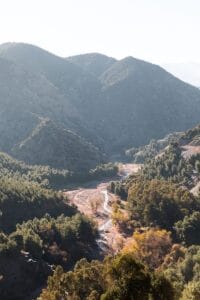
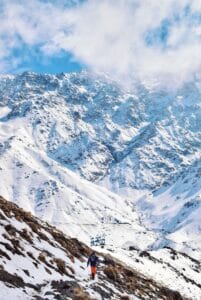
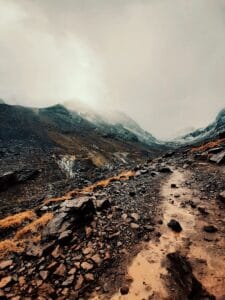
Plenty of mountain ranges have peaks. Fewer have a culture that lives on them. The Atlas have both, and that is the reason hiking in the Atlas Mountains Morocco stays in your head for years afterward. You walk through walnut groves planted by someone’s great-grandfather. A boy on a donkey passes you and yells salaam. The trail you are on is not a trail at all, it is a mule path that has carried flour and salt and wedding parties between villages for centuries.
The other thing that sets these mountains apart is the access. From New York, you can land in Marrakech, sleep in a riad, eat a tagine, and be on a trailhead by lunch the next day. Few high mountain ranges in the world give you that kind of quick swing from city to summit. The hiking in the high atlas mountains sits roughly an hour and a half from Marrakech by car, with the village of Imlil acting as the basecamp for almost every serious route in the region.
What surprises first-timers is the variety. You can pick a flat valley walk past saffron fields one morning and a brutal high pass at 2,900 metres the next. The terrain changes faster than the language does, and that is saying something in a country with three official tongues plus several Tamazight dialects.
One unique angle that competing guides tend to miss: the Atlas are not one mountain range. They are three. Knowing which range fits your group is the single most useful piece of planning you can do.
The Three Atlas Ranges, Explained Without the Brochure Speak
The Atlas chain runs roughly 2,500 kilometres across Morocco, Algeria, and Tunisia. Inside Morocco alone, the range splits into three distinct sub-ranges, and they hike very differently.
The High Atlas
This is the one with the snow caps and the postcards. It runs east from the Atlantic past Marrakech and includes Toubkal (4,167m), Ouanoukrim (4,089m), and the M’Goun massif (4,071m). Most hiking adventure in the atlas mountains happens here. Trails range from one-hour family loops out of Imlil to multi-day traverses across high passes where you sleep in stone refuges. The High Atlas is where you go if you want altitude, dramatic ridge views, and proper alpine conditions in winter.
The Middle Atlas
Cooler, greener, and far less hiked. The Middle Atlas sits north of the High Atlas around Ifrane and Azrou, with cedar forests, freshwater lakes, and Barbary macaques living wild in the trees. Peaks top out around 3,300 metres. If you want pine-forest hikes with kids and zero altitude worries, this is the smarter choice than crowding onto the Toubkal trail.
The Anti-Atlas
South of the High Atlas, the landscape goes rust-red and lunar. Hiking in the anti atlas mountains is a different sport. The peaks are lower (Jebel Sirwa at 3,304m is the high point), the air is drier, and you can hike here in winter when the High Atlas is buried under snow. Jebel Saghro and the Tafraoute region offer some of the quietest trails in Morocco, with rock formations that look painted on.
Best Routes for Hiking in the Atlas Mountains Morocco
There are dozens of good routes. These are the ones I would actually send a friend on.
Imlil to Aroumd: The Two-Hour Sampler
If you have a single day and a mixed-ability group, this is the route. You start in Imlil at around 1,740 metres, follow a stream up through walnut and cherry orchards, and reach the village of Aroumd in roughly an hour and a half. Aroumd sits on a giant alluvial fan of boulders, with stone houses stacked like a Tetris board against the slope. Kids can do this. Grandparents can do this. You eat tagine on a rooftop, walk back down. Done.
Azzaden Valley Three-Day Loop
For families with kids aged seven and up, the Azzaden Valley is the sweet spot. You walk four to five hours a day, with a mule carrying the bags and a spare mule for kids who hit the wall around mid-afternoon. You sleep in family-run gîtes (mountain guesthouses) that serve dinner by paraffin lamp. The pass at Tizi Mzik (around 2,500m) is the high point.
M'Goun Traverse: Six Days of Quiet
The hiking in the high atlas mountains morocco crowd mostly skips M’Goun, which is exactly why you should go. The traverse runs through the Aït Bouguemez Valley (locals call it the Happy Valley) over high passes around 2,900 metres and down into red-rock ravines. You will see almost no other hikers for days at a time.
The Toubkal Circuit
The full circuit takes five to seven days, summiting Toubkal on day four or five with proper acclimatisation built in. This is the route for fit teenagers and adults who want the peak without the rushed two-day version that beats up your body.
Climbing Mount Toubkal: The Real Talk
Toubkal is the tallest mountain in North Africa at 4,167 metres. Half the hiking in the atlas mountains content online treats it like Everest. The other half treats it like a stroll. The truth sits in between.
Can a Beginner Climb Mount Toubkal?
Yes, with conditions. Toubkal is a non-technical summit, meaning you do not need ropes, climbing experience, or specialist skills outside of winter. You do need to be comfortable walking six to eight hours a day on rough ground with a daypack, and you need to handle the altitude. Most operators run a two-day version (Imlil to refuge, refuge to summit and back). I would skip that. The five-day or six-day circuit gives your body time to adjust and turns the trip into an actual mountain experience instead of a forced march.
Is There Altitude Sickness at Mount Toubkal?
Yes, and people who say there is not are selling something. Anything above 2,500 metres carries a risk of acute mountain sickness, and Toubkal puts you above 4,100. The good news: serious altitude sickness on Toubkal is rare. Reputable operators like Call to Adventure note that experienced guides on this peak rarely see severe cases in decades of work. Mild symptoms (headache, poor sleep, low appetite) at the refuge are normal. Severe symptoms (loss of coordination, chest pain, repeated vomiting) mean you go down. Immediately. No debate.
How Hard Is It to Climb the Atlas Mountains?
It depends entirely on which mountain. A village walk near Imlil is easier than most state park trails. The Toubkal summit push is a 9-to-12-hour day with 1,000 metres of vertical gain at altitude. The Tichka Plateau Traverse sits somewhere in the middle. Match the route to your group, not the other way around.
Ready to Start Your Morocco Journey?
Let us help you design a smooth, affordable, and memorable journey crafted by local travel experts who know Morocco best.
Hiking in the Atlas Mountains with Family: What Actually Works
Here is where most guides go wishy-washy. Real numbers help.
Ages 4 to 6: Stick to day walks of two to three hours from Imlil, Ourika, or Ouirgane. Bring a mule. Use it. Aim for waterfalls, river crossings, and villages, not summits.
Ages 7 to 11: This is the golden window for hiking in the atlas mountains with family. Three-day valley treks with mule support work beautifully. The Azzaden Valley loop is purpose-built for this age group. Kids at this age remember Berber kids teaching them how to throw walnuts at trees twenty years later.
Teenagers: Now you can talk Toubkal. A fit fourteen-year-old can summit on a five-day itinerary with proper acclimatisation. Some operators set seven as a hard floor for any multi-day trek and ten or twelve for the Toubkal summit. Ask before booking.
The non-negotiables for any age: a private guide, a mule, and a flexible itinerary. Do not book a fixed group tour with kids. You need the option to bail at lunch on day two if a child is wrecked.
Plan Your Family Adventure with Morocco Family Vacation. Custom private Morocco tours designed for families, with child-friendly experiences, trusted local guides, and comfortable stays from the medinas to the Sahara. Get a tailored itinerary that matches your kids’ ages and your pace.
Berber Villages, Mint Tea, and the Cultural Side
The Atlas have been home to the Amazigh (Berber) people for thousands of years, long before any of the empires that have swept through Morocco. Walking through these villages is not a sideshow to the trekking. For many people, it becomes the main event.
A few things to know. Mint tea is not optional. If a household offers it, you sit, you accept, and you compliment it. Refusing tea is read as a refusal of hospitality, which is a serious thing in Berber culture.
Bring small gifts for villages you stay in: notebooks, pencils, fresh fruit from the souk, never sweets in bulk.
Modesty matters. Shorts above the knee on women read poorly outside Marrakech. Long pants or knee-length hiking skirts work better, both for cultural reasons and for the brutal sun above 2,500 metres. Men should keep shoulders covered in villages.
Food on the trail is better than it has any right to be. Cooks travelling with treks set up portable kitchens at lunch and produce salads, lentil soup, fresh bread, and tagine that puts most Marrakech restaurants to shame. If your kids are picky, tell the cook on day one. They will adapt.
Best Time to Visit Atlas mountains and What the Seasons Feel Like
Timing can make or break your hiking experience.
- Spring (mid-March through May): Best window for most hikes. Wildflowers everywhere, snowmelt feeding the rivers, daytime temperatures between 15°C and 22°C in the valleys. Toubkal still holds snow on the upper slopes into early May.
- Summer (June through August): Fine in the high mountains, brutal in the lower valleys. Marrakech can hit 45°C, but Imlil at 1,740m is twenty degrees cooler. Toubkal summit attempts are easiest in summer, no crampons needed. Crowds peak in July and August.
- Autumn (September through early November): My pick. Stable weather, gold light, harvests in progress in the villages, cool nights. The best season for hiking in the atlas mountains if you want photos that look like paintings.
- Winter (mid-November through February): The High Atlas turns serious. Toubkal becomes a winter mountaineering objective requiring crampons, ice axe, and mountain skills. The Anti-Atlas, however, is excellent in winter with daytime temperatures in the high teens.
Pro Tip:
For families, spring and autumn are the safest and most comfortable seasons.
Practical Travel Tips: Gear, Guides, and Getting There
Getting there: Fly into Marrakech Menara Airport. Imlil is about 65 km away, roughly 90 minutes by taxi or transfer. Expect 350 to 600 dirham for a private taxi, or take bus 35 from Sidi Mimoun in Marrakech to Tahnaout, then a shared taxi onward.
Guides: Outside the easiest valley walks, hire one. A licensed mountain guide costs roughly 700 to 1,200 dirham per day (around $70 to $120 USD). For Toubkal, a guide is effectively required by the national park, and on circuit treks you also pay for a cook and mule, typically bringing the day rate to around $150 to $200 for a small group.
Gear: Real hiking boots, broken in. Sun hat. Layered clothing including a fleece and a hard shell, even in summer. Two litres of water minimum. Sunscreen at SPF 50. Headlamp for the refuge. Cash in dirham for tips and gîtes (cards work almost nowhere on the trails).
Permits: Toubkal National Park has charged a small entrance fee in recent years, usually included in tour prices. Confirm with your operator.
Recommendation:
For hiking in the Atlas Mountains Morocco, especially with family, hiring a local guide adds significant value.
check this article for the all the atlas mountains map
Is Hiking in the Atlas Mountains Safe?
Yes, with caveats. Atlas trails are generally safe, particularly with a guide. Petty crime in mountain villages is almost unheard of, in contrast to the hustle of Marrakech.
The 2018 incident where two Scandinavian hikers were murdered on the Toubkal trail rocked the country. The Moroccan government responded by requiring registered guides on Toubkal and adding patrols. Trail safety today is high, but the message stands: do not hike Toubkal solo, and stick to your guide’s pace and route.
Real risks come from terrain, weather, and altitude, not people. Loose rock on summit day is more dangerous than anything else. Flash floods in valleys after a storm can turn a stream crossing lethal. Listen to your guide.
Are the Atlas Mountains safe? For a properly planned trip with a licensed guide, yes. For a solo hiker who wandered up Toubkal in trainers without telling anyone where they were going, no.
Plan Your Family Adventure with Morocco Family Vacation. Custom private Morocco tours designed for families, with child-friendly experiences, trusted local guides, and comfortable stays from the medinas to the Sahara. We match the route to your kids and your fitness, then handle the rest.
Need Help with Transportation in Morocco?
Book a reliable private driver for your Morocco family adventure today – personalized routes designed just for you, and get 30% off as a first-time visitor!
Quick Takeaways
- Hiking in the Atlas Mountains Morocco is unusually accessible: Marrakech to trailhead in 90 minutes by car
- The Atlas split into three ranges (High, Middle, Anti-Atlas), each with a different feel and best season
- Imlil is the gateway village for around 90% of trekkers heading into the High Atlas
- Toubkal at 4,167m is non-technical but requires real fitness and proper acclimatisation
- Families with kids aged seven and up do brilliantly with three-day mule-supported valley treks
- Spring (March to May) and autumn (September to early November) are the prime hiking windows
- Hire a licensed local guide for any route above an easy day hike, both for safety and cultural access
Closing Thoughts: Why This Trip Sticks
Some trips you forget by the next holiday. The Atlas are not one of them. There is something about the combination of altitude, mint tea, mules, kids fist-bumping you on a footpath, and the way the light hits the red rock at sunset that lodges deep. Hiking in the atlas mountains Morocco rewards people who plan it well and rewards families even more, because the slow pace and the homestays and the shared meals around a low table do something for kids that no theme park ever will.
If you have been on the fence about whether to bring the children, bring them. If you have been wondering whether you are fit enough for Toubkal, you probably are with the right itinerary. If you want a trip that is genuinely different from your last six holidays, this is the one.
Ready to put the dates on the calendar? Plan Your Family Adventure with Morocco Family Vacation. Our custom private Morocco tours are designed for families, with child-friendly experiences, trusted local guides, and comfortable stays from the medinas to the Sahara. Tell us your kids’ ages, your dates, and your fitness level. We will build the trip around you.
─── Your questions, our answers.
Frequently Asked Questions
Our dedicated team is here to answer your Morocco Travel questions and ensure a smooth, memorable journey through Morocco.
How hard is it to climb the Atlas Mountains?
It depends on the route. A day walk from Imlil to a Berber village is easy enough for anyone who walks regularly. The Toubkal summit, the most popular goal for hiking in the atlas mountains, is a moderate-to-challenging trek requiring good fitness, around 6 to 9 hours of walking on summit day, and altitude tolerance up to 4,167 metres. No technical climbing skills needed in summer.
Is hiking in the Atlas Mountains safe?
es, when you go with a licensed guide and stick to established routes. Morocco tightened guide requirements and added patrols on the main routes. Crime in mountain villages is rare, and Berber communities are famously hospitable. The bigger risks are altitude, weather changes, and loose rock on summit day, all of which a good guide manages.
Can a beginner climb Mount Toubkal?
Yes. Toubkal is one of the most beginner-friendly 4,000-metre peaks in the world. You need solid fitness, sturdy boots, and ideally a five-day itinerary that lets you acclimatise properly rather than the rushed two-day version. Many people doing hiking in the high atlas mountains for the first time make Toubkal their goal, and most reach the top.
Is there altitude sickness at Mount Toubkal?
Mild altitude sickness is fairly common at the Toubkal Refuge (3,207m) and on summit day above 4,000m. Symptoms include headache, poor sleep, and reduced appetite. Severe altitude sickness is rare but possible. Climb slowly, hydrate, build in an acclimatisation day, and tell your guide immediately if symptoms get worse rather than better.
What is the best time of year for hiking in the Atlas Mountains Morocco?
Mid-March through May and September through early November are the prime windows. Summer works for the high peaks but is hot in the valleys. Winter turns the High Atlas into serious mountaineering territory but opens up beautiful hiking in the anti atlas mountains with mild daytime weather and almost no other tourists.

Kate Carter
Family Travel Blogger
Kate Carter is a mom and travel blogger who fell in love with Morocco’s culture and warmth. Through Morocco Family Vacation, she shares tips and stories to help travelers enjoy authentic, stress-free experiences. Join us along the way.
Table of Contents
Our Services
-
Private Family Tours
-
Custom Itineraries
-
Sahara Desert Tours
-
Chefchaouen & Northern Morocco Tours
-
Luxury Desert Camping
-
Multi-Day Tours (2–16 Days)
-
Atlas Mountains Trips
-
Cooking Classes & Market Visits
-
Photography & Heritage Tours
-
Airport Transfers & Private Transport
-
Custom Birdwatching Tour in Morocco
-
24/7 Tour Support & booking Flexibility
At Morocco Family Vacation, we create custom Morocco tour packages designed around your interests and travel style. As a dedicated and independent travel agency, we specialize in private Morocco tours offering memorable desert adventures, cultural experiences, and family friendly itineraries while delivering attentive, personalized service from start to finish.
Popular Tours
Latest Posts



#Morocco in February
#Morocco weather in February
#February temperatures in Morocco
#Weather in Morocco in February
#Morocco travel guide February