
What is the currency of Morocco?
What is the currency of Morocco? A Family Guide
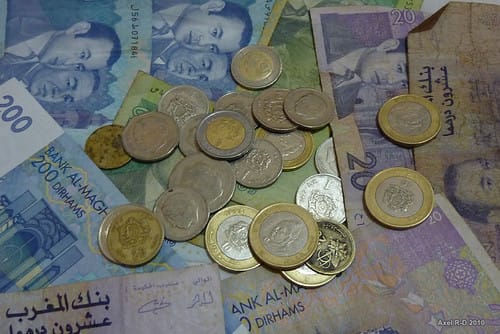
Every family trip to Morocco starts with the same practical question at the airport: where do I get the local money and how much of it do I need. The answer to what is the currency of Morocco is the Moroccan dirham, known locally as the DH and written on price tags as MAD. It is a closed currency, which means you cannot buy it from your bank at home before you fly. You get it once you land.
This guide walks through what the dirham looks like in your hand, what one US dollar or one euro is worth in dirhams right now, why you cannot bring dirhams into the country, where to change money after you arrive, how much cash you should actually withdraw, when cards work and when they do not, how to tip in small notes without carrying a stack, and the currency related mistakes travelers make on their first Morocco trip. Written for family travelers who want the practical answer, not the encyclopedia one.
- Explore Morocco with your kids stress-free! Private transport, kid-friendly hotels, and safe meals included. Plan Your Family Tour
- Experience the Atlas Mountains and Sahara Desert with hands-on fun for kids and comfort for parents. Customize Your Adventure
- Enjoy Morocco’s coasts and cities at a calm pace. Perfect for families with young children. Book Your Relaxed Tour
Quick takeaways
- The answer to what is the currency of Morocco is the dirham (MAD). One dirham is worth about 10 US cents at current rates. Symbols you will see: DH, MAD, or د.م.
- The dirham is a closed currency. You cannot buy it outside Morocco, and you can only bring in or take out up to 1,000 MAD legally.
- Current rates (July 2026): 1 USD is about 9.35 MAD, 1 EUR is about 10.70 MAD, 1 GBP is about 12.48 MAD. Check daily rates from Bank Al-Maghrib before your trip.
- Cash rules outside cities. Souks, taxis, tips, and rural stops all need cash. Cards work in bigger hotels, upscale restaurants, and supermarkets.
- ATMs are your best friend. Widely available in cities, they usually give better rates than airport counters or hotel desks.
- Bring USD, EUR, or GBP if you carry any home currency. Australian and Canadian dollars are often refused at exchange offices.
- Always choose MAD when a card machine or ATM asks whether to charge in dirhams or your home currency.
What currency is best to use in Morocco?
The Moroccan dirham (MAD) is the currency to use for almost everything in Morocco, since it is the official and only widely accepted currency across the country. Cash in dirhams handles souks, taxis, small restaurants, tips, and any purchase outside big cities. Cards work in upscale hotels, malls, and higher end restaurants.
You cannot buy dirhams before you arrive because it is a closed currency. That means you will need to plan how to get your first stack of MAD once you land. Most travelers use an airport ATM for a small first withdrawal, then a city ATM or bureau de change for larger amounts once they are settled.
Some higher end hotels and Sahara desert camps will quote and accept payment in euros or US dollars, but the exchange rate they use is almost always worse than the market rate. For anything below a hotel bill, you need dirhams.
However, if you are only visiting Marrakech briefly and staying in a five star hotel with mostly meals and taxis paid for, a mix of dirhams for street spending and a credit card for the hotel can work fine. Families staying in riads and doing day trips need more cash than couples staying in resorts, since medinas, guides, tips, and small purchases all run on physical dirhams.
Practical takeaways:
- Withdraw dirhams from a city bank ATM rather than an airport counter for the best rate
- Bring 100 to 200 euros or dollars in cash as a backup in case a card fails at the airport
- Do not accept payment in your home currency on card machines. Always choose MAD.
- Break large 200 dirham notes early at a supermarket or larger café. Small notes matter for taxis and tips.
- Keep the equivalent of 100 to 200 dollars in dirhams on you at any given time in cities, and more if traveling to rural areas
For families planning a multi city trip, Morocco Family Vacation builds in scheduled money stops with trusted exchange offices and ATMs in each city, so you never end up cash short in a medina at 8 pm.
Coins for tips, taxis, and sweets
Coins run from 10 and 20 santim pieces up through ½, 1, 2, 5, and 10 dirhams. The 5 and 10 dirham coins are bi-metallic and look a bit like euro coins, which is handy because kids tend to recognize them quickly. You will burn through coins faster than you expect: public toilets, rounding up taxi fares, tipping the porter at the riad, buying a single mandarin from a street cart. Always keep a pocketful of small dirhams when you head into the medina.
What is the currency of Morocco: the dirham basics
The short answer to what is the currency of Morocco is the Moroccan dirham. Its ISO 4217 code is MAD. Locals write it as DH after prices, or د.م. in Arabic. One dirham is divided into 100 santimat, sometimes called centimes when speaking French.
Bank Al-Maghrib, the central bank, prints and manages the money supply. The current series of banknotes was introduced in 2013 and updated with additional security features in 2021. The bills are colorful, sized differently by denomination, and feature portraits of the reigning monarch King Mohammed VI along with local landmarks and cultural motifs.
The dirham is one of the oldest continuously used currency names in the region. The word comes from the Greek drachma, which traveled through the Arab world with trade routes over a thousand years ago. Morocco reintroduced the dirham as its national currency in 1960, replacing the Moroccan franc left over from the French protectorate era.
Because Morocco runs a partly managed float, the dirham stays relatively stable against the euro and dollar. Bank Al-Maghrib pegs it to a basket weighted 60 percent to the euro and 40 percent to the US dollar. That means the dirham moves less dramatically than fully floated currencies like the Turkish lira or Argentine peso, which makes budgeting easier for travelers.
For any trip planning, expect a rate close to 9 to 10 MAD to the US dollar and 10 to 11 MAD to the euro, and adjust from there. Small daily movements will not change your total trip budget in a meaningful way.
Moroccan dirham notes and coins
You will see four banknote denominations in daily use:
- 20 dirham note (about 2 USD): light green, smallest, used for small purchases
- 50 dirham note (about 5 USD): olive and rose, common for cafés and small meals
- 100 dirham note (about 10 USD): brown and yellow, the workhorse note
- 200 dirham note (about 21 USD): blue, largest, often refused by small vendors early in the day
Coins come in half dirham (50 santimat), 1 dirham, 2 dirham, 5 dirham, and 10 dirham denominations. Very small coins in 1, 5, 10, 20 santimat exist but are rare in daily transactions and mostly appear as change at supermarket registers.
The 200 dirham note is the one that causes headaches. Taxi drivers, small souk vendors, and street food sellers often cannot break it. When you withdraw from an ATM, try amounts like 490 or 990 dirhams instead of round 500 or 1000. You will get a mix of denominations that includes 100 and 50 dirham notes, which are far more useful for daily spending.
Fake notes and how to spot them
Counterfeit dirham notes are rare but they exist. The main tell is a lack of the raised print on the portrait of the king. Real notes have a slightly textured feel on the face and the value numeral. Fake notes feel completely smooth. If you receive a note that feels off, ask for a different one before you walk away.
Current exchange rates: what one dollar or euro gets you
Moroccan Dirham — Live Converter
Convert between the Moroccan dirham and twelve world currencies using live mid-market rates. Refreshed when the widget loads.
Rates shown are mid-market. Real ATM and exchange counters land 1 to 6 percent below this depending on where you change money. The dirham is a closed currency, so you cannot buy it before you arrive in Morocco.
Live rates: © Morocco Family Vacation.
Rates move daily. As of mid 2026, here is roughly what your home currency buys in dirhams:
- 1 USD = about 9.35 MAD
- 1 EUR = about 10.70 MAD
- 1 GBP = about 12.48 MAD
- 100 USD = about 935 MAD
- 100 EUR = about 1,070 MAD
- 100 GBP = about 1,248 MAD
- 1 CAD = about 6.75 MAD
- 1 AUD = about 6.20 MAD
To reverse it, 100 dirhams is worth roughly 10.70 USD, 9.35 EUR, or 8.00 GBP.
Bank Al-Maghrib publishes official daily reference rates at bkam.ma. The rate you get at an ATM or exchange bureau will be a percent or two below that reference rate. Airport counters take a bigger cut, often 4 to 6 percent worse than the market rate. That is the cost of convenience.
A useful mental math trick: for US dollar users, take the dirham price and divide by 10 to get a rough dollar equivalent. A 45 dirham glass of orange juice is about 4.50 USD. A 320 dirham dinner for two is about 32 USD. Euro users can do the same at slightly under parity.
For pound sterling users, divide by 12. A 240 dirham taxi ride is 20 pounds. A 1,200 dirham riad night is 100 pounds.
None of these numbers changes fast enough to blow up a trip budget, but check the rate the week you leave to sanity check your estimate.
Why can’t I buy Moroccan dirham before I arrive?
Because the Moroccan dirham is a closed currency. That is the technical answer. The practical one: Bank Al-Maghrib restricts the export and import of physical dirhams to protect the currency’s stability and the country’s foreign exchange reserves.
You are legally allowed to bring in or take out up to 1,000 MAD (about 100 USD). Anything above that at customs can be confiscated. In practice, no one checks small amounts, but the rule stands.
This is why your bank at home will tell you they cannot get you dirhams. It is not their policy. It is Moroccan law preventing the currency from being traded outside the country. The same applies to Tunisia, Libya, and a handful of other countries with restricted currencies.
The upside of a closed currency is stability. Wild speculation in offshore markets cannot swing the rate as dramatically as it can for fully floated currencies. The downside is inconvenience. You cannot preload dirhams before your trip, and you cannot easily convert leftover dirhams once you leave.
What this means for you:
- Arrive with USD, EUR, or GBP in cash as backup (100 to 300 in your home currency is enough)
- Plan to hit an ATM within the first hour after landing
- Spend down your dirhams before flying home. Leftover MAD is hard to exchange elsewhere.
- Small amounts of leftover dirhams can sometimes be changed at the airport departure counter but at a poor rate
- Keep exchange receipts if you need to convert a large amount back at the airport, they may ask
How to get dirhams once you land
Now that you know what is the currency of Morocco, here is how to get some in your pocket without wasting money on bad rates. The three ways to get dirhams are ATMs, bureaux de change, and hotel front desks. Each has trade offs.
ATMs: first choice for most travelers
- Widely available in Marrakech, Fes, Casablanca, Rabat, Tangier, Agadir, and other cities
- Rare in rural areas and small villages, so stock up before heading to the Sahara or Atlas
- Typical fees: 20 to 40 MAD per withdrawal from the Moroccan bank, plus your home bank fee
- Withdrawal limit per transaction usually 2,000 to 3,000 MAD (around 200 to 300 USD)
- Reliable networks: BMCE (BMCI), Attijariwafa Bank, Banque Populaire, Société Générale Maroc
- Always choose MAD, not your home currency, when the ATM asks about the conversion
Bureaux de change and hotel counters
Bureaux de change (called “change” or “cambio” in tourist areas) are good for larger amounts. Best rates land in city centers, especially around Marrakech’s Jemaa el-Fna and Fes’s Batha area. They usually beat airport counters and hotel desks. Look for a licensed sign with posted rates. No commission is standard, but always confirm before handing over cash.
Hotel front desks work when you land late, arrive on a holiday, or need a small emergency top up. Rates are typically 5 to 10 percent worse than city bureaux de change. Use them for convenience, not value.
Airport counters give you 4 to 6 percent worse than the market rate. Fine for a first 500 to 1,000 dirhams to get you to the hotel, not for the whole trip.
If you cannot find a working ATM at the airport, most Marrakech and Casablanca terminals have at least four different bank ATMs. If one rejects your card, walk to the next. The problem is often a specific bank network mismatch, not your card being blocked.
Book Your Family Adventure Now — Limited Spots Available!
Book Your Family Adventure Now — Limited Spots Available!
Using credit and debit cards in Morocco
Cards work in more places than they used to, but Morocco is still primarily a cash economy. Here is where cards do and do not work.
Cards work at larger hotels (3 stars and up), upscale restaurants (especially in the ville nouvelle districts), supermarkets like Carrefour and Marjane, malls, chain pharmacies, petrol stations, some tour operators for advance payments, and airport shops.
Cards do not work at souk stalls, taxis (except a handful of Uber style apps in Casablanca and Marrakech), most small restaurants and cafés, street food vendors, public transit, riad staff tips, rural guesthouses, and Sahara camps (unless prearranged).
Visa and Mastercard are widely accepted where cards work. American Express is accepted at some higher end hotels and restaurants, but you cannot rely on it and for Asian travelers who are using UnionPay it only works in Attijariwafa Bank atm
Notes on using cards in Morocco
- Notify your bank before you travel. Some banks will freeze cards without notice on the first foreign transaction.
- Foreign transaction fees vary by card, usually 1 to 3 percent per purchase
- Always choose the local currency (MAD) when a card machine offers to convert to your home currency. The card machine rate is 5 to 10 percent worse than your card’s default rate.
- Carry two different cards from two different banks, in case one is compromised or a machine eats it
- Contactless payment works in newer terminals, especially in Casablanca
How much cash to bring on a Morocco trip
Total cash budget depends heavily on your travel style. Rough guidelines for a seven day family trip of four:
- Backpacker or budget family (small riads, casual meals, public transit): 2,500 to 3,500 MAD per day (about 270 to 375 USD)
- Mid range family (private guides for some days, mid tier riads, mix of casual and nicer meals): 4,500 to 6,500 MAD per day (about 480 to 700 USD)
- Higher end family (luxury riads, private drivers throughout, upscale dining): 8,500 to 12,000 MAD per day (about 910 to 1,285 USD)
Some of that will go on your card at hotels. The cash portion, for daily meals, souvenirs, tips, guides, and small transport, usually runs 800 to 2,500 MAD per day for a family of four, depending on style.
A practical daily withdrawal plan for a mid range family trip:
- Day 1 (arrival): 500 MAD at airport, 2,000 MAD at city ATM in the evening
- Days 2 to 6: One ATM stop every two or three days for 2,000 to 3,000 MAD
- Day 7 (departure): Spend down remaining dirhams before the airport, or exchange back at the counter
Tipping in Morocco
Tipping is woven into Moroccan hospitality, and small change goes a long way. You do not need to overtip, but acknowledging good service is expected.
A practical tipping cheat sheet:
- Café waiter: 5 to 10 dirhams
- Restaurant server (sit-down meal): round up the bill or add 10 percent for excellent service
- Riad housekeeping: 10 to 15 dirhams per night, left at the end of the stay
- Porter at hotel or train station: 5 to 10 dirhams per bag
- Petits taxi driver: round up the fare
- Tour guide for a half-day: 50 to 100 dirhams per family
- Camel handler in the desert: 20 to 50 dirhams per family
- Public toilet attendant: 1 to 2 dirhams
Keep a stash of 1, 2, and 5 dirham coins specifically for tipping. Nothing kills the moment faster than fumbling for change after a kind gesture.
Currency mistakes to avoid
A few of the most common ones I have seen families make on their first Morocco trip.
Exchanging too much cash at the airport. The rate is bad. Get a small amount and use a city ATM for the bulk of your money.
Accepting home currency on card machines. The machine will show you a “helpful” conversion. That helpful rate is 5 to 10 percent worse than your card’s default rate. Choose MAD every time.
Withdrawing round numbers from ATMs. Withdrawing 1,000 MAD often gives you five 200 dirham notes. That is almost useless for daily spending. Withdraw 990 or 940 instead. You get a better note mix.
Not carrying small notes. A 200 dirham note in a small taxi is a problem. Break big notes at supermarkets and cafés early.
Forgetting to notify the bank. Card freezes on the first foreign transaction are common. A three minute call before your trip prevents a stressful moment at a Marrakech ATM.
Trying to bring dirhams home. Beyond 1,000 MAD, you cannot legally take them out. Spend them or exchange them back before you fly.
Falling for dual pricing on unmarked goods. Souvenirs, guides, and taxi rides often have a tourist price and a local price. Ask a hotel staff member for a fair baseline before you shop or agree on a fare.
Currency and kids: practical notes for family travel
Kids do not care about exchange rates, but they do care about ice cream, small souvenirs, and picking up a stone from a Sahara guide who wants a 10 dirham tip. Currency for a family trip runs slightly differently than for a solo traveler.
Small note bags for older kids
Give teens and older kids a small stack of 20 and 50 dirham notes to handle their own snacks, souvenirs, and tips. They learn a bit about the money and it takes the small transactions off your plate.
Families do more small transactions than couples. Ice cream stands, small souvenirs, camel guide tips, café stops, and casual food carts all take cash in the 10 to 50 dirham range. Withdraw with that in mind.
Physical wallets get lost. A card locked to your phone with Apple Pay or Google Pay works in newer machines and reduces the chance of losing your primary card. Not every terminal in Morocco supports contactless yet, but many in Casablanca, Marrakech, and Rabat do.
Kids often want to overtip or not tip at all. A quick chat before dinner about the 10 percent norm and a few small notes to give the porter goes a long way in avoiding awkward moments.
Keep a small emergency reserve of home currency and dirhams in the room safe. If a wallet gets lost in the medina, you are not stranded.
Booking family trips with Morocco Family Vacation removes some of the currency stress. Guides handle small tips and cash exchanges when needed, and your riad and driver payments are usually settled at the start or end of the trip rather than in small daily amounts.
Common Currency Mistakes Tourists Make in Morocco
A short list of the avoidable ones:
- Buying dirhams at home. Either you cannot, or you pay a terrible rate.
- Changing too much at the airport. A small amount for the taxi is fine; doing your full week at the airport rate costs you.
- Holding only large notes. ATMs hand out 200s; vendors hate them. Break them down early.
- Skipping the receipt. When exchanging cash, keep the slip. You may need it to convert leftover dirhams back at the airport.
- Saying yes to dynamic currency conversion. Always pay in dirhams, both at ATMs and at card terminals.
- Carrying all your cash in one pocket. Split it. Always.
- Trying to take more than 2,000 dirhams home. Technically illegal, and customs occasionally check.
Mobile Payments and Modern Options
Morocco has been pushing mobile money since 2018, and you will see logos like inwi money, Orange Money, and Maroc Telecom Cash at small shops and even some taxis in larger cities. Tourists generally cannot register for these without a Moroccan phone number and ID, so they are not practical for short visits, but it is worth knowing the country is shifting.
International travel cards like Wise, Revolut, and Travelex Money Card all work in Morocco at most card terminals. They typically give better rates than a regular bank debit card, especially if you load them with euros or pounds before traveling. Just remember that you cannot pre-load actual dirhams (closed currency rule), so your card will convert when you spend.
Need Help with Transportation in Morocco?
Book a reliable private driver for your Morocco family adventure today – personalized routes designed just for you, and get 30% off as a first-time visitor!
Final thoughts: what is the currency of Morocco and how to handle it
What is the currency of Morocco, in short, is the Moroccan dirham. The dirham is a closed currency that you cannot buy at home, cannot legally take out in large amounts, and cannot avoid using once you are inside the country. It is stable, straightforward, and widely usable through ATMs in every city.
For a family trip, the practical answer is: land with a small amount of home currency as backup, use an airport ATM for your first dirhams, then rely on city bank ATMs and a couple of bureaux de change for the rest of the trip. Cards fill in the gaps at hotels and higher end places. Cash covers everything else.
Rates hover around 9.35 MAD per US dollar, 10.70 MAD per euro, and 12.48 MAD per pound. Those numbers move a percent or two week to week but do not change trip budgets meaningfully.
Morocco Family Vacation designs Private Family Tours in Morocco for Kids, Teens & Toddlers. Plan your perfect family trip to Morocco with custom private tours built for families traveling with toddlers, kids, and teens. You get family friendly experiences, trusted local guides, and handpicked comfortable stays from the medinas all the way to the Sahara.
─── Your questions, our answers.
Frequently Asked Questions
Our dedicated team is here to answer your Morocco Travel questions and ensure a smooth, memorable journey through Morocco.
What currency can I use in Morocco besides the dirham?
The official answer is the Moroccan dirham, full stop. In practice, some hotels, desert camps, and high-end shops in tourist areas accept euros, US dollars, or British pounds in cash, but the exchange rate they offer is almost always worse than what you would get from a Moroccan ATM. Use foreign currency only as a backup, and never expect to pay for taxis, café meals, or souk purchases in anything other than dirhams.
How much is $100 dollars in Morocco?
About 935 Moroccan dirhams as of mid 2026 at the mid market rate. Real ATM and exchange rates will land at 900 to 925 MAD after fees. That amount covers a mid range family dinner for four, a full day of small taxi rides, or a couple of nights in a modest riad. Rates move daily, so check Bank Al-Maghrib or an app like Wise or Xe the week before your trip.
Are credit cards accepted everywhere in Morocco?
Cards are accepted at most mid-range and upscale hotels, larger restaurants in cities, supermarkets, train stations, and tourist museums. They are rarely accepted in souks, street food stalls, petits taxis, small village shops, or for tipping. Plan to carry cash in dirhams for daily spending and use cards for bigger expenses like hotels and sit-down dinners. Visa and Mastercard work most reliably; American Express and Diners Club are spotty.
How much currency in Morocco should I budget per day for a family?
Costs vary by travel style, but a comfortable mid-range family of four can budget roughly 600 to 1,200 dirhams per day (around 60 to 120 US dollars) for meals, taxis, snacks, small entry fees, and tips, on top of accommodation. Marrakech and Casablanca run higher than Fes, Chefchaouen, or smaller towns. Desert tours are usually paid as a package separately. The currency in Marrakech Morocco specifically tends to stretch further than in European cities, so families often find their budget goes further than expected.
Is $50 a lot in Morocco?
$50 USD is a more comfortable and flexible amount in Morocco for a day of travel-style spending, especially for budget to mid-range travelers. Converted into Moroccan dirhams, $50 can cover a combination of meals, transportation, entrance fees, and small shopping expenses. In many cities, this amount could support a full day of moderate activity, including dining at a mid-range restaurant and taking taxis or public transport.
That said, $50 is still not considered “a lot” in the context of accommodation, private tours, or upscale experiences, which can quickly exceed that amount. For example, hotel stays, guided desert tours, or luxury dining will require a higher budget. Overall, $50 is a solid daily spending amount for a modest but comfortable travel day, especially if you manage expenses wisely.
Why can't I buy Moroccan dirham?
Because the Moroccan dirham is a closed currency, and Bank Al-Maghrib restricts its export from Morocco. That means banks and currency shops outside the country do not stock it. You can only legally carry in or out 1,000 MAD (roughly 100 USD). The rule exists to protect the currency’s stability and the country’s foreign exchange reserves.
What is the currency of Morocco called?
The answer to what is the currency of Morocco is the Moroccan dirham, written as DH after prices, MAD as the ISO code, or د.م. in Arabic. One dirham splits into 100 santimat, sometimes called centimes when locals speak French. It has been the country’s currency since 1960, replacing the French protectorate era Moroccan franc.

Kate Carter
Family Travel Blogger
Kate Carter is a mom and travel blogger who fell in love with Morocco’s culture and warmth. Through Morocco Family Vacation, she shares tips and stories to help travelers enjoy authentic, stress-free experiences. Join us along the way.
Table of Contents
Our Services
-
Private Family Tours
-
Custom Itineraries
-
Sahara Desert Tours
-
Chefchaouen & Northern Morocco Tours
-
Luxury Desert Camping
-
Multi-Day Tours (2–16 Days)
-
Atlas Mountains Trips
-
Cooking Classes & Market Visits
-
Photography & Heritage Tours
-
Airport Transfers & Private Transport
-
Custom Birdwatching Tour in Morocco
-
24/7 Tour Support & booking Flexibility

At Morocco Family Vacation, we create custom Morocco tour packages designed around your interests and travel style. As a dedicated and independent travel agency, we specialize in private Morocco tours offering memorable desert adventures, cultural experiences, and family friendly itineraries while delivering attentive, personalized service from start to finish.
Popular Tours
Latest Posts

get in touch
#Rabat Morocco
#Things to do in Rabat
#Best restaurants Rabat Morocco
#Hassan Tower Rabat
#Morocco Family Vacation