Historical Attractions in Morocco
10 Famous Historical Attractions in Morocco You Should Visit
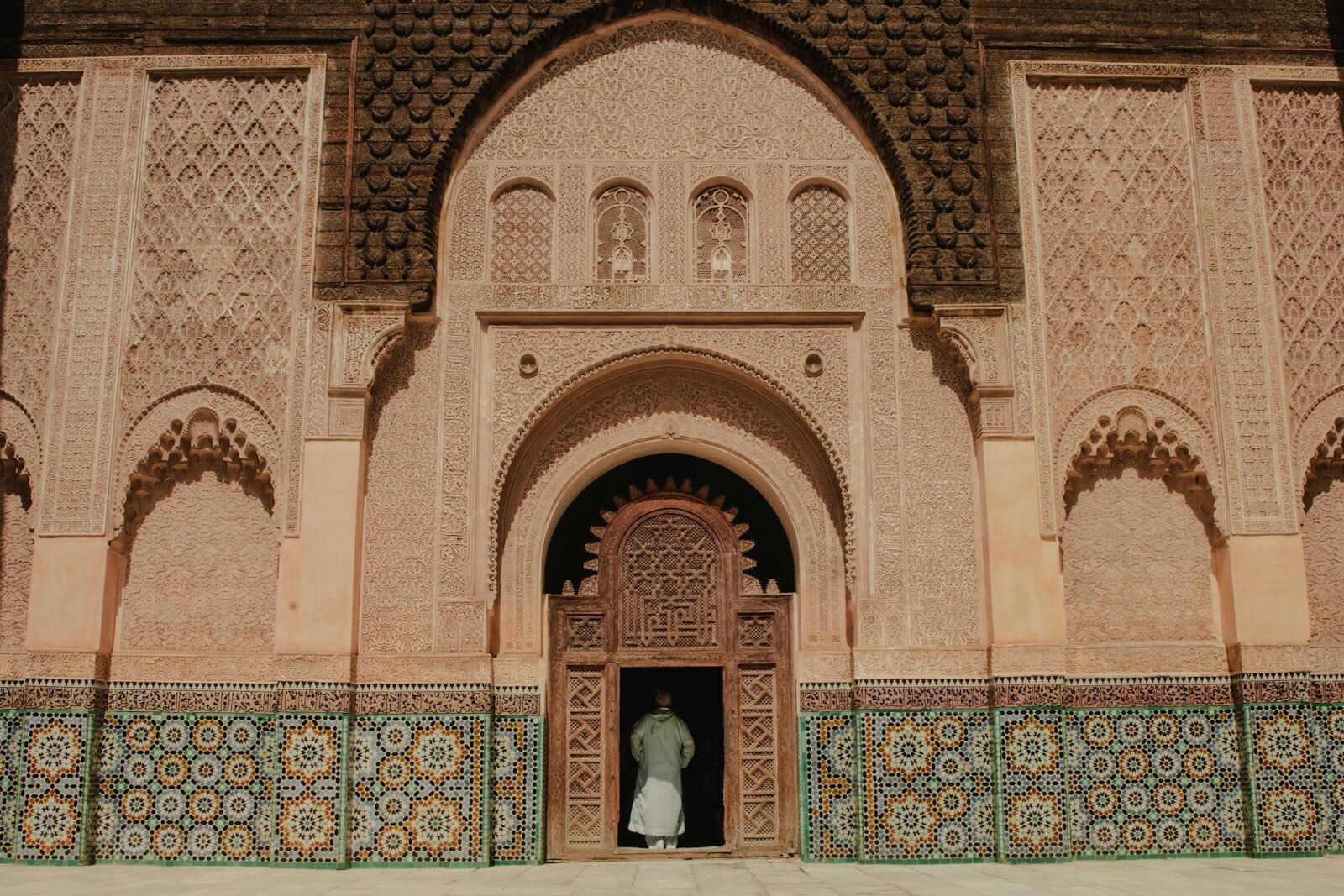
Historical Attractions in Morocco has a long history that visitors can discover through its medieval medinas, royal palaces, Roman ruins, fortified villages and historic coastal cities. Some of the country’s most important historical attractions are found in Marrakech and Fes, while others are spread across Meknes, Rabat, Volubilis, Essaouira and southern Morocco.
For families planning a trip, visiting these places does not have to mean spending the entire holiday in museums or walking through old buildings. Most historical monuments can be included naturally while exploring the cities already on your itinerary. The important thing is to choose the right places, allow enough time and check ticket arrangements before arriving.
Morocco has nine properties on the UNESCO World Heritage List, including several of the destinations featured in this guide. Here are 10 historical attractions in Morocco worth considering for your trip.
The 10 Historical Attractions in Morocco at a Glance
| Historical attraction | Location | Main historical interest | When and by whom it was built |
|---|---|---|---|
| Medina of Fes | Fes | Medieval Moroccan architecture | Founded c. 789 to 808 by the Idrisids; major additions under the Almoravids and Marinids |
| Volubilis | Near Meknes | Roman ruins | Roman city mostly built in the 2nd to 3rd centuries AD, on an earlier Mauretanian settlement; triumphal arch dated 217 AD |
| Ksar of Ait Ben Haddou | Near Ouarzazate | Traditional fortified settlement | Settlement much older; most surviving buildings date from the 17th century |
| Medina of Marrakech | Marrakech | Palaces and Islamic architecture | Founded c. 1070 by the Almoravids; Koutoubia (late 12th century, Almohads), El Badi (1578 to 1603, Saadians), Bahia (19th century, Alaouites) |
| Historic City of Meknes | Meknes | Imperial history | Imperial capital built mainly under Sultan Moulay Ismail (1672 to 1727) |
| Historic monuments of Rabat | Rabat | Almohad and modern Moroccan history | Kasbah of the Udayas (12th century) and Hassan Tower (begun 1195), both Almohad; Mausoleum of Mohammed V (completed 1971) |
| Medina of Essaouira | Essaouira | Historic fortified port | Planned and built from the 1760s under Sultan Mohammed ben Abdallah, with European design input |
| Portuguese City of Mazagan | El Jadida | Portuguese architecture | Early 16th century (from 1514) by the Portuguese |
| Medina of Tétouan | Tétouan | Andalusian influences | Rebuilt in the late 15th century by Andalusian refugees, on earlier Marinid foundations |
| Hassan II Mosque | Casablanca | Modern Moroccan architecture | 1986 to 1993, commissioned by King Hassan II; architect Michel Pinseau |
| Chellah | Rabat | Roman ruins and a Marinid necropolis | Roman town from about the 1st century AD; Marinid necropolis added in the 14th century |
| Kasbah of the Udayas | Rabat | Almohad-era fortress overlooking the sea | 12th century, Almohad dynasty |
| Marinid Tombs | Fes | Ruined tombs with views over the medina | 14th century, Marinid dynasty |
| Moulay Idriss Zerhoun | Near Meknes | Holy town linked to the first Islamic dynasty | Grew around the tomb of Idris I (died c. 791); mausoleum rebuilt in the 18th century under Moulay Ismail |
| Telouet Kasbah | High Atlas, near Ait Ben Haddou | Glaoui family stronghold on the old caravan route | Mainly 19th and early 20th centuries by the Glaoui family |
| Kasbah Taourirt | Ouarzazate | Glaoui kasbah in earthen architecture | 17th-century origins; expanded by the Glaoui in the late 19th and early 20th centuries |
| Draa Valley kasbahs (including Tamnougalt) | Near Agdz | Fortified earthen villages along the caravan routes | Mostly 17th to 19th centuries, built by local tribes and families |
| Tinmel Mosque | High Atlas, near Marrakech | Almohad mosque in the mountains | 1153 to 1154, Almohad dynasty |
| Portuguese Sea Castle (Kechla) | Safi | Portuguese coastal fortress | Early 16th century (c. 1523) by the Portuguese |
| Medina and ramparts of Asilah | Asilah | Portuguese-built walls | Late 15th century by the Portuguese, on older coastal settlement |
| Kasbah of Tangier | Tangier | Historic citadel overlooking the strait | Palace complex built in the late 17th century under Moulay Ismail, on earlier fortifications |
| Lixus | Near Larache | Ancient Phoenician and Roman ruins | Founded by the Phoenicians (traditionally around the 7th century BC); expanded in Roman times |
Medina of Fes
The Medina of Fes is one of the most important historical attractions in Morocco. Known as Fes el Bali, this old city is recognized as a UNESCO World Heritage Site and is famous for its traditional architecture, historic religious schools, markets and narrow streets.
Walking through the medina gives visitors an opportunity to discover how an important Moroccan city developed over centuries. Traditional workshops, old trading streets and historic buildings remain part of everyday life.
Historical Monuments to Visit in Fes
Several monuments deserve attention during a visit:
- Bou Inania Madrasa: A historic religious school known for its carved cedar wood, detailed stucco decoration and traditional tilework.
- Al Attarine Madrasa: Another remarkable example of Marinid architecture, with intricate decorative details.
- Nejjarine: A historic complex associated with traditional woodwork and the former commercial life of the medina.
- Bab Boujloud: One of the best known entrances to the old city and a useful starting point for exploring its streets.
- Al Quaraouiyine area: An important historic religious and educational centre.
The medina contains far more historical buildings than most visitors can see in one visit. A local guide can help families understand the history behind the places they encounter rather than simply walking between monuments.
Family note: Shade is limited, so go early in the morning or in the late afternoon. Allow 1.5 to 2 hours. The main paths are fairly open and manageable, but the ground is uneven stone, so a sturdy stroller or carrier is better than a lightweight one. A guide is optional, but helpful for the mosaics, which children enjoy once someone points out the animals and scenes hidden in them. Many families also visit the nearby town of Moulay Idriss Zerhoun, which is about a 10 to 15 minute drive away.
Volubilis
Volubilis is one of the most significant archaeological sites in Morocco. Located near Meknes and Moulay Idriss Zerhoun, it preserves the remains of an ancient Roman city that once played an important role in the region.
The archaeological site is particularly known for its Roman mosaics, columns, public buildings and triumphal arch. Visitors can walk through the remains of the city and get a better understanding of Roman life in North Africa.
Volubilis is a UNESCO World Heritage Site and a worthwhile stop for anyone interested in ancient history.
Is Volubilis Worth Visiting With Children?
Yes. The open archaeological site gives children room to explore while learning about a different period of Moroccan history. It is an outdoor visit, so comfortable walking shoes, sun protection and water are useful, especially during warmer months.
Volubilis can also be combined with a visit to Meknes, depending on the family’s route and available time.
Family note: Shade is limited, so go early in the morning or in the late afternoon. Allow 1.5 to 2 hours. The main paths are fairly open and manageable, but the ground is uneven stone, so a sturdy stroller or carrier is better than a lightweight one. A guide is optional, but helpful for the mosaics, which children enjoy once someone points out the animals and scenes hidden in them. Many families also visit the nearby town of Moulay Idriss Zerhoun, which is about a 10 to 15 minute drive away.
Ksar of Ait Ben Haddou
Ait Ben Haddou is one of Morocco’s best known fortified settlements. Located in the Ounila Valley near Ouarzazate, this historic ksar is recognized by UNESCO for its traditional earthen architecture and distinctive collection of buildings.
The settlement consists of closely grouped houses, towers and defensive structures built using traditional materials. Its position along historic routes connecting the Sahara with other parts of Morocco helps explain its importance.
What Should Families Know Before Visiting?
Visiting Ait Ben Haddou involves walking through the old settlement, including some uneven paths and uphill sections. Families should allow enough time to explore without rushing, particularly when visiting with younger children or grandparents.
The views from higher parts of the ksar are worth taking time to enjoy. It is also important to consider the weather because there is limited shade in some areas.
Family note: Allow 1.5 to 2 hours. Strollers are not practical, as you cross a stream bed to reach the ksar and then climb stepped, uneven paths. Wear closed, grippy shoes rather than sandals. Late afternoon gives softer light and cooler temperatures. Children under about four are usually happiest in a carrier, and older children tend to enjoy the climb if you set the top viewpoint as the goal. A guide is optional, since the layout is easy to follow, but one adds useful stories about the caravan trade and the films shot here.
Medina of Marrakech
Marrakech is one of the best cities in Morocco for visitors interested in historical monuments. Its UNESCO listed medina contains royal palaces, historic religious buildings, traditional streets and important examples of Moroccan architecture.
For many families, Marrakech is an excellent place to begin discovering Morocco’s history because several major monuments can be visited during the same stay.
The Best Historical Monuments in Marrakech
Bahia Palace is one of the city’s most impressive historic residences. Built and expanded during the second half of the 19th century, it is known for its courtyards, gardens, carved wood, painted ceilings, marble and traditional zellij decoration.
El Badi Palace offers a different experience. Although much of the original palace is now in ruins, its large courtyards and remaining structures give visitors an idea of the scale of the original complex and the power of the Saadian dynasty.
Saadian Tombs are another important historical site. The tombs are associated with the Saadian dynasty and are known for their detailed decoration, marble and carved architectural features.
Ben Youssef Madrasa was an important centre of Islamic education. Visitors can admire its courtyard, carved cedar wood, stucco decoration and geometric tilework.
Koutoubia Mosque is one of Marrakech’s most recognizable landmarks. Its minaret has influenced the city’s skyline for centuries and is an important example of Almohad architecture. Visitors who are not Muslim should respect the mosque’s access restrictions and appreciate its exterior and surroundings.
These monuments are among the strongest reasons to spend time exploring Marrakech beyond its markets and main square.
Family note: Do not try to see all five in one day. Pair two monuments per morning, keep afternoons for the pool or a slower activity, and use the Koutoubia gardens as a free stop for children to run around. Bahia and El Badi are the most stroller-friendly, with a few steps, while Ben Youssef and the Saadian Tombs are tighter. Go at opening time, before tour groups and the midday heat arrive.
Check Tickets Before Visiting Marrakech's Monuments
One practical point families sometimes overlook is ticket availability. Some popular monuments have online ticketing options, while others may sell tickets at the entrance. Entry arrangements can change, and visitor capacity may affect whether people can enter at their preferred time.
I recommend checking the official ticket information before visiting, particularly if a monument is an important part of your plans. The Moroccan Ministry of Culture’s ticket portal provides information and booking options for several heritage sites.
Historic City of Meknes
Meknes is one of Morocco’s four imperial cities and an important destination for understanding the country’s royal history. Its development as an imperial capital is closely connected with Sultan Moulay Ismail, who made the city the centre of his rule during the late 17th and early 18th centuries.
The historic city is recognized by UNESCO and contains monumental gates, royal buildings and historic neighbourhoods.
Historical Monuments to See in Meknes
Bab Mansour is one of the city’s most famous landmarks. Its impressive entrance, decorated with tilework and traditional architectural details, reflects the importance of Meknes as an imperial capital.
The Mausoleum of Moulay Ismail is another significant place connected with the city’s royal history. Visitors can also explore the historic medina and the remains of the royal complex, including the granaries and stables.
Meknes is particularly convenient for families who are also visiting Volubilis. The two destinations can be included in the same part of a northern Morocco itinerary.
Family note: Meknes is calmer and less crowded than Fes or Marrakech, which makes it a good place for a relaxed half day. The wide square at Bab Mansour is easy with strollers, and the vast granary and stable ruins give children space to explore. Because opening arrangements for some royal sites can change, confirm access on the day.
Historic Monuments of Rabat
Rabat combines Morocco’s modern capital with important historical landmarks. Its UNESCO World Heritage listing recognizes the city’s historic heritage alongside its development as a modern capital.
Several important attractions can be visited during a stay in Rabat.
Hassan Tower is an unfinished minaret from a major mosque project begun during the Almohad period. It remains one of the city’s defining historical landmarks.
Nearby, the Mausoleum of Mohammed V is known for its carefully decorated architecture and traditional Moroccan craftsmanship.
The Kasbah of the Udayas is another worthwhile stop. Its historic streets, traditional houses and position overlooking the Bouregreg River and Atlantic Ocean make it different from the larger medinas of Marrakech and Fes.
Families interested in archaeology can also visit Chellah, a historic site with remains connected to earlier Roman and Islamic periods.
Rabat is a useful historical stop for families travelling between Casablanca and northern Morocco.
Family note: Rabat is one of the easiest cities for strollers. The Hassan Tower esplanade is wide, flat and open, so children can move freely while you look around. The Kasbah of the Udayas has cobbled lanes and some slopes, but it is compact and pleasant at an easy pace. Allow half a day for Hassan Tower, the mausoleum and the Kasbah, or a full day if you add Chellah.
Medina of Essaouira
Essaouira offers a different kind of historical experience from Morocco’s imperial cities. Its UNESCO listed medina is known for its fortified walls, historic port and distinctive coastal architecture.
The city’s historic development was closely connected with maritime trade and its position along Morocco’s Atlantic coast.
Visitors can walk through the old streets, explore the historic ramparts and see the port where traditional fishing boats remain part of daily life.
Essaouira is also a comfortable place for families who want to combine historical sightseeing with time by the ocean. Its relatively compact medina makes it possible to explore without planning a full day of monument visits.
What to See in Essaouira
- Skala de la Ville: The sea bastion with its row of old cannons, ramparts and views over the Atlantic. Children usually enjoy walking along the cannons.
- The port: A working fishing port where blue wooden boats, gulls and fresh seafood stalls are part of daily life. Best in the morning or late afternoon.
- Skala du Port: The fortified gate and walls beside the harbor, a good spot for photos.
- The medina streets: A compact walled old town with arched gates, whitewashed buildings and workshops. Allow time to wander rather than follow a checklist.
The medina is relatively compact, which makes it possible to explore without planning a full day of monument visits. Half a day is usually enough for the main sights, and many families spend longer simply enjoying the seafront.
Family note: Essaouira is one of the most comfortable historic towns in Morocco for families. The medina is mostly flat and pedestrian, so strollers work reasonably well, although some surfaces are uneven. The ramparts have steps and open edges, so keep young children close. It can be windy, so bring a light jacket even in summer.
Portuguese City of Mazagan in El Jadida
El Jadida is home to the Portuguese City of Mazagan, a UNESCO World Heritage Site that reflects the Portuguese presence on Morocco’s Atlantic coast.
The historic settlement is known for its fortified walls, bastions and Portuguese architectural features. The site offers a different perspective on Morocco’s history, showing how European maritime powers influenced parts of the Atlantic coastline.
What to See in Mazagan
- The Portuguese Cistern: An underground chamber supported by rows of stone columns, with a shallow reflecting pool of water on the floor. It is dramatic, cool and easy for children to remember.
- The ramparts and bastions: You can walk along the fortified walls for sea views and a sense of how the city was defended.
- The old streets: A small, quiet walled quarter with the Church of the Assumption and traditional houses.
Mazagan is compact, and 1.5 to 2 hours is enough to see the main sights. El Jadida is worth considering for families travelling along the coast between Casablanca and other Atlantic destinations.
Family note: This is an easy, low-effort stop that suits young children. The cistern is flat and quick to visit, although the floor can be damp and slippery. The ramparts have drops on one side, so supervise children closely. A guide is not necessary, but a short briefing helps bring the Portuguese story to life.
Medina of Tétouan
Tétouan is an important historical city in northern Morocco. Its UNESCO listed medina is particularly known for its Andalusian influences, which are visible in its architecture, traditional houses, crafts and urban layout.
The city’s history is closely connected with people who arrived from Andalusia following the changes in Spain during the late medieval period.
What to See in Tétouan
• Bab Okla: One of the main gates to the medina and a convenient place to begin a walk.
• Souk Al Houts: The old fish market area, lively and busy, and a good place to see everyday life.
• Feddan Square and the royal palace area: A wide, open space that gives breathing room between the narrow lanes.
• Craft quarters: Traditional workshops where leather, woodwork and other crafts are still made.
Walking through the medina offers a chance to discover a different architectural style from the one found in Marrakech or southern Morocco. Allow two to three hours for a relaxed visit.
Tétouan is best included in a northern Morocco itinerary, particularly for families visiting Tangier, Chefchaouen or other destinations in the Rif region.
Family note: The medina is less touristy than Fes or Marrakech, which many families find more relaxed, but there are fewer facilities set up for visitors. Strollers are difficult because of steps and narrow lanes. The fish market can be strong-smelling, so decide in advance whether it suits your children. A guide helps with orientation and with understanding the Andalusian history.
Hassan II Mosque in Casablanca
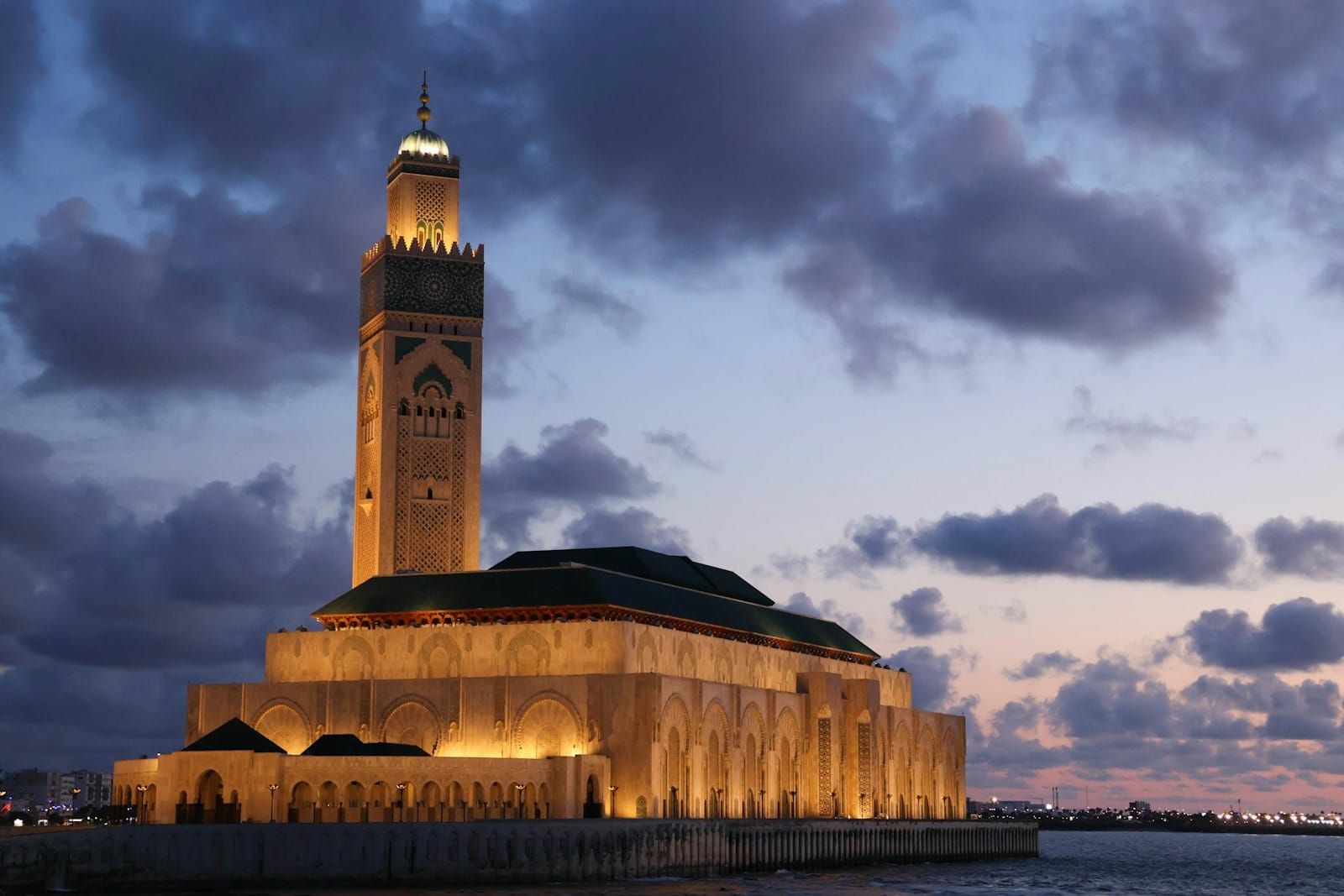
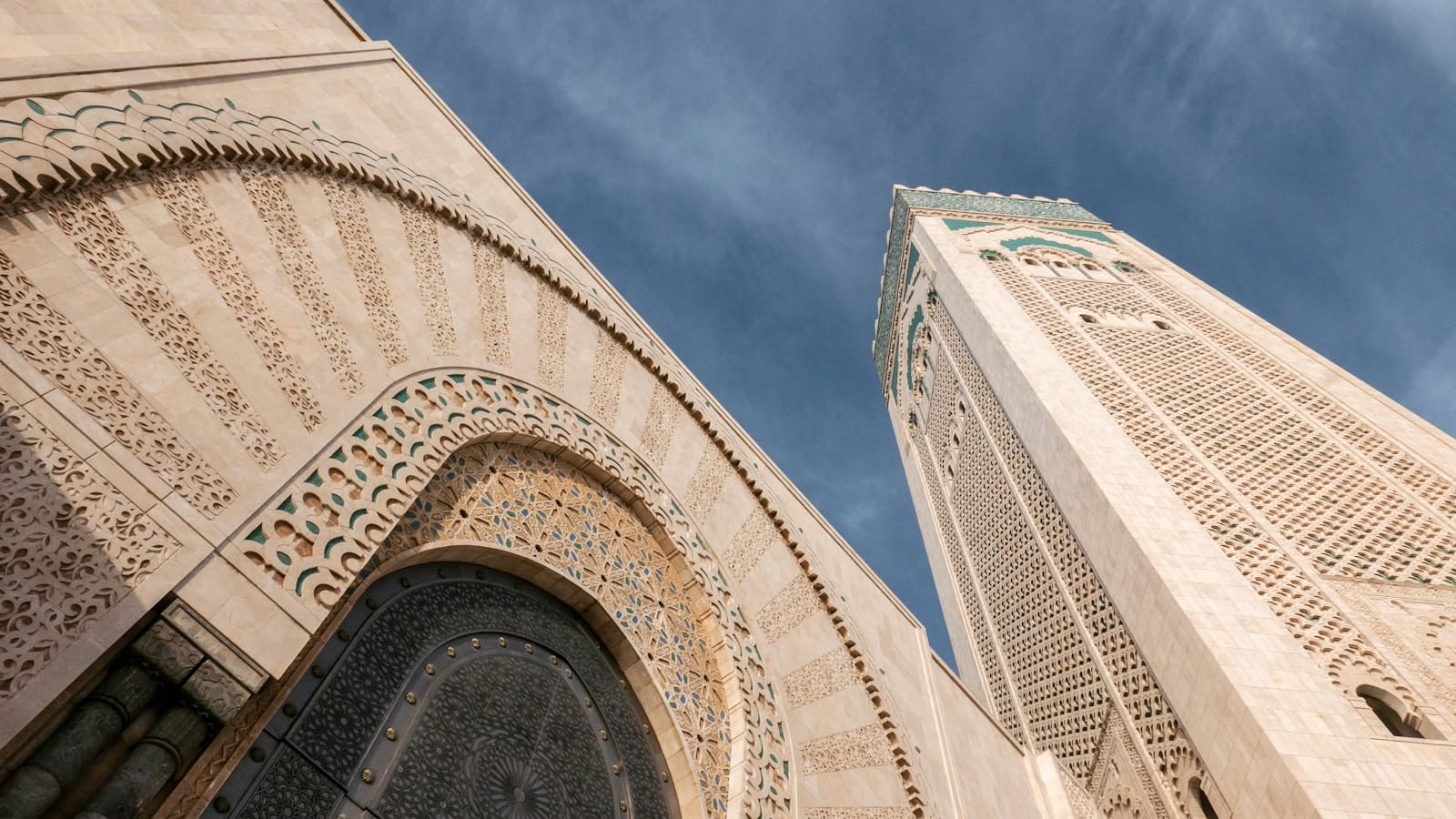
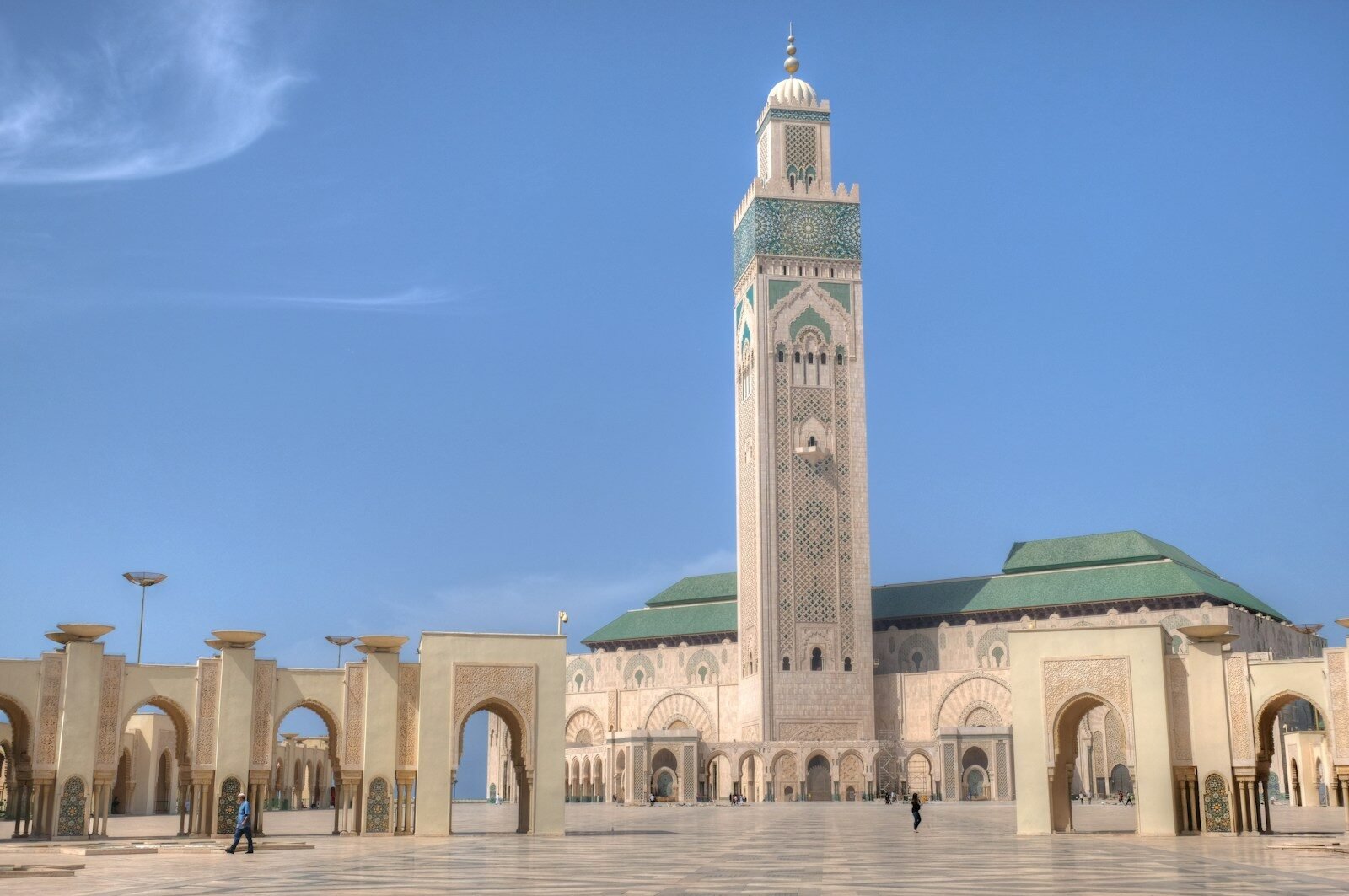
The Hassan II Mosque is one of the most important modern landmarks in Morocco. Although it is not an ancient monument, its architectural and cultural importance makes it a worthwhile addition to a list of historical attractions.
Construction began in 1986 during the reign of King Hassan II, and the mosque was inaugurated in 1993. Built beside the Atlantic Ocean, it combines traditional Moroccan craftsmanship with modern engineering.
Visitors can admire its detailed zellij, carved wood, marble and impressive prayer hall. Guided visits allow non Muslim visitors to explore parts of the building outside prayer times, subject to the mosque’s current visitor rules.
Families visiting Casablanca should consider including the mosque in their sightseeing plans. Check the official Hassan II Mosque Foundation website for visiting hours, prices and current rules before arriving.
Family note: The guided visit lasts around an hour, which is manageable for most children, and the building is spacious and generally stroller-friendly. Keep in mind that modest clothing is expected, and that the esplanade by the ocean can be windy and exposed. Book or arrive early in the day, as tours can fill up.
Beyond the Top 10: More Historic Places Worth Adding
If you have extra time, or want to go beyond the standard list, these are worth considering.
Chellah (Rabat): An atmospheric historic site with Roman ruins and a medieval Marinid necropolis set among gardens. It is part of the Rabat UNESCO listing, and storks nest on the old walls and minaret. It is easy to combine with the rest of Rabat and good for children who like exploring ruins. Allow about an hour.
Telouet Kasbah: A former Glaoui family stronghold in the High Atlas, on the historic route between Marrakech and the south. Parts of it are decorated and others are in ruins, which gives a vivid picture of a powerful regional family. It can be added to a drive toward Ait Ben Haddou if you have time.
Draa Valley kasbahs: Along the road south of Ouarzazate, the valley is dotted with historic kasbahs and palm groves. Kasbah Tamnougalt near Agdz is one example, and the library at Tamegroute is a fascinating stop. These are best for families already heading toward the desert.
Are Historical Attractions in Morocco Suitable for Families?
Yes. Most of the historical attractions in this guide can be visited by families travelling with children. You do not need to avoid monuments simply because you are travelling with younger visitors or teenagers.
The main consideration is how the visit is organized. Some places involve more walking, uneven ground, stairs or time outdoors, while others are easier to explore at a relaxed pace.
For example, Volubilis and Ait Ben Haddou require outdoor walking, while the historic monuments in Marrakech can be arranged around the family’s sightseeing schedule. In Fes, exploring the medina with a knowledgeable local guide can make the experience easier to understand and navigate.
It is also worth checking opening hours and ticket requirements before setting out. Some popular monuments can become busy, and families should not assume that tickets will always be available when they arrive.
How to Include Historical Attractions in a 7 to 10 Day Morocco Trip
Families do not necessarily need a separate historical sightseeing itinerary. A more practical approach is to include important monuments in the cities they are already visiting.
For example, while staying in Marrakech, families can visit Bahia Palace, El Badi Palace, the Saadian Tombs and Ben Youssef Madrasa. During their stay in Fes, they can explore the medina and its historic schools and monuments.
If Casablanca is included in the route, the Hassan II Mosque is a natural sightseeing stop. Rabat and Meknes can also provide opportunities to discover different periods of Moroccan history.
For a 10 day private family trip, we organize historical sightseeing around the destinations included in the itinerary. This allows families to discover the important monuments in each city without adding unnecessary travel or trying to visit too many places in one day.
If you are planning a shorter holiday, it is better to concentrate on the historical attractions in the cities you have time to explore rather than rushing across Morocco to see every famous site.
Final Thoughts
Morocco’s historical attractions offer much more than old buildings. They tell the story of Roman settlements, imperial dynasties, traditional architecture, religious education, trade and the country’s connections with other parts of the world.
For families, the best way to experience these places is to include them naturally in a well planned itinerary. You can explore the monuments of Marrakech, discover the medina of Fes, visit Volubilis or see the historic landmarks of Rabat without making the entire holiday revolve around sightseeing.
At Morocco Family Vacation, we help families organize private trips around their interests, travel pace and preferred destinations. We can include the important historical attractions in the cities you visit while keeping enough time for other experiences along the way.
Frequently Asked Questions
Our dedicated team is here to answer your Morocco Family Travel questions and ensure a smooth, memorable journey through Morocco.
What are the best historical sites in Morocco?
Some of the best known historical sites include the medinas of Fes and Marrakech, Volubilis, Ait Ben Haddou, Meknes, Rabat, Essaouira, El Jadida and Tétouan. Each offers a different perspective on Moroccan history.
What is the most famous historical attraction in Morocco?
There is no single answer. Fes and Marrakech are among the country’s best known historic cities, while Volubilis is especially important for Roman archaeology and Ait Ben Haddou is famous for its traditional fortified architecture.
Are historical attractions in Morocco suitable for children?
Yes. Most historical attractions are suitable for families. The main things to consider are walking distances, weather, stairs and how much sightseeing children can comfortably manage in one day.
Should I book historical monuments in Morocco in advance?
It depends on the monument. Some offer online tickets, while others sell tickets at the entrance. Check current arrangements before visiting popular sites because availability and entry procedures can vary.
Which Moroccan cities have the most historical attractions?
Marrakech and Fes are two of the strongest choices for historical sightseeing. Rabat and Meknes also have important monuments, while Casablanca offers the Hassan II Mosque and examples of more recent Moroccan architecture.
Table of Contents
-
Private Family Tours
-
Custom Itineraries
-
Sahara Desert Tours
-
Chefchaouen & Northern Morocco Tours
-
Luxury Desert Camping
-
Multi-Day Tours (2–16 Days)
-
Atlas Mountains Trips
-
Cooking Classes & Market Visits
-
Photography & Heritage Tours
-
Airport Transfers & Private Transport
-
Custom Birdwatching Tour in Morocco
-
24/7 Tour Support & booking Flexibility

At Morocco Family Vacation, we create custom Morocco tour packages designed around your interests and travel style. As a dedicated and independent travel agency, we specialize in private Morocco tours offering memorable desert adventures, cultural experiences, and family friendly itineraries while delivering attentive, personalized service from start to finish.