What to do in Marrakech
Plan what to do in Marrakech with kids or as a couple: must-see sights, family activities, food, where to stay, and what to skip.
What to Do Marrakech: Family‑Friendly Activities to Do in Marrakech With Kids
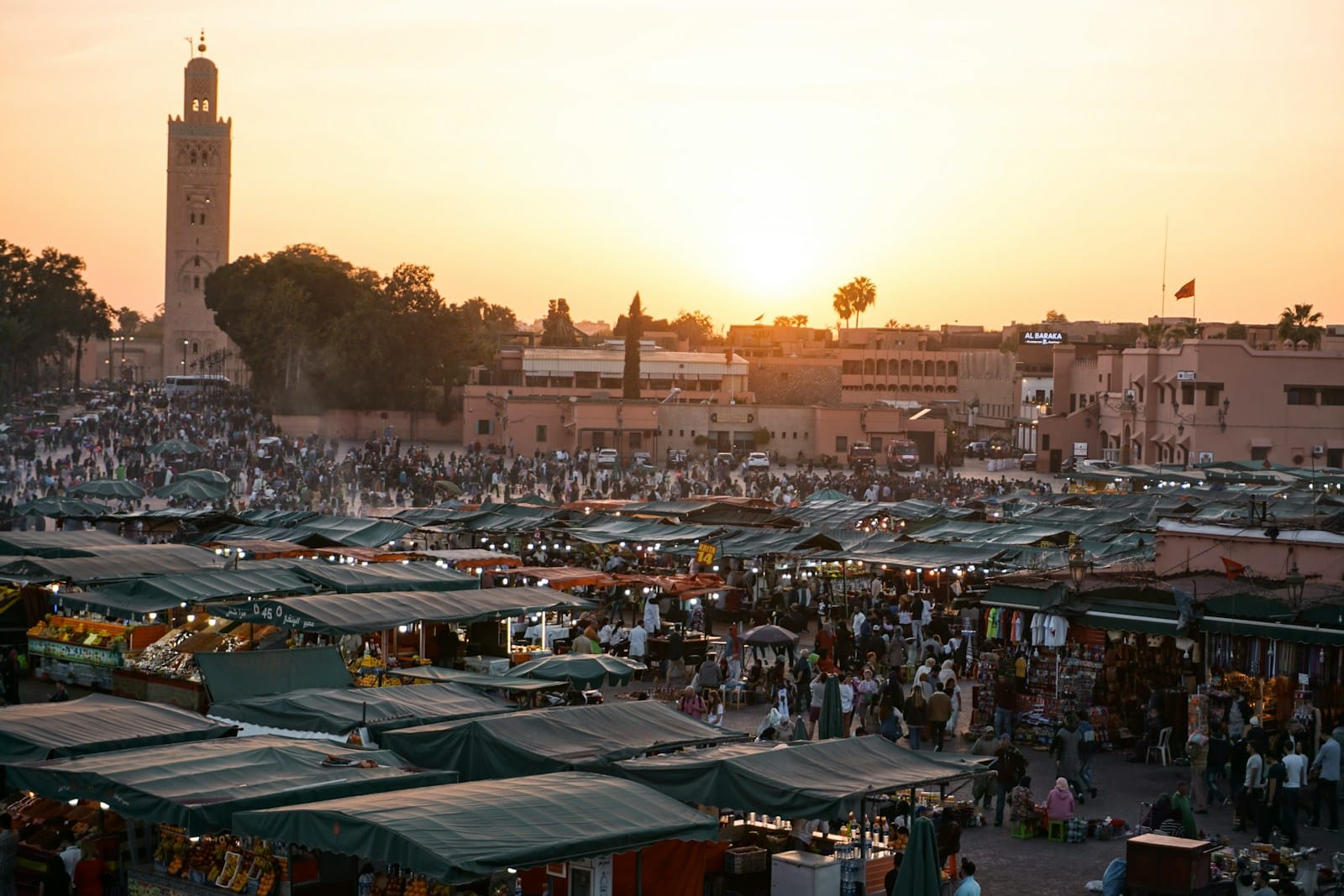
The first time you walk into Jemaa el-Fnaa at dusk, the smell hits before the sound: orange peel, grilled meat, and woodsmoke from the food stalls firing up for the night. Then the drums start. Marrakech does not ease you in. It just begins.
That is why deciding what to do in Marrakech can feel like trying to choose a single song at a wedding. The city packs ancient palaces, gardens designed by French painters, a giant medina, modern art museums, and the Atlas Mountains all into one short trip. With a few days and a plan, though, you can see the best of it without burning the kids out or running yourself into the ground.
This guide covers what to do in Marrakech for families, what to skip, where to eat, where to stay, and how to handle the medina without losing anyone in the souks. It is written for parents traveling with kids and toddlers, couples, and first-time visitors who want a practical, honest read.
- Explore Morocco with your kids stress-free! Private transport, kid-friendly hotels, and safe meals included. Plan Your Family Tour
- Experience the Atlas Mountains and Sahara Desert with hands-on fun for kids and comfort for parents. Customize Your Adventure
- Enjoy Morocco’s coasts and cities at a calm pace. Perfect for families with young children. Book Your Relaxed Tour
Quick takeaways
- Start at Jemaa el-Fnaa: The main square is loud, busy, and the heart of the medina. Visit at dusk for the best atmosphere.
- Three to four days is enough: Most travelers see the main sights without rushing. Add days for trips to the Atlas or coast.
- Dress modestly: Knees and shoulders covered makes everything easier. Women do not need to cover their hair.
- Marrakech with kids works: With a good guide, a comfortable riad, and shorter days, families do well here. Pace matters more than the itinerary.
- Day trips lift the trip: Ourika Valley, Imlil, or Essaouira give you mountains, waterfalls, or ocean within a two hour drive.
- Carry small change: Tips, taxi rides, and small purchases all run smoother with coins and small dirham notes.
- Skip the snake charmers: Animal welfare is poor and the photo fees are a tourist trap. Spend your money on food, crafts, or a hammam instead.
What should I not miss in Marrakech?
The four sights you should not miss in Marrakech are Jemaa el-Fnaa at sunset, the souks of the medina, Bahia Palace, and Jardin Majorelle. Together they cover the city’s history, daily life, royal architecture, and modern art in a way nothing else can.
Most travelers arrive with a long wish list and try to do everything. After ten minutes in the medina, that plan usually falls apart. The smarter move is to pick four anchor sights and build the rest of your days around them, with food breaks, riad downtime, and one or two surprises.
Jemaa el-Fnaa is the open-air square at the center of the medina. You go for the night food stalls, the storytellers, the gnawa musicians, and the chaos of a thousand people moving through one space. Bahia Palace, a few minutes’ walk away, shows you what nineteenth-century Moroccan craftsmanship looked like at its peak: carved cedar ceilings, painted plaster, courtyards with orange trees. Jardin Majorelle, restored by Yves Saint Laurent in the 1980s, is the city’s green lungs and a real break from the heat.
If you are visiting with toddlers or grandparents, swap the souks for the Menara Gardens or Le Jardin Secret. Both are calmer, with shaded benches and easy paths. The full medina experience can wait for the next trip.
Practical takeaways for what to do in Marrakech first:
- Go to Jemaa el-Fnaa about an hour before sunset and stay through dinner
- Visit Bahia Palace early in the day before the tour groups arrive
- Book Jardin Majorelle tickets online, since the walk-up queue can take 45 minutes
- Hire a local guide for your first medina walk: it pays back the cost within the first hour
- Save the souks for day two or three, once you have your bearings
If you want to skip the planning entirely, Morocco Family Vacation puts together private itineraries for what to do in Marrakech with kids, teens, and toddlers, with a local guide who keeps the day flowing and the meltdowns to a minimum.
Jemaa el-Fnaa: the heart of the medina
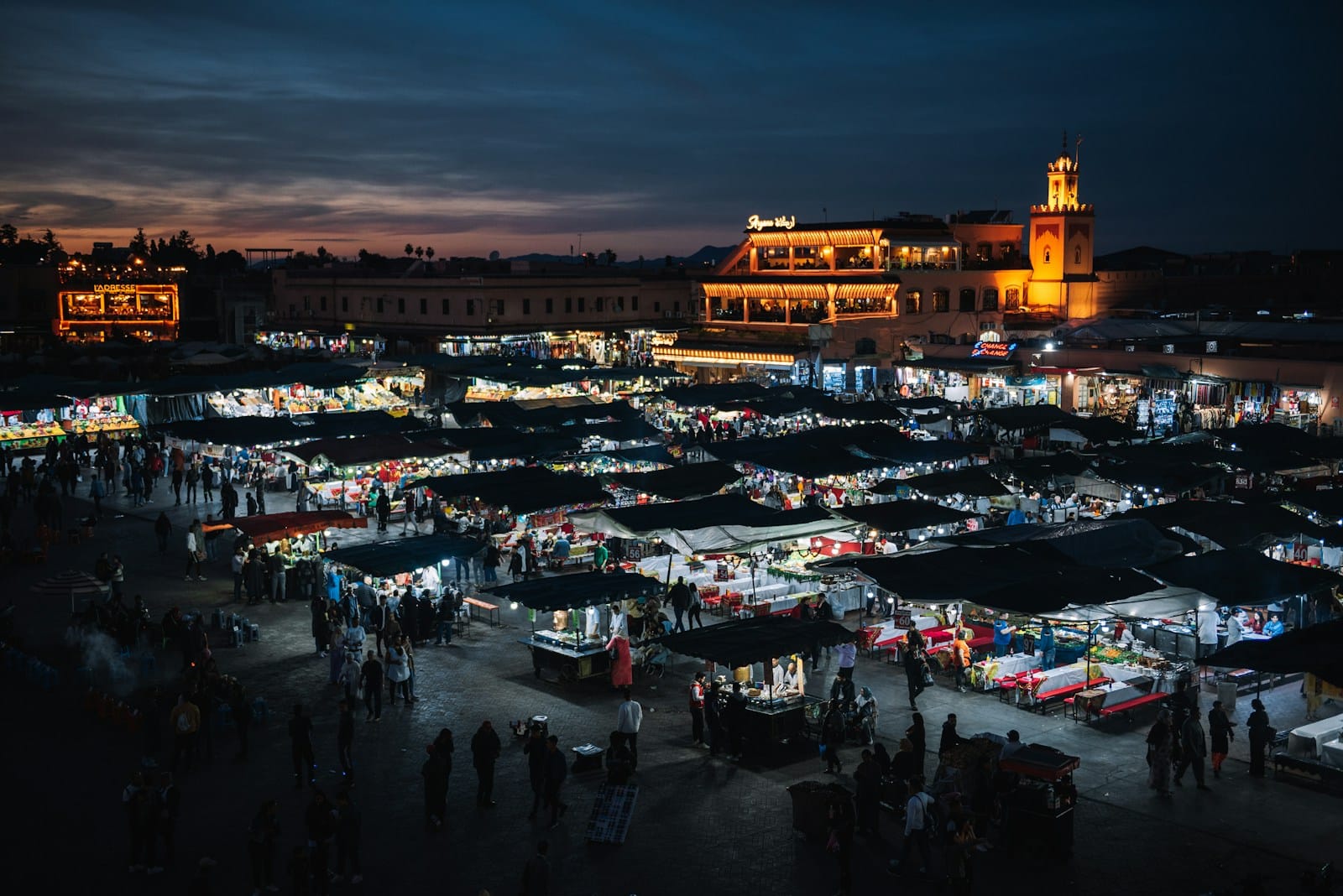
The square has two faces. By day it is half empty: a few snake charmers, water sellers in red costumes, a couple of monkey handlers you should walk past quickly. By 6 p.m. it changes. The food stalls roll out, the smoke rises, the drums start near the storytellers’ circles, and the whole square fills up with locals and travelers eating side by side.
You can sit at one of the rooftop cafes around the edge of the square if you want a calmer view. Glacier, Argana, and Le Café France all give you that. Order a mint tea and watch the place fill up from above. Then go down and walk through it.
If you have older kids, let them try the snail soup from one of the carts. It is cheap, hot, and the kids who are brave enough always remember it. Younger kids may prefer the brochettes (grilled meat skewers) from the stalls in the middle. Stick to stalls with high turnover. The busy ones are safer than the empty ones.
The square has been here since the eleventh century, when it was a public meeting ground for the Almoravid dynasty. The name means “assembly of the dead”, which sounds darker than it is. UNESCO put Jemaa el-Fnaa on its list of intangible cultural heritage in 2001 because the oral storytelling tradition was dying out, and the listing helped bring it back.
A note on the henna ladies: they will grab your wrist, draw on you fast, then demand 500 dirhams. Keep your hands close to your body and say “la, shukran” (no, thank you) clearly. Same goes for the chained monkeys and snakes. If you want henna, book a session at a salon in Gueliz instead. The work is better and the price is fixed.
The souks of Marrakech: how to shop without losing your mind
The souks are not one market. They are a connected web of small specialist streets, each named for the trade that used to happen there. Souk Smata for slippers. Souk Haddadine for blacksmiths. Souk Cherratine for leather. Most travelers walk in expecting an organized layout and walk out three hours later wondering how they ended up in a carpet shop drinking tea.
Pick one souk per day. Go in with a list of two or three things you actually want to find. Wander past five or six shops before you ask a price on anything. Then bargain in a friendly way. Start at about one third of the opening price and meet somewhere in the middle. Walking away is a normal part of the conversation, not an insult.
For carpets, go to Souk des Tapis but be patient. A real Berber carpet takes weeks to weave, and the prices reflect that. Anything under 100 euros is either machine made or very small. For leather, the tannery at Chouara is interesting to see (you get a sprig of mint to hold under your nose) but the leather quality at shops near Bab Debbagh is better. For spices, the Mellah (old Jewish quarter) has the best prices, often half of what you pay near the main square.
Avoid the salesmen at the entrances who offer to “show you the way”. They will walk you to their cousin’s shop and you will pay a 20 percent markup. The medina is genuinely confusing, but Google Maps mostly works inside it now, and asking shopkeepers (not loiterers) for directions usually gets you straight answers.
Bargaining without being a jerk
Bargaining in the souks is a conversation, not a fight. The shopkeeper expects you to negotiate. He does not expect you to be rude. Smile. Ask his name. Take the tea if it is offered. Make a counter-offer that is reasonable, not insulting. If he refuses, thank him and walk. He will often call you back with a better price. If he does not, no harm done.
This part of what to do in Marrakech is where most of the trip stories come from later. Even if you do not buy anything, walking the souks for a couple of hours is the best way to understand the city.
Bahia Palace and the Saadian Tombs
These two sights sit close to each other in the southern part of the medina, and you can do both in a morning.
Bahia Palace was built in the late 1800s by Si Moussa, the grand vizier to the sultan. The name means “the brilliant”. The palace covers about eight hectares and you can walk through most of it for around 90 dirhams. The cedar ceilings are the thing to look at, painted in tight geometric patterns that took artisans years to finish. The harem courtyard, with its black and white marble floor, is the calmest spot in the medina. Take your time there.
The Saadian Tombs are smaller and easier to miss. The Saadian sultans ruled Marrakech in the sixteenth and seventeenth centuries. After the dynasty fell, Sultan Moulay Ismail sealed the tombs behind a wall and they stayed hidden until 1917. The tombs hold 66 royal graves, including children, and the main chamber has marble columns and a carved cedar ceiling worth twenty minutes of your time. Lines can be long. Go early.
If you only have time for one, pick Bahia Palace. The space is bigger, the kids have room to run, and the experience is less crowded than the tomb chamber.
For a deeper history lesson, hire a local guide for a couple of hours. You will pay around 300 to 500 dirhams for the morning. A good guide will tell you why the carved Quranic verses are placed at eye level (so worshippers could read them) and why some of the palace rooms have no windows facing the street (privacy laws of the time). Worth every dirham if you are interested in how the city actually worked.
Jardin Majorelle and the YSL Museum
The blue garden is the most photographed spot in Marrakech, which means you need a plan to enjoy it. Jacques Majorelle, a French painter, built it as his private home and studio in the 1920s. After his death the garden fell into disrepair until Yves Saint Laurent and Pierre Bergé bought it in 1980 and restored it.
You can do the garden, the small Berber Museum, and the YSL Museum next door in about three hours. Book tickets online ahead of time. The walk-up queue at peak season can run 45 minutes in the sun, and there is no shade.
The garden itself is small, around two and a half acres, but the layout makes it feel bigger. The pots and trim are painted the famous Majorelle blue, a specific cobalt shade Majorelle mixed himself. The cactus collection is the standout. There are over 300 species, some over thirty feet tall.
The YSL Museum next door takes about an hour. If you have a fashion-curious teenager with you, this is the best stop in the city for them. The rotating exhibitions of Saint Laurent dresses, the screening room with Loulou de la Falaise interviews, the original sketches: it punches above its weight as a museum.
For families with younger kids, the museum visit is short and the garden has enough open space for a few minutes of running. Keep an eye on the koi ponds. If you are figuring out what to do in Marrakech with limited time, prioritize Jardin Majorelle over the Menara Gardens. Menara is pleasant but less interesting visually.
Book Your Tour with Morocco Family Vacation
Book a guided day trip to discover Berber villages, mountain scenery, and authentic rural Moroccan culture.
What to do in Marrakech with kids
This is where the city surprises people. Marrakech is loud, the medina is dense, and the snake charmers will not endear themselves to small children. But the city is great for kids if you set it up right.
Start with a riad over a hotel. A traditional courtyard house gives the kids a pool or a fountain to play near, a quiet break from the streets, and usually a family suite. Most riads will warm up dinner for tired children and serve breakfast on the roof terrace.
Kid friendly activities that work
For activities, what to do in Marrakech with kids looks like this:
- A cooking class in a riad: kids roll their own briouats and decorate cookies. Most lessons run two to three hours and end with eating what you made
- A morning at Le Jardin Secret: this restored garden inside the medina has fountains, benches, and a quiet cafe. Easier than Majorelle and right in the center
- A camel ride in the Palmeraie: 30 to 60 minutes is plenty. Longer rides bore most kids
- The Henna Cafe near the medina: ethical henna artists, fair prices, kid friendly designs, and good food upstairs
- A day trip to the Ourika Valley: waterfalls, river crossings on stepping stones, lunch at a Berber family’s home, and a break from the heat
Skip the big squares at peak heat (1 to 4 p.m.). Pace the days. One major sight in the morning, lunch, riad downtime, one more thing in the late afternoon. Trying to cram three palaces into a single day with kids will ruin everyone’s mood.
The medina can feel intense to children at first. Walk them through it on day one slowly, hold hands, and let them stop at shops that interest them. By day two they will start recognizing turns and feeling braver. By day three they will be leading you back to the riad.
For families with kids and toddlers, Morocco Family Vacation builds private itineraries that pace the day the way a parent would: shaded walks in the morning, real food, riad time during the heat, and gentle activities in the evening. Trusted local guides, kid friendly stays from the medinas to the Sahara, and no surprises that ruin the trip.
What to do at night in Marrakech
Night in Marrakech splits into two cities. The medina at night is about food, music, and walking. Gueliz is about cocktails, rooftops, and restaurants.
In the medina, start at Jemaa el-Fnaa for dinner. The food stalls open around 6 p.m. and run until midnight. Stall 14 (Mohammed’s) is reliable for grilled meat. Stall 1 is good for sheep’s head, if you are feeling adventurous. The orange juice carts squeeze fresh juice for about 5 dirhams a glass.
After dinner, walk to one of the storytellers’ circles. The hlaykia (oral storytellers) still perform here in Darija, the Moroccan Arabic dialect. Even if you do not understand a word, the rhythm and the crowd’s reactions are worth the stop. UNESCO listing this tradition saved it from dying out completely.
Family evenings in the medina
For something quieter, book a dinner at a traditional riad restaurant. Le Tobsil, Dar Yacout, and La Maison Arabe all serve Moroccan menus with music in the courtyard. Reserve a day or two ahead.
What to do at night in Marrakech if you want a real night out:
- Comptoir Darna in Gueliz for live music and dinner, with belly dancing later in the evening
- Le Salama, a multi-level rooftop near the main square with city views
- Sky Bar at La Renaissance hotel for the best aerial view of the city at sunset
- Theatro nightclub for younger travelers who want to dance, open until 4 a.m.
- A hammam session at Les Bains de Marrakech, open until 9 p.m. and the best wind down after a long day
Families with younger kids should plan an early dinner in the medina or at the riad. Most kids melt down after 8 p.m., and the streets get busier with adult crowds after that.
If you have a teenager, the night market at Jemaa el-Fnaa is a memorable experience. The smell of grilled meat, the henna ladies (avoid them), the storytellers, the musicians, the snake charmers winding up for the night. Walk them through it once, then return to the riad. Twice is too much.
Gueliz: what to do in Marrakech beyond the medina
Gueliz is the modern part of the city, built by the French in the 1910s and 1920s when Morocco was still a French protectorate. The streets are wide, the cars are real, and the cafes do espresso instead of mint tea (though most have both).
A few things make Gueliz worth a half-day visit, especially after a few days in the medina.
The MACAAL contemporary art museum is one of the best in North Africa. The rotating shows usually feature Moroccan and African artists. Entry is around 70 dirhams. Plan an hour or two.
The Saturday morning produce market on Avenue Mohammed V is where local families do their weekly shopping. Olives, fresh bread, dates, fresh fish in season, and seasonal vegetables. Bring small bills. Most stalls do not break large notes.
For shopping with fixed prices (no haggling), walk Rue de la Liberté and Rue Yougoslavie. Brands like 33 Rue Majorelle stock Moroccan designers across clothing, jewelry, and homeware. The prices are higher than the souks, but the quality is consistent and you do not have to negotiate.
For lunch, Plus 61 (Australian-Moroccan fusion), Naranj (Lebanese), or Café Kif Kif (vegetarian) all work well. Kids menus available at most places.
What to do in Marrakech if you want a half day away from the medina could look like this: brunch at one of the cafes, an hour at MACAAL, a walk through the boutiques, and dinner at Comptoir Darna with live music. Easy day. No medina pressure.
Gueliz also has a few playgrounds (Parc El Harti has shaded benches and play structures), which sounds boring but is genuinely useful when traveling with younger kids who need to burn off some energy in a familiar setting.
Day trips from Marrakech worth taking
Day trips count as part of what to do in Marrakech once you are past day three. The Atlas Mountains, the coast, and the desert all sit within reach.
Atlas mountain day trips
The Ourika Valley is the closest and easiest. About an hour south, the road climbs into the foothills past Berber villages, market towns, and the river that gives the valley its name. The seven waterfalls hike at Setti Fatma takes two to three hours round trip, with stops at small cafes built into the rocks. Lunch at a Berber family home costs around 150 dirhams per person and includes tagine, salads, bread, and mint tea.
The Imlil valley sits higher, about an hour and a half from Marrakech. This is the base for Mount Toubkal, the tallest peak in North Africa at 4,167 meters. You do not need to summit to enjoy Imlil. A morning walk through the walnut groves, lunch at Kasbah du Toubkal, and an afternoon back in the village makes a good day.
Essaouira is the coastal escape. Two and a half hours west, this fortified port city has wide beaches, a fishing harbor, and a smaller medina that is much easier to navigate than the Marrakech one. Lunch at the port, where you pick your fish off the boats and grill it on the spot, runs about 200 dirhams for two.
For families with older kids and teens, the Agafay desert is closer than the Sahara (less than an hour) and gives you camels, dunes, and a sunset dinner without an overnight drive. Not as impressive as Merzouga, but a fair substitute if you are tight on time.
For real Sahara dunes, you need three days minimum. Two days of driving plus one night at Merzouga, sleeping in a desert camp. It is worth the time if you can give it, but skip it if you only have a long weekend.
Book Your Tour with Morocco Family Vacation
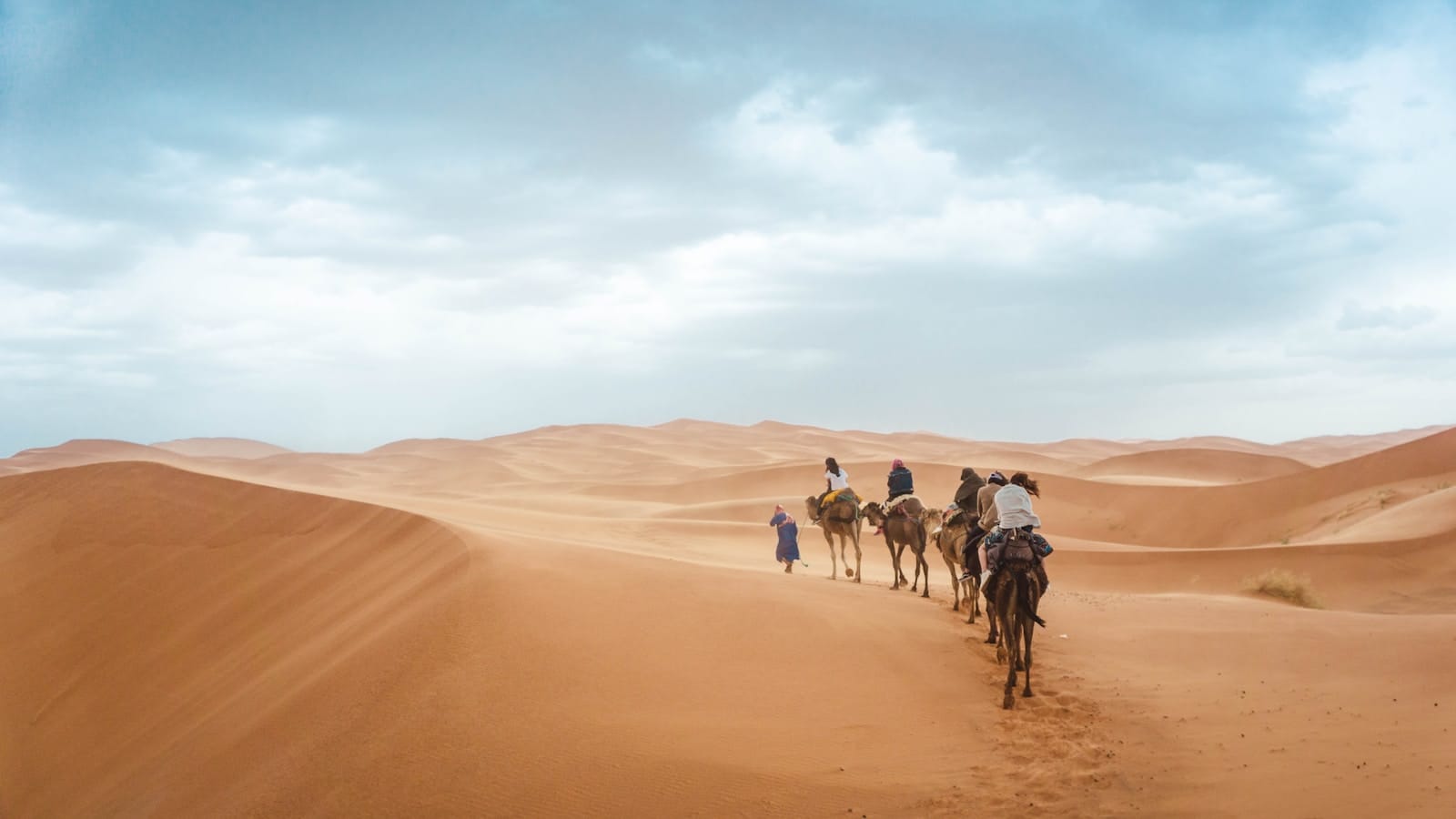
Enjoy a peaceful camel trek through the palm groves of Marrakech as the sun sets over the desert landscape.
What not to do in Marrakech
Most of what travelers regret on a Marrakech trip is preventable.
Do not pay for photos with the chained monkeys or snakes in Jemaa el-Fnaa. The animals are mistreated, the handlers will demand more money once you have agreed to a price, and your photo will look the same as everyone else’s. The trade survives because tourists keep paying.
Do not get pulled into following someone who offers to “show you the way” in the souks. They will lead you to a cousin’s shop. If you are lost, ask a shopkeeper inside a real store, or check Google Maps.
Do not wear short shorts and tank tops in the medina. Knees and shoulders covered will save you from constant stares and uncomfortable interactions. This applies to women and men. You do not need to dress conservatively at the riad pool, but in the medina it makes the trip easier.
Do not drink the tap water. Bottled water is cheap (5 dirhams a liter at most shops) and the trip is short. Ice in drinks at most restaurants comes from filtered water, but ask if you are unsure.
Do not flash expensive cameras or phones in the medina. The risk is not violence: it is pickpocketing in crowded areas like Jemaa el-Fnaa or the entrance to Souk Semmarine. Keep cameras on a wrist strap and phones in a zipped pocket.
Do not rush the souks on your first day. The map seems simple until you get inside. Pick a single street to walk, then leave the way you came. Build confidence gradually.
What to do in Marrakech well comes down to pacing as much as picking the right sights. The travelers who try to see everything in two days come home exhausted and grumpy. The ones who plan four days and accept that they will miss things come home wanting to return.
Where to eat and where to stay
The food scene in Marrakech covers every budget, with 20-dirham brochettes at Jemaa el-Fnaa on one end and 1,500-dirham tasting menus at modern fusion restaurants on the other.
For traditional Moroccan, Le Tobsil and Dar Yacout serve set menus in restored riads with live music. Reserve at least a day ahead, expect to spend around 750 dirhams per person, and plan for a slow three to four hour meal. This is dinner as theater.
For mid-range, Nomad and Café Clock both sit near the medina and do modern Moroccan plates that work well for kids: smaller portions, lighter spice, and rooftop seating. Lunch around 200 dirhams per person.
For street food, the orange juice carts on Jemaa el-Fnaa, the snail soup carts, and the grilled meat stalls cover dinner for under 100 dirhams per person.
Riads worth booking
Where you stay matters more in Marrakech than in most cities, because the medina riads change the entire feel of the trip.
For families, a riad with a pool is worth the splurge. Riad Yasmine, Riad BE Marrakech, and El Fenn (the new wing) all welcome kids and have rooftop pools. Expect to pay 1,500 to 4,000 dirhams a night for a family suite.
For luxury, La Mamounia is the iconic hotel. The gardens, the spa, the historic rooms. Around 6,000 dirhams a night and worth one night even if you stay in a riad for the rest of the trip.
For budget travelers, Equity Point Hostel and Riad Dia both have private family rooms under 800 dirhams a night. Pools at both. Air conditioning at Riad Dia.
The general rule: stay inside the medina for the first half of your trip, then move to Hivernage or Palmeraie for the second half if you want a quieter, more resort-style end. The contrast makes both parts feel better.
When to visit and what to wear
The best months are March to May and September to November. Days are warm (around 25°C), nights are cool, the gardens are in bloom, and the medina is busy without being unbearable.
June through August can hit 45°C. The medina becomes punishing in the middle of the day. If you visit in summer, plan early mornings, long riad breaks, and late evenings. Stay somewhere with a pool.
December and January are cooler (around 18°C during the day, 7°C at night). The light is beautiful for photography, the crowds thin out, and the prices drop. Bring layers. Riads are often poorly insulated and can be cold at night.
What to wear depends on the season, but the rule for the medina stays the same: knees and shoulders covered, light fabrics, comfortable closed-toe shoes (the souks are not flip-flop friendly). Women do not need to cover their hair.
For kids, the same applies. Light pants or long shorts past the knee, t-shirts (not tank tops), sun hats, and walking shoes. Sandals for the riad pool. A small backpack with water and snacks for each kid, since you will walk more than you expect.
A few practical packing notes for what to do in Marrakech across the year:
- Sunscreen is expensive and often poor quality locally. Bring your own
- Tampons are hard to find. Bring what you need
- Bring a small first aid kit with rehydration salts, especially for kids
- Pack a thin scarf or wrap for women, useful in mosques and on cooler evenings
- Bring a power adapter (Type C and E, same as continental Europe)
If you are unsure about your dates, March, April, October, and November are the safest weather bets for family travel with kids. The shoulder seasons give you most of the benefits without the summer heat.
Book Your Tour with Morocco Family Vacation
Experience the magic of the Sahara with a multi-day tour from Marrakech, including camel trekking and overnight desert camping.
Final thoughts: what to do in Marrakech without burning out
A good Marrakech trip is not about hitting every monument. It is about giving the city enough time to surprise you. Pick four or five anchor sights, build a riad break into the middle of each day, eat at one street stall and one nice restaurant, and leave space for the things you did not plan: a kid wanting to try mint tea, a shopkeeper showing you how to wrap a turban, a quiet street where someone is baking bread in a public oven.
The travelers who come back the happiest are the ones who slowed down. The ones who come back disappointed usually crammed too much into too few days. Three to five days is the sweet spot for most families. Less than that and you miss the calm middle of the trip, where the city stops feeling intense and starts feeling familiar.
If you want a trip designed around your kids’ ages, your stamina, and the food you want to eat, Morocco Family Vacation builds Private Family Tours in Morocco for Kids, Teens, and Toddlers. Plan your perfect family trip with us through custom private tours built for families traveling with toddlers, kids, and teens. You get family friendly experiences, trusted local guides, and handpicked comfortable stays from the medinas all the way to the Sahara. Let someone else handle the logistics while you focus on the moments that make the trip worth taking.

Kate Carter
Family Travel Blogger
Kate Carter is a mom and travel blogger who fell in love with Morocco’s culture and warmth. Through Morocco Family Vacation, she shares tips and stories to help travelers enjoy authentic, stress-free experiences. Join us along the way.
Table of Contents
Our Services

At Morocco Family Vacation, we create custom Morocco tour packages designed around your interests and travel style. As a dedicated and independent travel agency, we specialize in private Morocco tours offering memorable desert adventures, cultural experiences, and family friendly itineraries while delivering attentive, personalized service from start to finish.