
Weather in Morocco in December
Weather in Morocco in December: Family Travel Guide
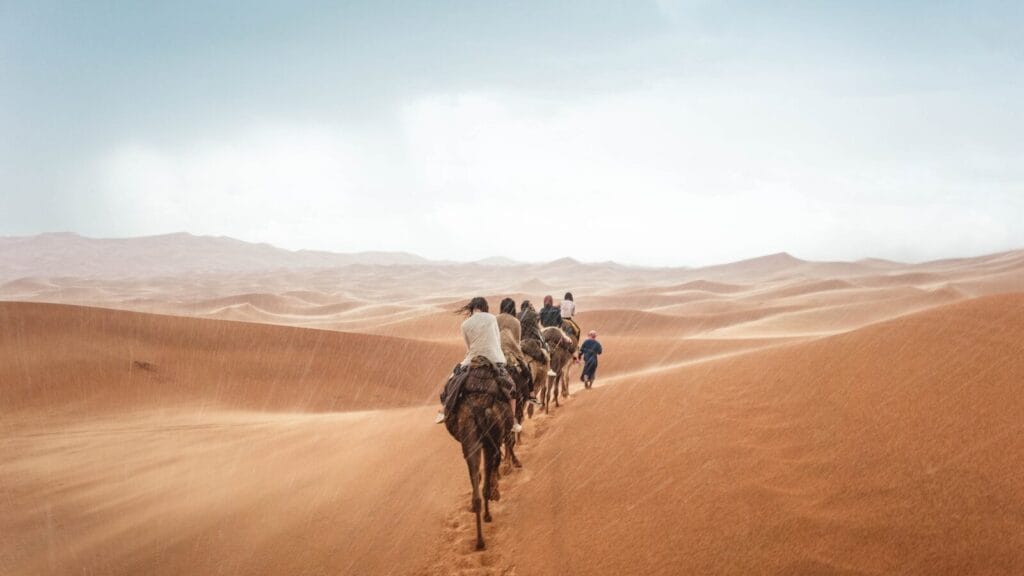
December in Morocco is the month most travelers underestimate. Days can feel like a warm spring afternoon in Marrakech, and that same night you might find frost on the Sahara dunes a few hours’ drive south. If you’re planning a winter trip with kids, the weather in Morocco in December is one of the friendliest variables you’ll deal with all year, but only once you understand how much it changes between the coast, the cities of the plain, the Atlas Mountains, and the desert.
This guide is written for families and travelers who want straight answers, not brochure copy. You’ll get real temperature ranges by region, what to pack for kids who get cold faster than adults, which festivals happen this month, where to base yourselves, and the small mistakes that ruin first-time Morocco trips at this time of year. By the end you’ll know whether December suits the kind of holiday you want, and you’ll have a packing list and a regional plan you can act on.
- 11-Day Family-Friendly Discovery Tour – Explore Morocco in December at a relaxed pace, with short drives, flexible schedules, and activities perfectly suited for all ages in the mild winter weather.
- 5-Day Cultural Immersion Experience – Discover Morocco in December through evening traditions, local meals, medina walks, and authentic cultural experiences in the calm winter atmosphere.
- Luxury & Comfort Escape – Enjoy Morocco in December with premium stays, private guides, elegant fireside dining, and full flexibility throughout the cooler winter months.
Quick Takeaways
- Mild days, cold nights: Most cities sit between 15 and 20°C during the day in December, but inland and desert nights can drop near zero.
- Marrakech is the sweet spot for families: Comfortable daytime temperatures, fewer crowds than summer, and easy day trips to Atlas snow.
- The Sahara is colder than people expect: Pack like you’re going skiing at night and to a sunny golf course by day.
- Coastal cities get rain: Tangier, Casablanca, and Rabat are the wettest, and the Atlantic wind cuts through thin layers.
- Two big events anchor the month: the Marrakech International Film Festival in late November to early December, and New Year’s Eve under the dunes in Merzouga.
- Christmas works as a family trip: Hotels go all out with decorations and kids’ programs, though it’s a Muslim country so it stays low-key in the streets.
- Layered clothing wins: One outfit doesn’t cover sunrise camel rides, midday souk walks, and a night in a riad with no central heating.
Weather in Morocco in December
Live conditions in 6 major cities, December averages for 10 destinations, packing tips, and family-friendly tour options for the holiday season.
Live data from Open-Meteo · Refreshed when widget opens
December Temperature Ranges
What to Pack for Morocco in December
Mid-weight for cities, properly insulated for the desert and Atlas evenings.
Long sleeves, jeans, a fleece or sweater. Daytime is mild, evenings drop fast.
Northern cities and the coast see real rain. Skip it only if you stay south.
Waterproof if possible. Medina cobbles get slick after rain.
Sahara nights drop near freezing. Mosque visits also call for shoulder cover.
Daytime sun is strong even in cool weather, especially in the desert and south.
Family Morocco Tours for December Travelers
Custom private itineraries with trusted local guides, comfortable family-friendly stays, and pacing that works with the cooler December rhythm. Pick your length, we shape the rest.
10 Day Morocco Tour from Casablanca
The compact family classic. Casablanca, Fes, Sahara, and Marrakech with breathing room for kids.
- Imperial cities + Sahara desert night
- Private driver, flexible pace
- Family-tested riads
11-Day Family-Friendly Tour from Casablanca
One extra day for slow mornings, hammam stops, and a deeper Sahara stay with the kids.
- Adds an Atlas mountain day
- Two nights in the Sahara region
- Cooking class option
12-Day Morocco Family Vacation
Imperial cities, the blue town of Chefchaouen, Sahara dunes, and Atlas valleys at a humane pace.
- Includes Chefchaouen
- Mid-trip rest day built in
- Private 4×4 for desert legs
14-Day Family Morocco Tour from Casablanca
The full Morocco picture without the rush. Coast, imperial cities, Atlas, Sahara, and a final unwind.
- Atlantic coast included
- Two desert nights, two Atlas nights
- Fully customizable to your dates
Climate averages reflect long-term December means for each location. Live data: Open-Meteo. © Morocco Family Vacation.
Is December a Good Month to Visit Morocco?
Yes, December is one of the best months to visit Morocco, especially for families who want warm sunshine without the punishing summer heat and the spring tourist crowds. Daytime weather in Morocco in December is mild across most of the country, schools are still in session for much of the month so popular sites stay manageable, and prices outside the Christmas holiday week are noticeably lower than in spring or autumn.
Three factors make December work. First, the weather in Morocco in December is forgiving for sightseeing with children: you can walk medinas, cross a souk, and explore an old fortress without anyone melting. Second, the country shifts into a low-pressure rhythm. Riads are quieter, guides have more time to slow tours down for kids’ attention spans, and restaurants don’t need to flip tables. Third, the contrast between regions becomes a feature, not a bug. You can ride camels at sunrise in a 19°C desert and see snow on the Atlas Mountains the same week.
However, December isn’t for everyone. If you want to swim, the Atlantic is too cold for most kids by this point in the year, and rooftop pools at riads are often unheated. If your family hates layering or your kids refuse hats and scarves, the temperature swings between day and night will be frustrating. And if you’re heading deep into the south for Sahara nights, you need real winter clothing, not just a hoodie.
Quick takeaways for deciding:
- Choose December if you want warm daytime sun and mild walking weather
- Choose December if you want Christmas atmosphere with no European cold
- Skip December if beach swimming is a non-negotiable
- Skip December if your family won’t pack proper layers
- Book by October if you want top riads for Christmas week
At Morocco Family Vacation, we build December itineraries that pair Marrakech with one short desert overnight, so families enjoy the warmth without enduring the coldest nights.
What the Weather in Morocco in December Actually Feels Like
If you’ve only checked a generic weather app, you’ve seen averages that don’t capture the lived experience. The weather in Morocco in December has two personalities. From roughly 10 a.m. to 4 p.m., it’s pleasant. Think a sunny late October day in southern Europe. After dark, especially inland and in the desert, it turns into something closer to a cold autumn evening, and few buildings have the heating systems Europeans or North Americans expect.
This matters more than the raw numbers. A riad in Marrakech may show 16°C indoors at 8 p.m., and that feels cold when there’s no insulation, the floors are tiled, and the walls hold the day’s chill. So when locals say December is “mild,” they’re telling the truth about the outside thermometer, but you’ll still want warm sleepwear and slippers for your kids.
Rain is real, but limited. Most of the country sees a handful of rainy days in December, mostly in the north and along the Atlantic. Skies clear quickly. Even on a wet morning in Fes, you might be in full sun by lunchtime. The mountains are a different story: snow appears above 1,500 metres, ski stations at Oukaïmeden can open by mid-month in a strong year, and high passes occasionally close briefly.
The single best mental model is this: the weather in Morocco in December behaves like a Mediterranean winter at low elevation and a continental winter the higher and further inland you go. Pair that with crisp light, low humidity, and short days (sunset around 5:30 p.m.), and you have a country that rewards early starts and slow afternoons.
Morocco in December Temperature by Region
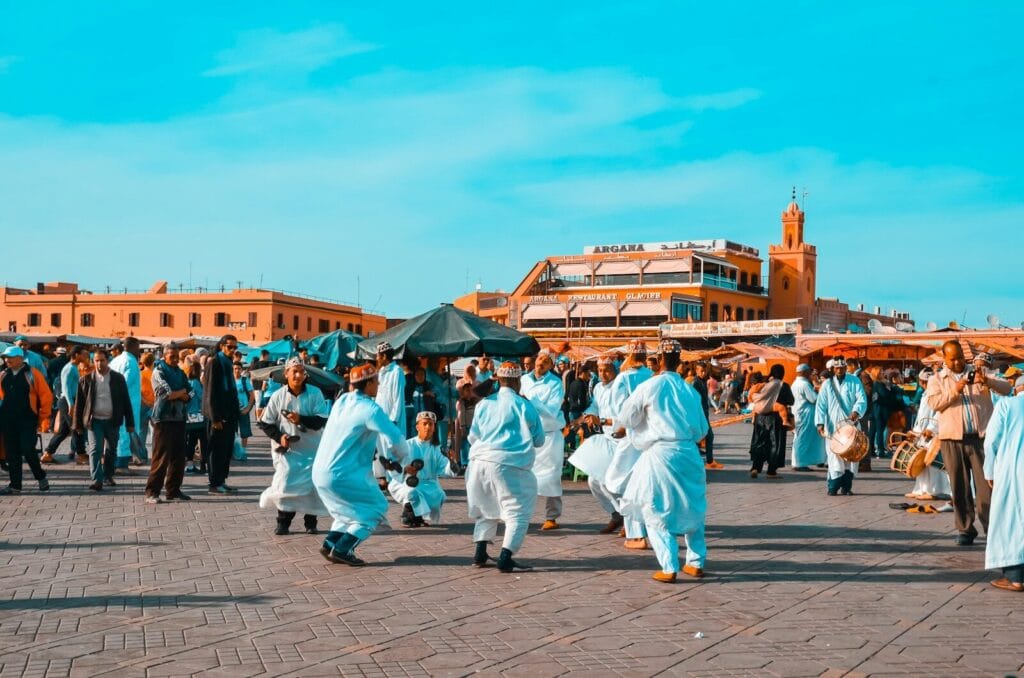
Averages hide too much. Here’s what the Morocco in December temperature actually looks like in the places you’re most likely to visit.
Marrakech in December
Daytime highs hover around 18 to 20°C, sometimes climbing to 22°C in a sunny spell. Nights fall to 6 to 8°C. Rain shows up two or three times a month at most. The December weather in Marrakech Morocco is the city at its most walkable. You can spend a full morning at the Jardin Majorelle or Bahia Palace without anyone overheating, and rooftop restaurants run heaters and blankets in the evening. Christmas week is the only time prices jump sharply, so build your trip around it.
Tangier, Casablanca, and Rabat in December
The Atlantic coast is cooler and wetter. Tangier in December sees highs around 16 to 17°C with regular drizzle and a steady wind off the strait. Casablanca in December feels similar but slightly milder. Rabat in December is the gentlest of the three, with sunny mornings being common between weather fronts. Bring a waterproof jacket your kids will actually wear, because thin coats won’t cope with the wind chill.
Fes in December
Fes in December sits at 400 metres elevation and feels colder than Marrakech. Days reach 15 to 17°C, nights can fall to 4°C, and the medina’s tall narrow streets stay shaded and cool. The upside: the imperial city is at its most photogenic in winter light, and tannery smells are far gentler than in summer.
Merzouga and the Sahara Desert in December
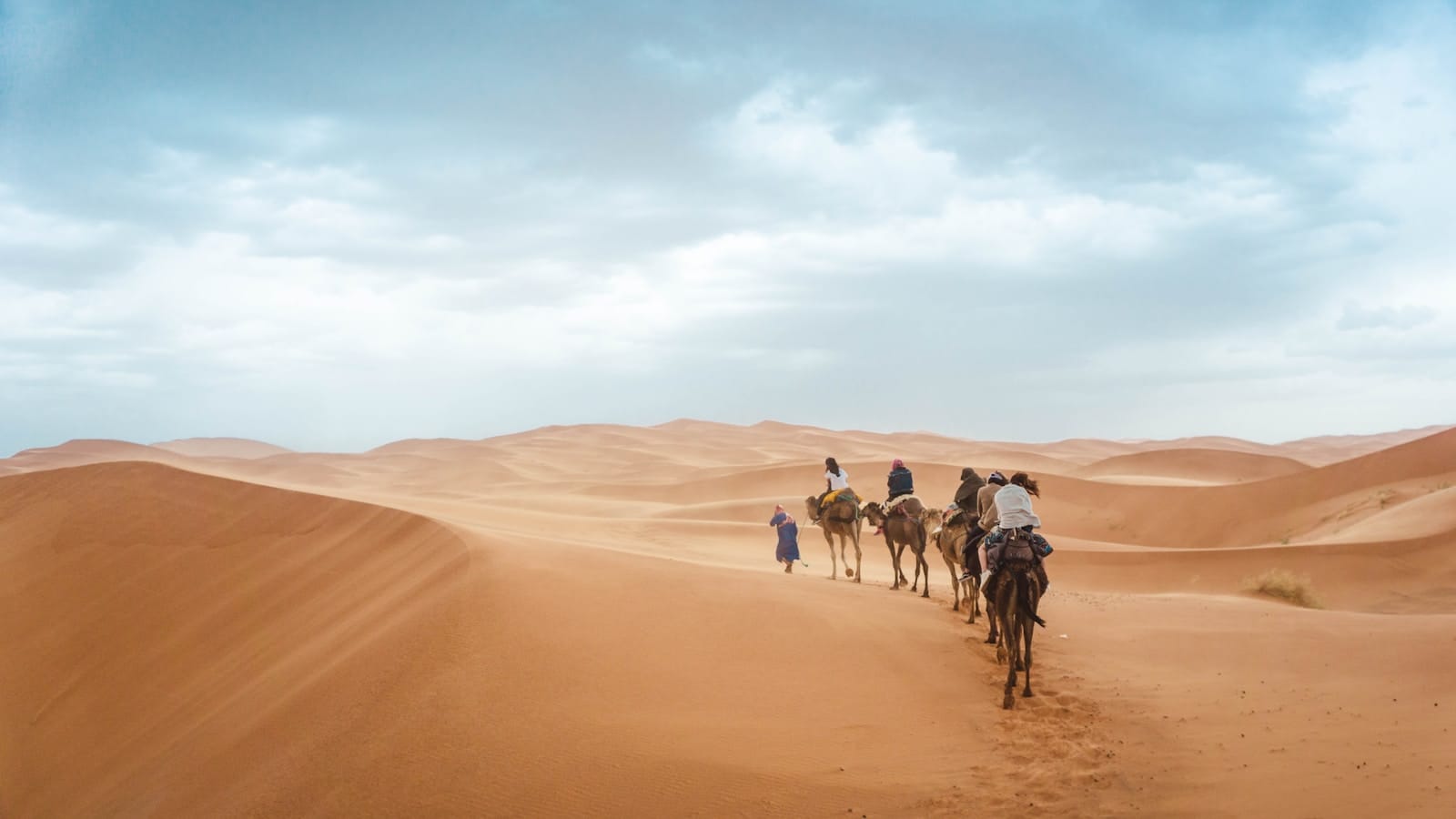
The Sahara surprises every first-time visitor. Merzouga in December delivers warm sunny days around 18 to 20°C, but desert nights regularly drop to 0 to 5°C, with the occasional frost. Wind chill in open desert is real. Bring proper insulated layers, warm hats for kids, and don’t trust marketing photos that show people in T-shirts at a campfire.
What to Wear in Morocco in December (Family Packing Guide)
Packing well for the weather in Morocco in December is mostly about layers, plus one or two real winter pieces for the desert leg of a trip. Here’s what works.
- For days in the cities, kids do fine in long trousers, a T-shirt, and a light fleece or hoodie that comes off mid-morning. Add a packable rain jacket for the north and the coast. Adults get away with the same setup, plus a scarf that doubles as sun protection or a head cover when visiting religious sites.
- For desert nights, treat it like a short winter trip. Insulated jacket, thermal base layer, beanie, gloves, and proper socks. A young child can lose heat fast in an open Berber tent, and a hot water bottle (riads will usually fill one for you) is the difference between a cosy sleep and a long miserable night.
- Footwear matters more than people expect. Tiled medina floors stay damp after rain, and slippery soles cause falls. Sneakers with grip work for cities; closed shoes with thicker soles are better for the desert because sand gets very cold after dark. Skip sandals except for hotel pool decks.
Before you head out, check our complete Morocco December packing list + with kids to make sure you’re ready for the cold nights and mild days.
One small tip that saves trips: pack one outfit per person that you can mix and match for evenings out, because riad restaurants are usually unheated, and a thin dress or shorts will ruin dinner.
Morocco in December with Kids: Family-Friendly Days
Travelling with children changes how the weather in Morocco in December plays out, and it usually plays out well. Mild days mean fewer meltdowns, low humidity means better sleep, and shorter daylight hours give you a natural reason to finish sightseeing early and return to a warm riad before the family runs out of energy.
The best family routine looks like this: a slow breakfast on a sunny rooftop, one main activity in the late morning, lunch at a calm restaurant, a long afternoon back at the riad with the pool (if heated) or board games, then dinner. Don’t try to cram three sights into a day. Kids in Morocco get tired of the souks faster than parents do, especially when the sensory input is high.
Activities that work in December include camel rides in the palm groves near Marrakech, a horse and carriage ride at sunset, cooking classes designed for kids, a half-day at the Menara Gardens, and one Sahara overnight if your children are five or older. The Atlas foothills work well for an easy day hike, and the Ourika Valley is forty-five minutes from Marrakech if you want a change of pace.
Indoor backup plans for cool days
When the weather in Morocco in December turns drizzly, lean on hammams (some have family-friendly hours), the Yves Saint Laurent Museum in Marrakech, the Mohammed VI Museum of Modern Art in Rabat, and rainy-day cooking classes. Most riads will set up a kids’ movie corner with mint tea on request.
Festivals in Morocco in December Worth Catching
Two December events stand out, plus a third that’s worth understanding so you don’t plan around old information. All three are easy to attend because the weather in Morocco in December cooperates with outdoor crowds.
Marrakech International Film Festival
The Marrakech International Film Festival is the country’s biggest international cinema event, and it bridges late November into the first week of December. The 2025 edition ran from 28 November to 6 December, and the 2026 edition is scheduled slightly earlier, from 20 to 28 November. If your trip overlaps, plan for busy hotels in the Hivernage and Gueliz neighbourhoods, livelier evening streets around Place Jemaa el-Fnaa, and a chance to see free public screenings on a giant outdoor screen. Families can attend the Young Audiences and Families sidebar, which is one of the festival’s most underrated sections.
New Year's Eve in the Sahara
If you want a New Year your kids will remember when they’re forty, the Sahara is the place. Camps near Merzouga and Erg Chigaga set up special dinners, bonfires, and Berber music nights for 31 December. The sky on a clear desert night this time of year is what every astronomy app is trying to imitate. Pair this with a guided 4×4 transfer rather than driving yourself, because rural roads can be tricky after dark.
Tan-Tan Moussem
The Tan-Tan Moussem is famous, UNESCO-listed, and often mentioned in older December travel articles. Worth knowing: the recent 2025 edition was actually held in mid-May, not December. The festival’s date has moved over the years, so if Saharan nomadic culture and camel trading are what draw you, ask your tour operator for the current schedule before booking around it. In December, the closest experience is staying with a Berber family near Merzouga and joining traditional music nights at camp.
Photography in Morocco in December
For photographers, the weather in Morocco in December is the country’s best-kept secret. Light is soft and warm for most of the day, the harsh midday glare of summer is gone, and the low sun makes long shadows in the souks that nobody gets in July. Even smartphone photos look better.
A few practical notes. Mornings are foggy in the Atlas valleys, which makes for moody mountain shots. The Sahara at sunrise in December often shows pink and orange tones rather than the white-hot pale of summer. Medina alleyways are quieter, so you can frame a shot without ten passers-by walking through it.
If you have one piece of advice for shooting with kids, it’s this: do your serious photo work in the first two hours after sunrise. By 9 a.m., your children will be ready for breakfast number two, the light will start to flatten, and you’ll have already captured the best images of the day.
Hiking in December in Morocco
Hiking in December in Morocco is genuinely good if you choose the right altitude. The Atlas foothills around Imlil sit at roughly 1,800 metres and have crisp clear days. Snow is possible above 2,500 metres, and Mount Toubkal climbs become a serious winter mountaineering objective rather than a regular trek, so don’t attempt the summit without proper kit and a qualified guide.
But keep in mind December is one of the most dramatic months in the Atlas Mountains, with snow-capped peaks and freezing nights check our Morocco Atlas Mountains map before you go.
For families, gentle hikes work best: the Ourika Valley waterfalls, paths around Setti Fatma, the Anammer trail above Imlil, and the Aït Bouguemez valley if you have an extra travel day. Pack hot drinks in a thermos, because mountain villages get cold quickly once the sun drops behind a ridge.
If you want a one-day Atlas experience from Marrakech, leave early, hike for two to three hours, lunch in a Berber home, and be back in the city by sundown. This pairs well with a flat city day before and after.
Where to Stay in Morocco in December
Accommodation choice has a bigger impact on your trip in December than in summer, because the weather in Morocco in December rewards warmth and ambiance over pool size. Look for three things: heating that actually works, a sunny courtyard or rooftop, and a kitchen that can deliver an early breakfast on cold mornings.
Marrakech: choose a riad in the medina for atmosphere, with a modern amenities and consistent heating. Family riads with two or three connecting rooms are common and worth booking early for Christmas week.
Fes: prioritise heated riads in the Fes el-Bali medina. The older the building, the colder it gets in winter, so check reviews specifically from December and January travellers.
Coastal stops: a sea-view room in Essaouira or Tangier is lovely, but ask if windows are double-glazed because the Atlantic wind is loud at night.
Sahara: pick a camp with proper beds, heavy blankets, a wood stove or fire pit, and ensuite bathrooms. Cheap camps are noticeably colder.
This is where Morocco Family Vacation plays a useful role. We design private routes that pair the right riad style with the right region for the weather in Morocco in December, so families don’t end up shivering in a beautiful but freezing room. Plan Your Moroccco December Family Adventure with us and we’ll match the accommodation to your kids’ ages and your tolerance for cold-night adventure.
Practical Travel Tips for Morocco in December
A few practical notes will save you small headaches.
Power and heating: Moroccan riads and traditional houses often rely on portable gas heaters or electric heaters in rooms. Ask your host to set yours up before sunset. Don’t leave gas heaters on overnight.
Getting around: the weather in Morocco in December is dry enough that road travel is reliable, but check forecasts for mountain passes such as Tizi n’Tichka and Tizi n’Test if you’re driving south. Snow can close them briefly.
Daylight: the sun rises around 7:45 a.m. and sets around 5:30 p.m. Plan your driving and outdoor activities accordingly. Sahara sunrise photos require a 5:30 a.m. wake-up.
Health: dry air and dust can irritate kids’ eyes and lips. Pack lip balm, basic saline drops, and a small humidifier, or just leave a wet towel near radiators overnight.
Money and crowds: ATMs work fine, cash is preferred in souks, and the only crowded window of the month is roughly 23 December to 2 January. Travel just before or just after for quieter sites.
warmest cities in morocco in december?
The warmest cities in Morocco in December are Agadir and Taghazout top the list. Both sit on the southern Atlantic coast and regularly see daytime temperatures between 20°C and 24°C in December. Taghazout, just 20 minutes north of Agadir, is a small surf village that stays warm and sunny through the winter months, making it a favourite for surfers, families, and anyone who wants genuine coastal warmth without the crowds. Agadir itself offers more infrastructure, a long sandy beach, and long stretches of daily sunshine. The wind off the ocean in both spots is gentle rather than biting. Families and couples who want real warmth without traveling deep into the desert tend to land here first.
Marrakech comes in close behind. Days typically reach 20°C to 23°C with plenty of clear sunshine. The evenings do cool down to around 8°C to 10°C, so you will want a jacket once the sun drops, but the daytime hours are genuinely comfortable for walking the medina, visiting gardens, and sitting at outdoor cafes without any discomfort.
Zagora and Ouarzazate in the pre-Saharan south also stay warm during the day, often hitting 22°C to 25°C. These are less visited cities but excellent if you want desert warmth combined with dramatic landscape.
Essaouira is mild rather than warm, sitting around 18°C to 19°C, but the Atlantic wind makes it feel cooler than the thermometer suggests.
If pure daytime warmth is your priority in December, Agadir and Taghazout are the clear answer. If you want warmth combined with culture and things to do, Marrakech is the better fit for most travelers.
How Hot Is Marrakech at Christmas?
A common related question. Marrakech around Christmas typically sees daytime highs of 18 to 20°C and nights of 5 to 7°C. It can feel warm in direct sun on a sheltered rooftop and quite cool in a shaded alley. Don’t expect to swim in a non-heated pool. Do expect to walk in comfort, eat outside at lunch, and need a jacket after sunset.
If you’re wondering which part of Morocco is the hottest in December, the answer is the deep south, around Zagora, Tan-Tan, Laayoune, and the Drâa Valley, where daytime highs can reach 22 to 25°C. The Atlantic south at Agadir is also reliably mild, with sunny days hitting around 21°C.
For families wondering what the coldest month in Morocco is, January edges out December slightly inland and in the mountains, but the difference is small. December and January both produce the country’s coldest nights, with the Atlas and the deep desert seeing temperatures near or below zero after dark.
Unexpected essentials for the desert
Beyond the obvious, desert travel in December requires specialized gear. Temperatures below freezing are common during overnight desert stays, particularly in Merzouga . Essential items include:
A thick jacket specifically for nighttime use
Thermal underwear as base layers
A keffiyeh (traditional headscarf) that protects your face from sand and sun
High boots rather than low shoes to prevent sand infiltration
Book Your Family Morocco Adventure Now. Limited December Spots Available
Secure Your Family’s December Morocco Escape Today. First-Time Travelers Enjoy 30% Off as Our Welcome Gift. Spaces Are Filling Up.
Can I sunbathe in Morocco in December?
Yes, you can sunbathe in Morocco in December, particularly in southern cities and along the Atlantic coast. Places like Agadir often enjoy daytime temperatures around 20°C to 24°C with many sunny hours. While the ocean water can feel cool, beach relaxation is still possible. In Marrakech and the Sahara, the sun is strong enough during the day for outdoor lounging. However, temperatures drop quickly after sunset, so warmer clothing is recommended for evenings.
Why early December is better than late December
Initially, December offers peaceful exploration with “off-season” pricing . Yet everything changes near month’s end. Christmas and New Year’s Eve mark high tourist season, with inflated prices on accommodations, flights, and tours . For late December travel, book well in advance. Primarily, early December provides authentic experiences without holiday crowds, typically at significantly lower costs.
How to plan around short daylight hours
December’s winter solstice brings sunset at 4:03 PM , with approximately 4 hours less daylight than summer. Accordingly, create solid plans for outdoor activities, especially hikes . Focus your energy on activities during daylight hours , starting early to maximize exploration time. This shorter window means that itinerary planning becomes essential for making the most of Morocco’s winter sunshine.
weather in morocco at christmas
Morocco’s weather at Christmas is generally mild, comfortable, and ideal for travelers. Along the coast, cities like Agadir, Essaouira, and Casablanca enjoy daytime temperatures around 18–22°C (64–72°F) with cool evenings of 10–14°C (50–57°F). Inland cities, such as Marrakech, are dry and sunny with similar daytime warmth but cooler nights.
Rainfall is minimal along the Atlantic coast, though northern and mountainous regions may see occasional showers. Overall, the pleasant winter weather makes Morocco perfect for sightseeing, desert adventures, coastal walks, and family-friendly outdoor activities during the Christmas season.
Average Weather in Morocco at Christmas
Marrakech & Imperial Cities: Expect mild, sunny days with average temperatures between 16–20°C (60–68°F). Evenings are cooler, so a light jacket is recommended.
Coastal Cities (Casablanca, Rabat, Essaouira): Christmas weather is mild and slightly cooler, around 14–18°C (57–64°F), with occasional light rain.
Sahara Desert (Merzouga & Erg Chebbi): Days are pleasant and sunny, often 18–22°C (64–72°F), but desert nights can be cold, sometimes close to freezing.
Atlas Mountains & Ifrane: This is the coldest region during Christmas, with snowfall possible, making it the best place in Morocco to experience winter scenery.
Overall, Morocco Christmas weather is ideal for travelers who want to escape harsh winter conditions while still enjoying cooler, comfortable temperatures.
Is Morocco Warm at Christmas?
Morocco is not hot at Christmas, but it is warm compared to Europe, Canada, and much of the USA. Most visitors find the weather perfect for:
City tours and cultural visits
Desert excursions and camel rides
Family-friendly sightseeing without extreme heat
For families traveling with kids or teens, Christmas weather in Morocco is especially comfortable, as activities can be enjoyed throughout the day without summer temperatures.
Is Christmas a Good Time to Visit Morocco?
Yes thanks to pleasant Morocco Christmas weather, fewer crowds than peak spring months, and excellent conditions for desert tours, Christmas is one of the best times of year to visit Morocco for families, couples, and first-time travelers.
What should I pack for a trip to Morocco in December?
Pack layers to accommodate temperature fluctuations throughout the day. Bring warm clothing for chilly mornings and nights, especially if visiting mountain or desert regions. Include a waterproof jacket for potential rain, comfortable walking shoes, and modest clothing for cultural sites. Don’t forget a warm jacket and thermal layers if planning desert camping.
Conclusion: Plan Your Morocco December Family Adventure
The weather in Morocco in December rewards families who plan smart and pack right. You get warm winter sun, manageable crowds, fair prices outside Christmas week, and a country that feels at ease with itself. The medina pace slows down, riad rooftops sit empty enough to feel like a private terrace, and the contrast between snowy Atlas peaks and warm Sahara dunes becomes a real-life geography lesson for your kids.
A good December trip looks something like this: arrive into Marrakech, spend three nights settling in and doing the easier sights, take a day in the Atlas or Ourika Valley, then head south for two desert nights and a slow drive back via Aït Benhaddou. Add a coastal stop at Essaouira if you have time. Avoid trying to fit Fes, Chefchaouen, the Sahara, and the coast into a single ten-day trip; you’ll spend more time in cars than with your family.
Morocco Family Vacation designs private routes that match the weather in Morocco in December to your family’s energy, ages, and travel style. Trusted local guides, child-friendly cooking and craft sessions, comfortable riads with real heating, and Sahara camps with proper beds make the difference between a trip you survive and a trip you remember. Plan Your Family Adventure with us, and let December do what it does best: deliver clear blue skies, golden light, and family memories the photos can only hint at.
─── Your questions, our answers.
Frequently Asked Questions
Our dedicated team is here to answer your Morocco Travel questions and ensure a smooth, memorable journey through Morocco.
Is the weather in Morocco in December good for first-time visitors with young children?
Yes. Mild daytime temperatures around 18 to 20°C in Marrakech and the south, low humidity, fewer tourists than in spring or summer, and short walking days make December a friendly month for families with kids aged three and up. Just pack proper layers for desert nights and indoor evenings.
What is the temperature in Morocco in December across the country?
Daytime highs typically fall between 15°C on the Atlantic coast and 22°C in the deep south. Nights swing widely: 6 to 10°C in cities, 0 to 5°C in the Sahara and the Atlas. The weather in Morocco in December is dry overall, with occasional rain in the north.
Can we visit the Sahara safely in December with kids?
Yes, with the right setup. Choose a camp with heated beds, plan a 4×4 transfer rather than long unguided drives, and bring serious warm clothing for the night. Most kids over five love the experience; toddlers may struggle with the cold.
What are the recommended activities in Morocco for a December visit?
Numerous activities can be enjoyed in Morocco during December. You can explore historical sites, partake in culinary tours, or embark on a desert adventure. Outdoor enthusiasts might take advantage of the mild weather to hike the Atlas Mountains or enjoy coastal cities’ scenic landscapes. December is also excellent for photography due to the clear winter light and snow-capped mountain backdrops.

Kate Carter
Family Travel Blogger
Kate Carter is a mom and travel blogger who fell in love with Morocco’s culture and warmth. Through Morocco Family Vacation, she shares tips and stories to help travelers enjoy authentic, stress-free experiences. Join us along the way.
Table of Contents
Our Services
-
Private Family Tours
-
Custom Itineraries
-
Sahara Desert Tours
-
Chefchaouen & Northern Morocco Tours
-
Luxury Desert Camping
-
Multi-Day Tours (2–16 Days)
-
Atlas Mountains Trips
-
Cooking Classes & Market Visits
-
Photography & Heritage Tours
-
Airport Transfers & Private Transport
-
Custom Birdwatching Tour in Morocco
-
24/7 Tour Support & booking Flexibility
At Morocco Family Vacation, we create custom Morocco tour packages designed around your interests and travel style. As a dedicated and independent travel agency, we specialize in private Morocco tours offering memorable desert adventures, cultural experiences, and family friendly itineraries while delivering attentive, personalized service from start to finish.
Popular Tours
Latest Posts
get in touch
#LawnCare
#Succulents
#GardenGoals
#Autumn
#SummerLandscaping