
Lanterns in Morocco
Lanterns in Morocco: A buyer's and traveler's guide
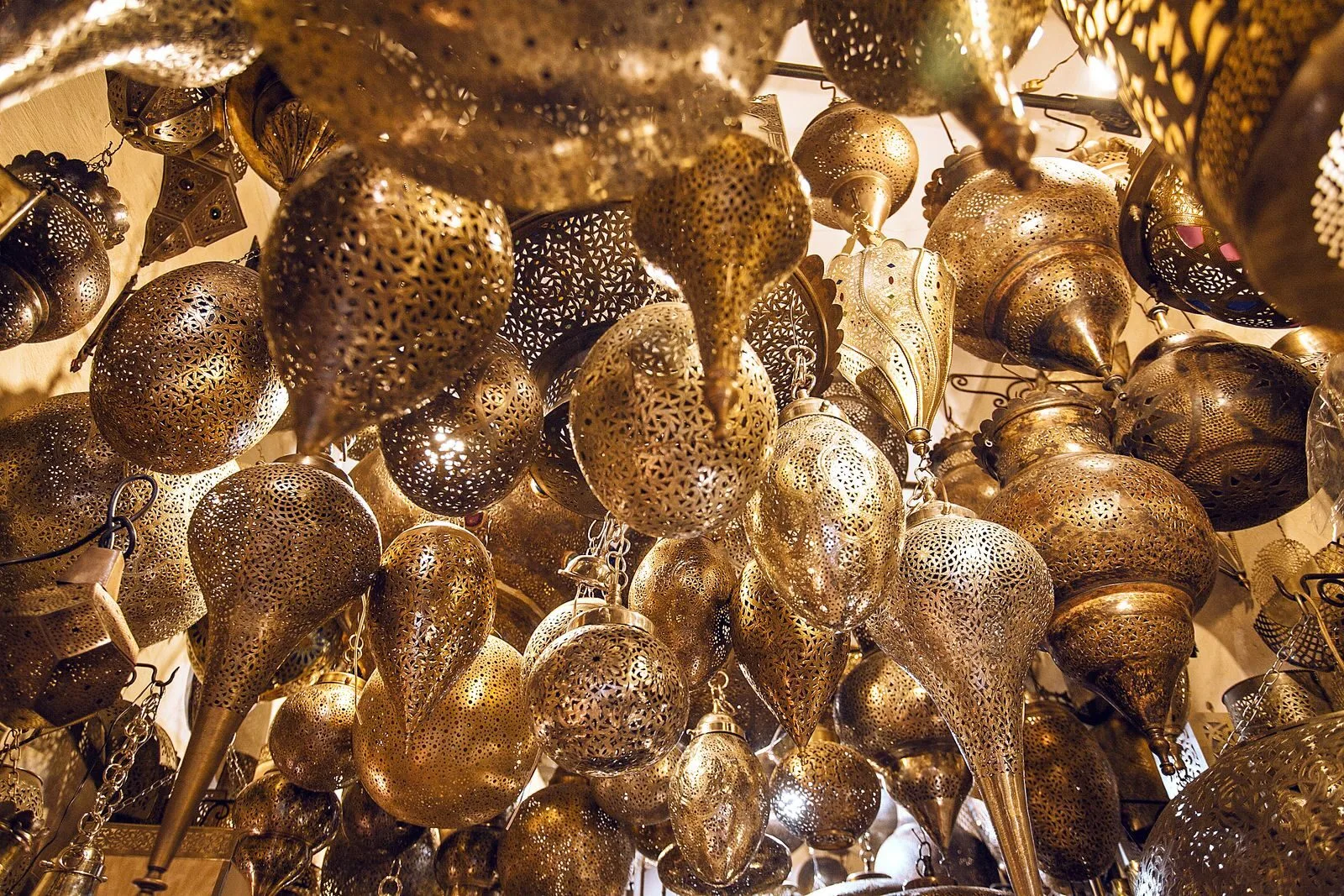
Walk into any narrow alley behind Marrakech’s Jemaa el Fna after sundown and the first thing you notice is not the smell of grilled lamb or the sound of a snake charmer packing up. It is the light. Hundreds of pierced brass and copper lanterns hanging from cables and hooks, throwing star-shaped shadows onto whitewashed walls and cobblestones. The lanterns in Morocco are the country’s most portable form of art, the thing every visitor ends up photographing and half of them end up shipping home.
This guide walks through what those lanterns are, what they are called in Arabic, where they are made, how much they cost, what makes a good one different from a tourist knockoff, and how to get one home in your suitcase without cracking the glass. It also covers the Ramadan connection, the difference between Moroccan and Turkish styles, and how to use a hanging lantern in a modern interior without making your house look like a themed restaurant.
Marrakech Shopping Tour: Souks, Moroccan Rugs & Lanterns
- Marrakech Bazaar Tour: Shop for Handmade Rugs, Lanterns & Local Treasures
- Experience the Atlas Mountains and Sahara Desert with hands-on fun for kids and comfort for parents. Customize Your Adventure
- Enjoy Morocco’s coasts and cities at a calm pace. Perfect for families with young children. Book Your Relaxed Tour
Quick takeaways
- Moroccan lanterns are called fanous (فانوس) in Arabic, from the Greek word for lantern. The plural is fawanis.
- They are made in the medinas of Marrakech and Fes, especially in Souk Haddadine (the blacksmiths’ souk) in Marrakech’s Mouassine quarter.
- Materials include brass, copper, tin, and iron, often paired with colored stained glass panels.
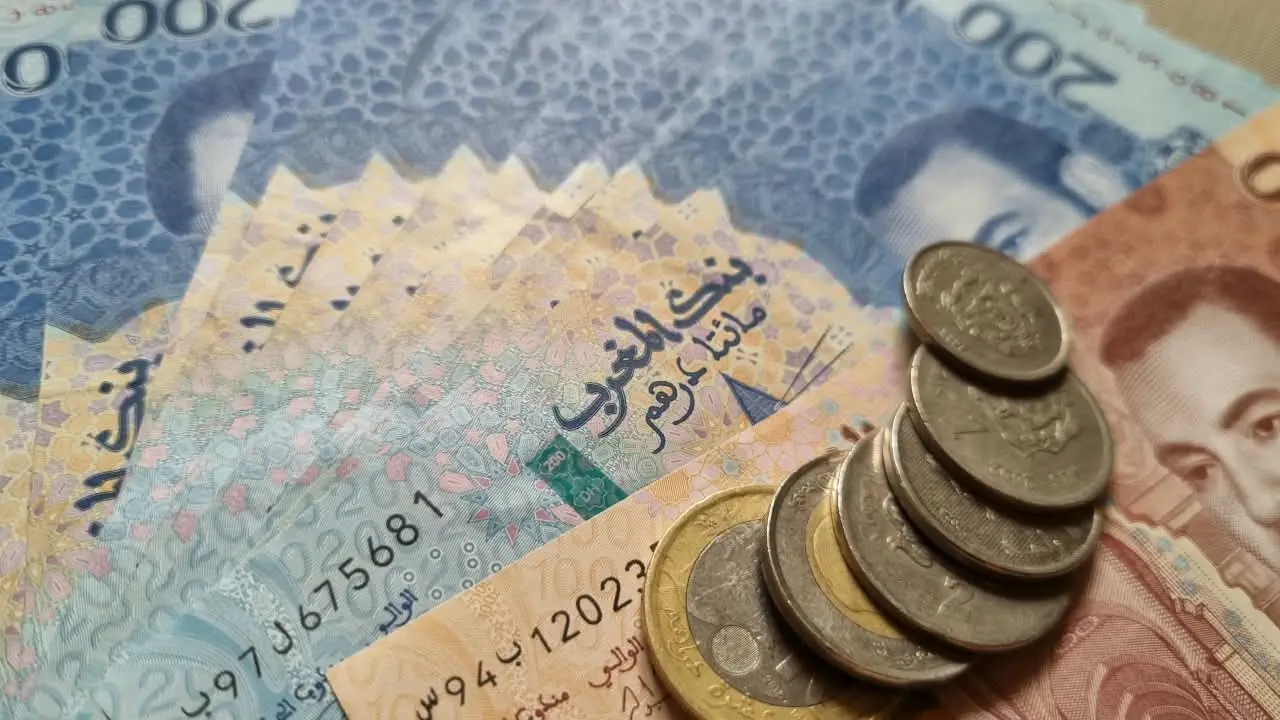
- Prices start around 50 to 150 MAD for small tea light holders and climb to 2,000 or 3,000 MAD (200 to 300 USD) for large hanging statement pieces.
- The Ramadan connection comes from Egypt, not Morocco, but Moroccan families now use the fanous during the holy month for decoration.
- Hand-cut lanterns are the real thing. Look for slight irregularities in the metalwork. Perfectly symmetrical pieces are usually machine cut or imported.
- Shipping home is easier than you think. Most Marrakech shops box lanterns for you and can arrange DHL or Aramex from the medina directly.
What are Moroccan lanterns called?
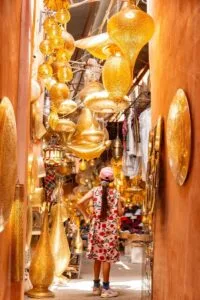
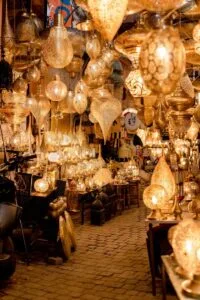
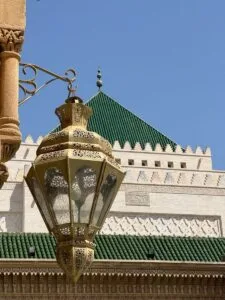
Moroccan lanterns are called “fanous” (فانوس) in Arabic, with the plural “fawanis” (فوانيس). The word means lantern or lamp, and it entered Arabic from the Greek word “phanós”, which meant a torch or bright light.
The name is used across the Arabic-speaking world, not just Morocco. In Egypt, Lebanon, Syria, and the Gulf, “fanous” refers to the same category of decorative pierced-metal lantern. Moroccan artisans and shopkeepers use the word interchangeably with the French “lanterne” and the English “lantern” when they talk to tourists.
Some regional and dialectal names also exist in Morocco. In Berber-speaking regions of the High Atlas, you may hear “misbah” (مصباح), which strictly means “lamp” and covers electric fixtures as well. Very old mosque-style hanging lamps are sometimes called “thurayya”, after the star cluster their shape resembles.
The distinction matters when you are shopping. If you ask a Marrakech vendor for a “fanous”, you will be pointed to a decorative pierced-metal lantern that holds a candle or bulb. If you ask for a “misbah”, the vendor may show you table lamps, wall sconces, and modern electric fixtures instead.
Practical takeaways:
- Say “fanous” (fah-noos) when asking for traditional lanterns in Marrakech or Fes
- Ask for “fanous kbir” if you want a large hanging piece (kbir means big)
- Ask for “fanous sghir” for a small tea light or table piece (sghir means small)
- Say “misbah” if you want a modern lamp with a bulb and cord
- Say “shama” if you want a candle to go inside a fanous (shama means candle)
For families building a Morocco itinerary that includes shopping the medinas, Morocco Family Vacation arranges private souk visits with a local guide who negotiates prices and helps arrange shipping directly from the workshop.
A short history of lanterns in Morocco
The tradition of lanterns in Morocco stretches back at least to the 12th century, when Almohad and later Marinid dynasties built mosques, palaces, and madrasas that needed lighting. Metalworkers in Fes and Marrakech developed a style that borrowed from Andalusian mosque lamps, Ottoman engraving traditions, and Islamic geometric design.
The pierced metal technique came from a practical problem. Candles and oil lamps flickered in drafts, and open flames in wooden buildings were dangerous. Metal lanterns with hand-cut patterns protected the flame while letting the light escape through star-shaped, floral, or arabesque cutouts. The patterns are not random. Islamic geometric design uses repeating stars, hexagons, and interlocking polygons to represent divine order without depicting human or animal forms.
By the 15th century, Fes had become the center of Moroccan lantern making. Metalworkers organized into guilds along specific alleys of the old medina, with fathers passing techniques to sons. The Souk Haddadine (the blacksmiths’ souk) in both Fes and later Marrakech is where you can still hear the tapping today, from workshops that have been running for four or five generations.
The 20th century added new materials. Colored glass panels from Europe, then from Egyptian and Syrian glassmakers, became widely used from the 1930s onward. Tin, cheaper and easier to work than brass, allowed for a lower-cost tier of lanterns aimed at everyday households rather than palaces.
Today, most lanterns you see in Marrakech shops are made within a few hundred meters of the shop selling them. The workshops in the Mouassine and Ziadine quarters produce for both the local market and export. A single senior artisan might turn out 40 to 60 medium-sized lanterns a month, working with one or two apprentices at his side.
Types of Moroccan lanterns
Not all Moroccan lanterns are the same, and the differences matter both for how they look and for how much you pay.
Pierced brass or copper hanging lanterns are the classic. Round, teardrop, or hexagonal in shape, with hand-cut geometric patterns and a hook for hanging. Sizes range from 15 cm to 80 cm tall. These are what you see in restaurants and riad entryways all over the country.
Tin lanterns are the cheaper cousin. Lighter, thinner metal, faster to make, less durable. Fine for outdoor patios or garden use but harder to keep looking sharp over years. Tin oxidizes and dulls faster than brass.
Stained glass panel lanterns combine metalwork with colored glass panes. The colored glass throws jeweled light on the walls when a candle or bulb is inside. Reds, greens, blues, and ambers are the standard palette. These are more fragile in transit but more dramatic once lit.
Wall-mounted sconces are pierced lanterns designed to attach to a wall rather than hang from a chain. Common in Moroccan hallways and along staircases.
Table lanterns sit flat on a surface. Smaller, usually with a top handle. Good for outdoor tables, kids’ rooms, or as a shelf display.
Ramadan fanous are a specific category: often smaller, brightly colored, sometimes with electric bulbs and battery power, designed as festive decorations for the month of Ramadan rather than everyday lighting.
Star lanterns (etoile) are five- or six-pointed, cut so the light throws star shapes on nearby walls. The most photogenic option when lit at night.
What tells a real one from a knockoff
- Slight irregularities in the metal cuts (hand cut, not machine stamped)
- Weight (real brass and copper are heavy for their size)
- Solder points visible on the inside (hand assembled)
- Glass panels sit slightly uneven (individually placed by hand)
- Machine-cut Chinese imports have perfectly identical cuts and lighter weight
Ready to Start Your Morocco Journey?
Let us help you design a smooth, affordable, and memorable journey crafted by local travel experts who know Morocco best.
How Moroccan lanterns are made
The workshop process has changed little in a hundred years. In a typical Souk Haddadine workshop, a senior artisan (the maâlem) does the design work while apprentices handle the earlier steps.
The metal arrives in flat sheets, usually brass or copper. The maâlem draws the pattern directly on the sheet with a stylus or a wax pencil, working from templates but often improvising details. He then cuts the pattern with a hammer and chisel, one cut at a time, with the metal sheet resting on a lead block. A single lantern can take 800 to 2,000 individual cuts.
Once cut, the sheet is bent into shape over a wooden or metal form. Curved lanterns are hammered in stages, with the metal reheated as it hardens under working. Panels are then soldered together with a tin or silver alloy. The top and bottom pieces come last, along with the hook and the door that opens for the candle.
Glass panels, when used, are cut separately and glued into the interior of the metalwork with a mastic that dries clear. The final polishing is done by hand with a cloth, oil, and sometimes a fine metal brush.
A small tea light lantern takes half a day. A large 60 cm hanging piece can take a full week of one artisan’s time. This is why prices vary as much as they do. Fast tin work costs almost nothing to produce. Hand-cut brass with stained glass in the 50 cm range represents 30 to 40 hours of skilled labor.
Where to buy lanterns in Marrakech
The single best place to buy lanterns in Morocco is Souk Haddadine in Marrakech, the blacksmiths’ souk in the Mouassine quarter of the medina. You can reach it in about ten minutes walking north from Jemaa el Fna. The tapping sound leads you in.
Souk Haddadine is a narrow lane lined on both sides with workshops and small shop fronts. You can watch pieces being made while you browse. Vendors here have the widest selection and the strongest bargaining flexibility, since many of them work directly with the artisans behind the shop.
Souk Semmarine, the main covered market street of the Marrakech medina, has more polished, tourist-friendly shops with fixed pricing and shipping counters. Prices run 20 to 40 percent higher than Souk Haddadine, but the shopping experience is less overwhelming for first time visitors.
Ensemble Artisanal on Avenue Mohammed V is a government-run craft complex just outside the medina walls. Prices are fixed, quality is guaranteed by a stamp, and there is no bargaining. Higher prices than the souk, but zero risk of being sold a Chinese knockoff.
Riad direct sales: Some higher-end riads work with specific workshops and can arrange private visits and purchases. Kasbah Tamadot in Asni and La Mamounia in Marrakech both do this.
Bargaining, briefly
Bargaining is expected in Souk Haddadine but not in Ensemble Artisanal or hotel shops. The rule of thumb: start at 40 percent of the first asking price, meet somewhere around 60 to 70 percent. Small tea lights that a vendor first quotes at 400 MAD usually settle at 150 to 200 MAD. Large hanging lanterns quoted at 4,000 MAD often close at 2,000 to 2,500 MAD.
If the vendor will not move much, the price is probably closer to fair than you think. Very cheap lanterns are almost always imports.
Where to buy in Fes and Essaouira
Marrakech gets most of the lantern shopping attention, but Fes is arguably the older center of the craft. If your itinerary includes both cities, save the bigger purchases for Fes.
Souk el Attarine in Fes runs through the heart of the old medina and includes several old lantern workshops. The style tends to be more classical: heavier brass, more mosque-influenced shapes, less stained glass. Prices are 10 to 20 percent lower than equivalent pieces in Marrakech because there are fewer tourists.
Place Seffarine in Fes is the metalworkers’ square, ringed with copper and brass workshops. You can watch the artisans hammer while you decide what to buy.
Essaouira is a smaller scene. The town has a few shops selling lanterns on Avenue de l’Istiqlal and around the port district. Essaouira lanterns often lean into Berber and Tuareg influences, with simpler patterns and rougher finishes. Prices are lower but selection is narrower.
Chefchaouen in the Rif Mountains sells a lot of lanterns, but most are imported from Marrakech and Fes rather than made locally. Charming setting, higher tourist markup.
For families, Fes gives kids a better experience than Marrakech. The workshops around Place Seffarine let children watch artisans hammer and shape the metal at close range, which most kids remember for years. Marrakech shops move faster and have less patience for browsers with children.
Ramadan lanterns and their meaning
The lanterns in Morocco you see during Ramadan carry a different weight than the decorative ones sold year round. The tradition did not start in Morocco. It comes from Fatimid Egypt in the 10th century.
The story goes that when the Fatimid Caliph Al-Muizz li-Din Allah entered Cairo on the fifth day of Ramadan in 969 CE, the people welcomed him at night with torches and colored lanterns. The Ramadan lantern (fanous Ramadan) tradition grew from that welcome and spread across the Arab world over the following centuries.
The lantern itself is not religiously required. Ramadan is a month of fasting, prayer, and charity, and none of the core practices involve lanterns. The fanous is closer to what a Christmas tree is to Christmas: a cultural symbol tied to a religious month, treated as a marker of joy and hospitality rather than as a religious object.
In Morocco today, families hang small lanterns on balconies and outside doorways during Ramadan. Children carry lit fanous in the evening between iftar (the breaking of the fast) and prayers. The colors are usually reds, greens, and yellows, with candles inside for the traditional look and battery-powered LEDs for modern practicality.
The deeper symbolic meaning is light in darkness, hope, and the guidance of faith. The lanterns are lit at night, during a month when Muslims fast in daylight and eat and pray after sunset. The light marks the transition between the two.
Non-Muslim visitors to Morocco during Ramadan often ask if it is respectful to buy a fanous. Yes, it is. Moroccans see it as a compliment to the tradition rather than an appropriation.
How to use a Moroccan lantern in your home
A hanging fanous can transform a room, or it can look completely out of place. The difference usually comes down to how much other Moroccan-styled material is already in the space.
As a single statement piece: One large hanging lantern in an entryway, above a dining table, or over a bathtub gives a room a defined focal point without turning it into a theme. This is the way most European and American designers use lanterns in Morocco style at home.
In multiples along a hallway or stairwell: Three or five smaller lanterns hung at different heights along a corridor throw overlapping shadow patterns that look magical when lit. Use pierced metal only, no colored glass, for a more subtle effect.
In outdoor gardens and patios: Tin lanterns work here because rain and sun will damage them slowly regardless, so the cheaper option makes sense. Cluster them along a wall or on a low table.
With candles vs bulbs: Real candles throw more dramatic light and smell of wax. LED bulbs are safer with kids and pets, and they let you use the lantern all evening without swapping candles. Both work.
Interior design pairings that work
- White or off-white walls (the shadow patterns need contrast to show)
- Warm wood or terracotta floors
- Simple modern furniture (the lantern does the visual work)
- Neutral textiles (Berber-style rugs pair well without competing)
Pairings to avoid
- Heavily patterned wallpaper (the lantern shadows get lost)
- Cold LED overhead lights in the same room (they wash out the lantern effect)
- Too many other Moroccan objects in the same view (starts to feel themed)
Ramadan lantern vs decorative Moroccan lantern
The two categories overlap but are not identical. Understanding the difference helps you buy the right piece for what you want.
Ramadan fanous:
- Usually smaller, 15 to 30 cm tall
- Bright colors (red, green, yellow)
- Often mass produced tin or plastic
- Battery-powered LED options common
- Designed for one month of use per year
- Price range: 30 to 200 MAD
Decorative Moroccan lantern:
- Larger, 30 to 80 cm tall
- Neutral or metallic tones (brass, copper, patinated)
- Hand-cut brass, copper, or tin
- Candle or wired electric versions
- Designed for permanent indoor or outdoor use
- Price range: 200 to 3,000 MAD
If you want a Ramadan lantern to hang on a balcony for one month, the small tin version is fine. If you want a permanent fixture for your living room or garden, invest in a hand-cut brass piece in the 500 to 1,500 MAD range. The difference in how it looks after five years is dramatic.
Shopping for lanterns with kids
Bringing kids into Souk Haddadine is easier than most parents expect, and it turns a shopping trip into one of the better memories of a Morocco trip.
What kids love:
- Watching artisans hammer metal at close range
- Choosing their own small tea light lantern to take home
- Learning to say “fanous” and use it with vendors
- Seeing the finished lantern lit up in the shop
How to make it work:
- Go before 11 am. The souk fills up and gets hot by midday.
- Give each kid a small budget (100 to 200 MAD) for their own lantern.
- Let them pick. Kids tend to pick brighter colors than adults, which is fine.
- Bring a water bottle and take breaks in cafés along Rue Mouassine.
- Skip the very narrow alleys with strollers. Baby carriers work better.
Older kids (ten and up) often want to try the bargaining themselves. Vendors usually go along with this and give them a good deal, both because it is entertaining and because kids often reach a fair price faster than parents do.
Morocco Family Vacation designs private family tours in Morocco for kids, teens, and toddler friendly itineraries. Plan your perfect family trip to Morocco with custom private tours built for families traveling with toddlers, kids, and teens. You get family friendly experiences, trusted local guides, and handpicked comfortable stays from the medinas all the way to the Sahara.
Need Help with Transportation in Morocco?
Book a reliable private driver for your Morocco family adventure today – personalized routes designed just for you, and get 30% off as a first-time visitor!
Getting a lantern home in one piece
The biggest reason people talk themselves out of buying a lantern is the fear of breaking it in transit. It is a smaller problem than it looks.
Small lanterns (under 30 cm):
- Fit in a carry on wrapped in clothes
- Colored glass panels are the vulnerable part
- Wrap in bubble wrap or thick sweaters
- No customs issues in most countries
Medium lanterns (30 to 60 cm):
- Fit in checked luggage with padding
- Ask the shop to box it in a proper cardboard box
- Most Marrakech shops do this for free with a purchase
- Weigh under 3 kg usually, well within luggage limits
Large lanterns (over 60 cm):
- Ship home separately
- DHL and Aramex both operate from Marrakech medina shops
- Cost: roughly 500 to 1,000 MAD for a large lantern to Europe or North America
- Delivery: 5 to 10 business days
- Customs: usually duty free for personal items under 500 USD in most Western countries
Get a receipt for customs purposes. If the value is over 800 USD, expect to pay duty on arrival. Shops will write the value at whatever number you ask, but declaring a wildly low value can cause issues if customs opens the box.
One piece of practical advice: buy in the middle of your trip, not on the last day. If something goes wrong (wrong size, better piece found later, shipping issue), you have time to fix it.
Final thoughts
The lanterns in Morocco you bring home carry more than decorative weight. Every hand-cut piece is a snapshot of an old workshop tradition that still runs in the same alleys of Marrakech and Fes it ran in five hundred years ago. When you hang one over your dining table, the light on your walls is coming through cuts made by hand, one hammer stroke at a time, by a maâlem whose father and grandfather did the same work.
For families visiting Morocco, a lantern shopping afternoon is one of the easier ways to give kids a real slice of Moroccan craft. The souks are safe, the artisans are welcoming, and even a small 100 MAD tea light lantern becomes a keepsake that outlasts most other travel purchases.
Buy in Fes if you have time. Buy in Marrakech if you do not. Skip the airport gift shops entirely. Get the piece properly boxed for shipping, or wrap it in your softest clothes for the flight home. Light it with a real candle the first night you are back, and the smell of hot brass and wax will bring the medina back into your kitchen for an hour.
Morocco Family Vacation designs Private Family Tours in Morocco for Kids, Teens & Toddlers. Plan your perfect family trip to Morocco with custom private tours built for families traveling with toddlers, kids, and teens. You get family friendly experiences, trusted local guides, and handpicked comfortable stays from the medinas all the way to the Sahara.
─── Your questions, our answers.
Frequently Asked Questions
Our dedicated team is here to answer your Morocco Family Travel questions and ensure a smooth, memorable journey through Morocco.
What are Moroccan lamps called?
Moroccan lamps and lanterns are called “fanous” (فانوس) in Arabic, with the plural “fawanis”. The word means lantern or lamp and comes from the Greek “phanós”. Some Berber regions use “misbah” for lamps and “thurayya” for old mosque-style hanging pieces. In Marrakech and Fes, both shopkeepers and artisans use “fanous” to describe traditional decorative lanterns in Morocco’s medina souks.
How much are lanterns in Morocco?
Prices for lanterns in Morocco start around 50 to 150 MAD (5 to 15 USD) for small tea light holders and climb to 2,000 to 3,000 MAD (200 to 300 USD) for large 60 to 80 cm hanging statement pieces. Mid-sized 30 to 45 cm hand-cut brass lanterns typically settle at 400 to 800 MAD after bargaining. Machine-made and imported pieces cost less but do not carry the same craftsmanship value.
What is the difference between Turkish and Moroccan lamps?
Turkish lamps use small pieces of colored glass arranged in mosaic patterns on brass frames, producing a jewel-like light. Moroccan lamps use pierced metalwork with large stained glass panels or no glass at all, producing sharp shadow patterns on nearby walls. Turkish lamps are usually smaller and more colorful. Moroccan lamps are larger, heavier, and lean more on the metalwork itself.
What do lanterns mean in Islam?
Lanterns are not religiously required in Islam, but they carry symbolic meaning as light against darkness and as guidance. The Ramadan fanous specifically became a cultural symbol of the holy month after Fatimid Egyptians welcomed Caliph Al-Muizz with lanterns in 969 CE. Today, Muslims across many countries, including Morocco, hang lanterns during Ramadan as a marker of joy, hospitality, and spiritual light.
How do I ship a Moroccan lantern home?
Most shops selling lanterns in Morocco can arrange DHL or Aramex shipping directly from the medina. Cost runs 500 to 1,000 MAD for a large lantern to Europe or North America, with delivery in 5 to 10 business days. Small and medium lanterns travel safely in carry on or checked luggage when packed with clothes or bubble wrap. Keep the receipt for customs. Most Western countries allow personal items under 500 USD duty free.

Kate Carter
Family Travel Blogger
Kate Carter is a mom and travel blogger who fell in love with Morocco’s culture and warmth. Through Morocco Family Vacation, she shares tips and stories to help travelers enjoy authentic, stress-free experiences. Join us along the way.
Table of Contents
Our Services
-
Private Family Tours
-
Custom Itineraries
-
Sahara Desert Tours
-
Chefchaouen & Northern Morocco Tours
-
Luxury Desert Camping
-
Multi-Day Tours (2–16 Days)
-
Atlas Mountains Trips
-
Cooking Classes & Market Visits
-
Photography & Heritage Tours
-
Airport Transfers & Private Transport
-
Custom Birdwatching Tour in Morocco
-
24/7 Tour Support & booking Flexibility

At Morocco Family Vacation, we create custom Morocco tour packages designed around your interests and travel style. As a dedicated and independent travel agency, we specialize in private Morocco tours offering memorable desert adventures, cultural experiences, and family friendly itineraries while delivering attentive, personalized service from start to finish.
Popular Tours
Latest Posts
#Morocco in February
#Morocco weather in February
#February temperatures in Morocco
#Weather in Morocco in February
#Morocco travel guide February