
Rissani Morocco
Rissani Morocco: A Family Travel Guide to the Sahara
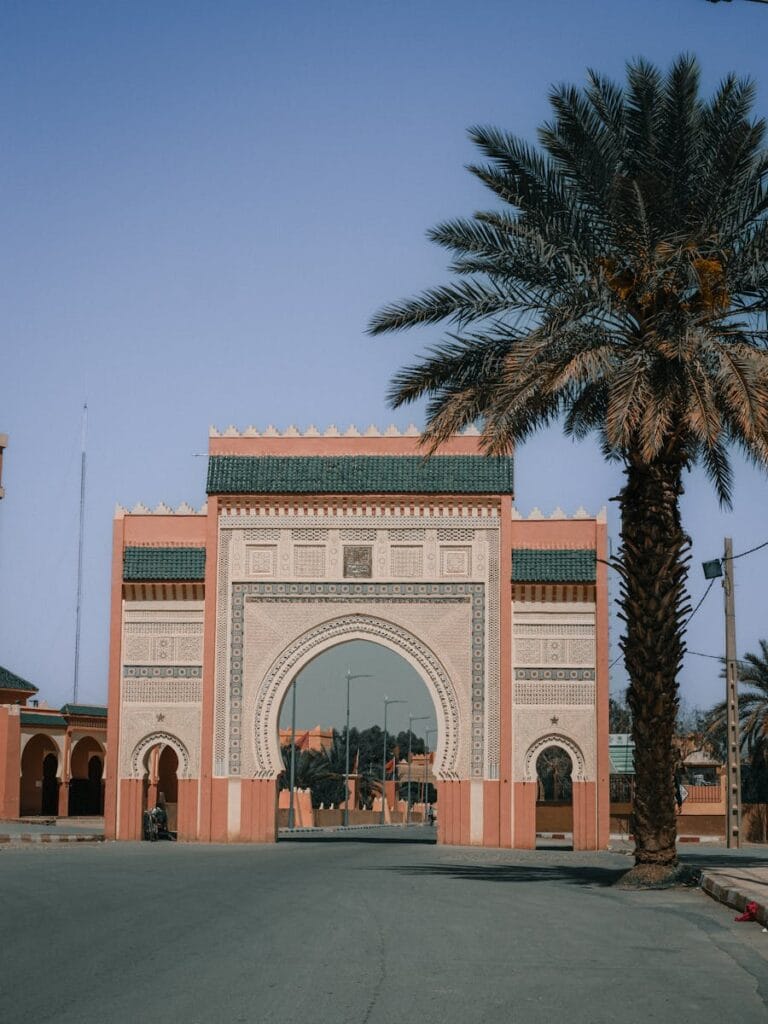
If you have ever stared at a Morocco map and wondered what that small dot southeast of Erfoud is, you have found Rissani. Most travelers blow through it in twenty minutes on the way to the Merzouga dunes. That is a mistake, especially if you are traveling with kids.
The town sits at the lip of the Sahara, in the Tafilalet oasis, and it is one of the few places in the country where everyday life still looks roughly the way it has for a couple of hundred years. The market is real. The food is local. The history is dense enough that a curious nine-year-old will start asking questions you cannot answer without Googling.
This guide is written for families planning a trip through southeastern Morocco. We will cover what to actually do in Rissani with kids, the truth about er Rissani Morocco market days, when to go (and when absolutely not to), where to stay nearby, what to eat, and how to deal with the touts so that your visit feels memorable rather than stressful. By the end you will know whether to make this stop a quick visit or a proper overnight base.
What and Where Is Rissani?
Open any Rissani Morocco map and you will see a town of roughly 20,000 people sitting in the Drâa-Tafilalet region, about 35 kilometers southwest of the Erg Chebbi dunes near Merzouga, and around 22 kilometers south of Erfoud. The closest international airport is Fez, about a six to seven hour drive north. Ouarzazate Airport is closer in distance but the road takes about as long.
Geographically, this is an oasis town. The Ziz River runs nearby, the date palms thicken into proper groves, and beyond all of that the Sahara begins. You can stand on the edge of town at sunset and watch the rocky pre-Sahara turn pink while the air cools fast. For kids who have only seen deserts in cartoons, that first view is something they remember.
The town itself is compact and walkable. There is a main square (Place du Center), a covered souk, the old medina with its mud-brick walls, and a few simple cafés. You will not find a Starbucks or a fancy mall, and that is part of the point. What you see today is what Morocco looked like before mass tourism rearranged its bigger cities.
A Quick Note on Names
You may see the place spelled “er Rissani Morocco” on older maps and in some Wikipedia entries. “Er” is just the Arabic article, like “the.” Locals usually drop it. If you are searching online for hotels or tours, both spellings work, but most modern booking sites have shortened the name.
Is It Worth a Stop With Kids?
Honestly, yes, but with a caveat. If you only have one afternoon, hit the market on a Sunday morning, eat Madfouna, and move on. If you have a full day or an overnight, you can add Sijilmassa, a fossil workshop, and a slow walk through one of the ksars. Younger kids (under six) might find a long souk visit overwhelming. School-age kids tend to love it.
A Short History You Can Actually Tell Your Kids
The town has one of the wilder backstories in Morocco. Long before the current settlement existed, a city called Sijilmassa stood on the same patch of ground, founded around 757 AD by a Berber group called the Miknasa.
For about six hundred years, Sijilmassa was the northern terminal of the trans-Saharan caravan trade. Camel trains of sixty to eighty animals crossed the desert from the Sahel carrying gold, salt, ivory, spices, and unfortunately enslaved people. At its peak the city was so wealthy it minted its own gold coins. The Arab geographer Ibn Hawqal, traveling in the tenth century, recorded a single trade transaction worth 42,000 dinars. He had never seen anything like it on his other journeys.
That kind of wealth attracts trouble. After centuries of being conquered, sacked, rebuilt, and conquered again, Sijilmassa was finally destroyed in 1393. The trade did not stop, but it shifted, and the modern town gradually rose nearby on the same crossroads of caravan routes.
The second piece of history is dynastic. In the early 1600s, Moulay Ali Cherif became the local leader of Tafilalet. His son, Moulay Rachid, went on to conquer most of the country in the 1660s and founded the Alaouite dynasty, which still rules Morocco today. So this small town is, in a real sense, the ancestral hometown of King Mohammed VI. Locals are proud of this and will tell you so.
Tell a kid that the dusty streets they are walking through used to lead to one of the richest places in Africa, and that the king’s family started here, and you have their attention for at least an hour.
The Rissani Market: What to Know Before You Go
The rissani market Morocco souk is the single best reason to plan your trip around a specific day. It runs Tuesdays, Thursdays, and Sundays, with Sunday being the largest and most chaotic. Things start moving around 8:30 AM, peak between 10:00 AM and 1:00 PM, and most stalls wind down by late afternoon, though some stay open until sunset.
If you visit on a non-market day, you will see a quiet town with maybe a dozen tourist-facing shops open. Worth a look, but you will miss the actual experience.
What You Will See
The souk is divided into sections called rahbas. Each one is dedicated to a different type of trade. There is a rahba for spices, one for dates, one for textiles, one for tools, one for produce, one for livestock. The livestock area handles sheep, goats, and donkeys, with auctions usually wrapping up by mid-morning. Outside the main souk, near the entrance, sits the famous donkey parking lot, where farmers tie up their animals while they shop. It is exactly as charming as it sounds and a guaranteed kid favorite.
Walking through the spice section, you smell cumin, ras el hanout, dried roses, and fresh mint all at once. The date section in autumn (after the September-October harvest) is particularly good. The wider region produces some of the country’s most prized dates, including the famous Mejhoul and the smaller Boufeggous.
Should You Hire a Guide?
For families, yes. A good local guide costs around 150 to 250 dirhams for a couple of hours and adds a huge amount of context. They will explain what is happening in the auction, translate haggling, point out crafts you would never spot on your own (sandals made from old tires are a good example), and most importantly, keep persistent vendors at arm’s length. Ask your guesthouse to arrange a licensed guide rather than accepting whoever approaches you in the parking lot.
Honest Warning About Touts
This is the one part of the experience that tests parental patience. The moment you arrive (especially by CTM bus, which drops you in the medina rather than at a station), several men will approach offering tours, hotels, and transport. Most are harmless but persistent. A polite but firm “La, shokran” (no, thank you) repeated a few times will usually do it. If you have arranged transport or a guide in advance, ask them to meet you at a specific spot to avoid the welcome committee entirely.
Sijilmassa Ruins: Walking on Layers of History
About two kilometers from the town center, in the date palm groves, lie the ruins of Sijilmassa. There is no big visitor center or polished signage. You can drive or even walk out and wander among low mud-brick walls, foundations, and a few partial structures.
The site has been excavated in stages since the 1980s and is recognized by the World Monuments Fund as endangered. For a history-minded kid, the lack of fences and gift shops is actually a plus. You are walking through the actual remains of a thousand-year-old African trade capital. Bring water, hats, and good shoes, because the sun is brutal and the ground is uneven.
Tips for Visiting With Children
Go in the morning before 10 AM or in the late afternoon after 4 PM. Midday is too hot, even in winter. Pack snacks because there is nothing to buy on site. A small notebook helps if your kids like to sketch or jot down questions. The view back toward the rooftops, with the date palms in the foreground, is genuinely lovely at golden hour.
Ksar Oulad Abdelhalim and Other Fortified Villages
Just outside town, the Ksar Oulad Abdelhalim is a 19th-century fortified village built of mud and palm wood. Its towers and decorated walls hint at how the leading families of Tafilalet once lived. Sometimes called the “Alhambra of Tafilalet” by locals (a slight exaggeration, but the carving is genuinely intricate), it makes for a great half-hour stop.
A few other ksars dot the area, including Ksar El Fida, which now houses a small museum. Walking through these structures, kids get a tactile sense of how desert architecture worked. Thick mud walls that stay cool in summer. Narrow shaded passages. Watchtowers. Wells. The buildings are slowly being eaten by erosion and neglect, which makes seeing them now feel important.
Ready to Start Your Morocco Journey?
Book your trip today with our expert planners, enjoy personalized itineraries tailored to your flights and travel needs, and claim 30% off as a first-time visitor!
Erg Chebbi and the Sahara: The Real Headline Act
Most people end up in this corner of the country because they are heading to the Erg Chebbi dunes near Merzouga. The dunes rise about 150 meters at their tallest and stretch for roughly 28 kilometers north to south. They are Morocco’s most accessible large erg (sand sea) and the closest thing in the country to the desert of the imagination.
From town, it is a 35 to 45 minute drive to the edge of the dunes. Most desert camps and camel trekking outfits are based out of Merzouga or Hassi Labied, but plenty of itineraries use this town as the staging post.
What This Looks Like With Kids
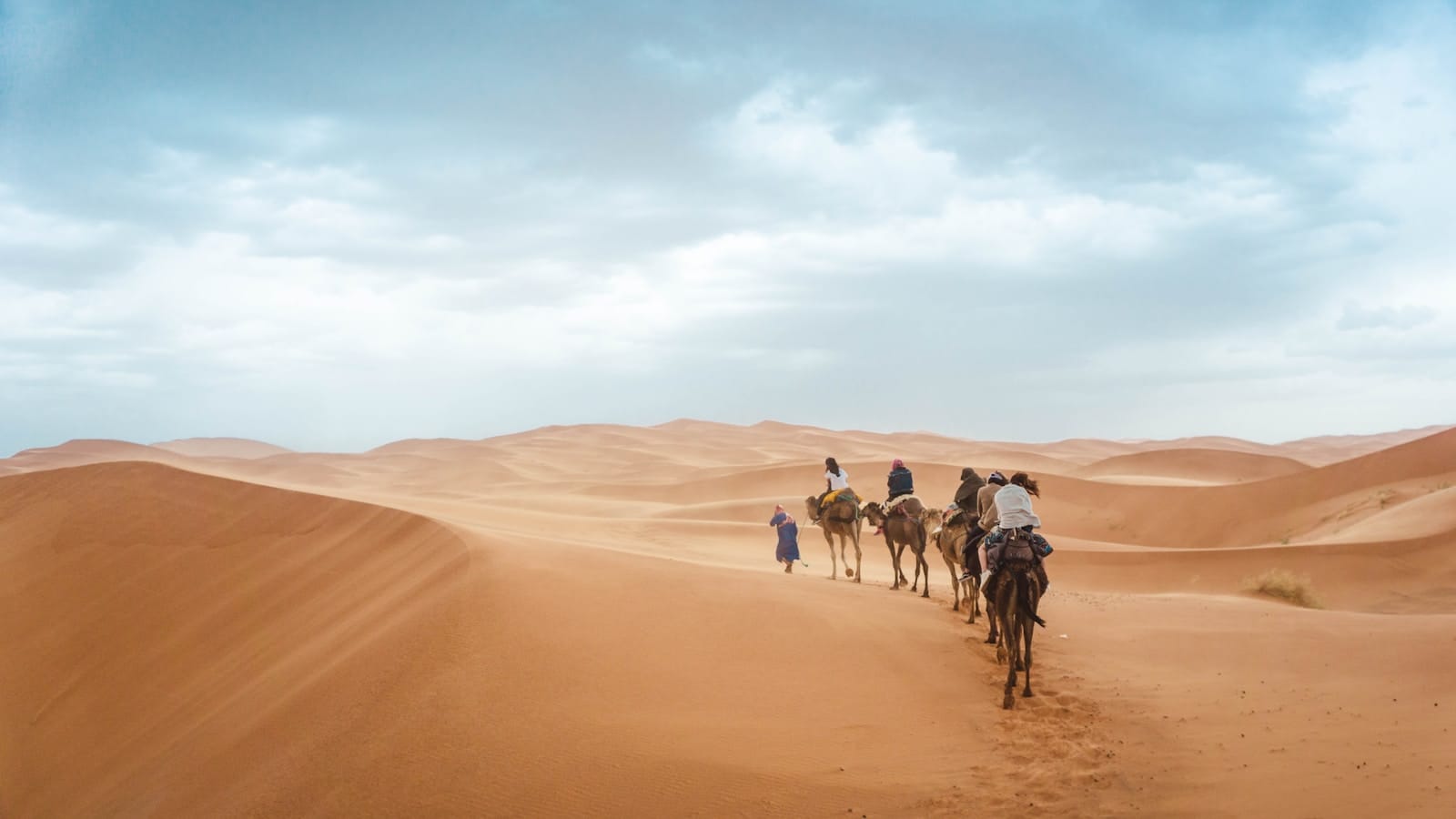
A typical family-friendly desert outing goes like this: You meet your camp’s 4×4 in the late afternoon. You drive to the edge of the dunes, swap the vehicle for camels, and ride about an hour into the sand. You arrive at a Berber camp before sunset, which the kids will find magical. Dinner is tagine and bread cooked over a fire. After dark, the camp guides bring out drums and you sit under a sky that has more stars than your kids have ever seen. You sleep in a tent with proper beds, often with private bathrooms in the better camps. In the morning, you wake before sunrise, climb a dune, and watch the sun come up over Algeria.
For very young children, the camel ride can be intimidating, and one hour on a camel is plenty. Most camps will arrange a 4×4 transfer instead if you ask, which is a sensible call for kids under five or anyone with back issues.
A Brand Note for Families
Planning all of this on the fly is doable but exhausting. Morocco Family Vacation designs custom private tours that build the Tafilalet and the Sahara into a wider family itinerary, with kid-friendly camps, trusted local guides, and pacing that does not destroy your toddler. If you would rather hand the logistics to someone who knows the road from Fez to Merzouga in their sleep, that is what we do. Plan Your Family Adventure with a team that builds the whole route around your family, not the other way around.
Madfouna and the Food of the Tafilalet
The local signature dish is Madfouna, often called Berber pizza. It is a stuffed flatbread filled with minced meat, onions, almonds, parsley, and warming spices, sealed and baked in a wood-fired clay oven. The traditional method involves burying the bread in hot ashes (the name madfouna means “buried” in Arabic), although most restaurants now use proper ovens.
The result is unlike pizza in any meaningful way except the round shape. The crust is denser, the filling more aromatic, and the whole thing is shared by tearing pieces with your hands. Kids who recoil from couscous often love Madfouna because it is essentially meat in bread. Order one between two people, plus a salad and maybe a tagine for the table.
You will find good versions at small restaurants around Place du Center. Restaurants are a long-standing favorite, and several guesthouses will arrange a Madfouna lunch with notice.
Other Things to Try
The dates from this region are some of the best in Morocco. Get a mixed box from the souk and let everyone pick favorites. Mint tea is poured everywhere, often with a theatrical pour from a great height. If you are stopping for a quick lunch, harira (a tomato-lentil soup) and grilled brochettes are reliable.
Best Time to Visit Rissani: Weather, Month by Month
This is where rissani Morocco weather and weather rissani Morocco searches actually matter, because the wrong month can ruin your trip.
The town has a hot desert climate (BWh in Köppen classification). The annual average is around 22°C (72°F), but that hides huge swings. Summer days regularly hit 43°C (109°F) and have been recorded above 50°C. Winter nights can drop close to freezing.
A Practical Month Guide
October to April is the sweet spot for families. Days are warm and pleasant (typically 20 to 28°C, or 68 to 82°F), nights are cool to cold, and the desert is comfortable for walking and camel rides. December and January nights in the desert can be genuinely cold (around 5°C in the camp), so pack layers.
March to May and September to November are the peak comfort months. Spring brings the desert in bloom (briefly) and autumn brings the date harvest, which is a fantastic time to be in the Tafilalet.
June through August is rough. Daytime temperatures regularly exceed 40°C, and walking around the souk or climbing dunes becomes dangerous, especially for young kids. If summer is your only window, plan for early-morning activities only and stay in air-conditioned accommodation. Skip midday outings entirely.
Rainfall is minimal across the year, so you do not need to worry about wet weather. A flash thunderstorm is possible in autumn, but it passes fast.
Where to Stay: In Town vs Near the Dunes
You have two real choices: stay in town for the cultural and historic side, or stay closer to Merzouga for desert immersion. Many families end up doing one night in each.
Staying in Rissani
Options here are fairly basic. Offering simple rooms, a pool in some cases, and home-cooked dinners. Expect to pay 400 to 800 dirhams per night for a family room. The advantage of staying in town is being walking distance from the souk on market mornings.
Staying Near the Dunes
Hassi Labied and Merzouga have a wider range, from simple guesthouses to genuinely lovely desert lodges with pools facing the sand. there are popular family choices. From here you can do a sunset camel ride and return for dinner, then drive in for the souk the next morning.
Desert Camps
For families with kids over five, one night in a desert camp is the highlight of the whole trip. Look for camps with proper beds, private bathrooms, and dinner included. Mid-range options run 800 to 1,500 dirhams per person. Luxury camps go higher. Avoid the budget options with shared bathrooms unless your kids are seasoned campers.
Practical Travel Tips for Visiting Rissani
Getting There
The easiest route from the north is Fez to Rissani, which is a long but scenic seven-hour drive through the Middle Atlas, over the Tizi n’Talghemt pass, and down through the Ziz Valley. The drive itself is part of the experience, with kasbahs, palmeries, and dramatic gorges along the way.
CTM and Supratours buses run from Fez and Meknes, with the night bus from Fez arriving early morning. From Marrakech, the trip is ten hours minimum and most families break it into two days, often via Ouarzazate and the Dades Valley.
If you are renting a car, the roads are paved and in decent condition. Just avoid driving after dark, since unlit livestock and slow trucks make night driving genuinely risky.
What to Pack
Sun hats, sunscreen, sunglasses, and reusable water bottles are essential. A light scarf or shemagh works for everyone, kids included, both for sun and for blowing sand on dune days. Modest clothing is appreciated in the souk and at the mausoleum: knees and shoulders covered for women and girls, long shorts or pants for men and boys. Closed-toe walking shoes for the ruins, and sandals for the camp. A headlamp or flashlight for desert nights. Wipes and hand sanitizer because washing facilities are scarce in rural areas.
Money and Connectivity
There are a couple of ATMs in town, but bring small bills for the souk. Many vendors do not have change for a 200-dirham note. Mobile coverage is decent in the center and patchy in the desert. Most camps have Wi-Fi at the main lodge but not in tents, which kids will survive.
Cultural Etiquette for Families
Teach kids to ask before photographing people. Many vendors and shoppers in the souk would rather not be in your Instagram. The Mausoleum of Moulay Ali Cherif welcomes visitors to the courtyard but the inner tomb is closed to non-Muslims, and that boundary should be respected. During Ramadan, eating and drinking openly during daylight is rude, so keep snacks and water in the car.
Working with Trusted Local Operators
This is another point where Morocco Family Vacation earns its keep. Plan Your Family Adventure with custom private Morocco tours designed for families, with child-friendly experiences, trusted local guides, and comfortable stays from the medinas to the Sahara. We handle the boring logistics so you spend your time on the ground actually enjoying it.
A Sample Two-Day Family Itinerary
Day 1: Arrive in town by late morning on a Sunday. Drop bags at your guesthouse, walk to the souk with a guide, and spend two hours exploring the spice rahba, the donkey parking, and the textile section. Lunch is Madfouna. In the afternoon, drive out to Sijilmassa for an hour of slow ruin-wandering, then visit Ksar Oulad Abdelhalim before sunset. Dinner back at the guesthouse, early bed.
Day 2: Drive to Merzouga in the morning. Stop at a fossil workshop on the way (kids love watching trilobites and ammonites get cut from raw rock). Arrive at the dune edge by mid-afternoon. Camel trek into the sand, sunset on a dune, dinner at the camp, drumming around the fire. Sleep under the stars. Wake at sunrise, climb a dune, breakfast, then ride or 4×4 back to your vehicle.
That is two days. You can stretch it to three or four with a Todra Gorge add-on.
Need Help with Transportation in Morocco?
Book a reliable private driver for your Morocco family adventure today – personalized routes designed just for you, and get 30% off as a first-time visitor!
Quick Takeaways
- The town sits at the edge of the Sahara in southeastern Morocco, about 35 km from the Erg Chebbi dunes near Merzouga.
- Market days are Tuesday, Thursday, and Sunday, with Sunday being the largest and most authentic.
- October through April is the comfortable family travel window. June through August is dangerously hot.
- Madfouna, or Berber pizza, is the local dish you must try, ideally at a small restaurant on Place du Center.
- The Mausoleum of Moulay Ali Cherif and the ruins of Sijilmassa anchor the historical visit, with Ksar Oulad Abdelhalim a worthwhile add-on.
- A licensed local guide is the best 200 dirhams you will spend, especially with kids in tow.
- Pair the Tafilalet stop with one or two nights in a Sahara desert camp for the best family experience.
Conclusion
Rissani is not the kind of place that overwhelms you the way Marrakech or Fez can. It is quieter, dustier, and more honest. The market is for locals first and tourists second. The history is layered enough that you keep finding new threads. The food is genuinely regional. And the desert begins at the edge of town.
For families, that combination matters. Kids who have spent a week in big-city Morocco arrive here and finally see the slower, rural side of the country. They watch a donkey auction wind down, eat Madfouna with their hands, run between mud-brick walls that have stood for a hundred and fifty years, and then sleep under more stars than they have ever seen. That is the kind of memory that sticks.
If you want to make this town part of a wider Morocco trip without juggling drivers, hotels, market days, and desert camp logistics yourself, Morocco Family Vacation can build it for you. Plan Your Family Adventure with custom private Morocco tours designed for families, with child-friendly experiences, trusted local guides, and comfortable stays from the medinas to the Sahara. We handle the route, the bookings, the cultural briefing, and the small details that turn a complicated trip into one your kids ask to repeat.
Whatever route you choose, set aside more than just an hour for this corner of the Tafilalet. The town rewards patience, and your family will thank you for it.
─── Your questions, our answers.
Frequently Asked Questions
Our dedicated team is here to answer your Morocco Travel questions and ensure a smooth, memorable journey through Morocco.
What is Rissani Morocco best known for?
The town is best known as the gateway to the Sahara’s Erg Chebbi dunes, the birthplace of Morocco’s Alaouite ruling dynasty, and home to the Sijilmassa ruins. The rissani market Morocco souk, held three days a week, is one of the most authentic in the country. It is also the home of Madfouna, a stuffed bread sometimes called Berber pizza.
When is the best time to visit Rissani for families?
The best time to plan a family trip is between October and April, when daytime temperatures sit comfortably between 20 and 28°C. Spring (March to May) and autumn (September to November) are ideal. Summer months are extreme, often topping 43°C, and not recommended for traveling with young kids. Always check current rissani Morocco weather before booking, since the Sahara has rare but possible extremes.
How do I get there from Fez or Marrakech?
From Fez, plan on a six to seven hour drive south through the Middle Atlas and Ziz Valley. CTM and Supratours run direct overnight buses for around 165 dirhams. From Marrakech, the journey is closer to ten hours and most families split it across two days, stopping in the Dades Valley or Ouarzazate. Renting a car gives you the most flexibility.
Is the area safe for traveling with children?
Yes, the region is generally safe for families. The biggest issue is heat (avoid summer), followed by persistent touts who can wear down parents. Hire a guide, stay with reputable accommodation, and keep kids close in the souk on busy days. Petty crime is uncommon. Many er rissani Morocco visitors report feeling more comfortable here than in larger cities like Marrakech.
How far is Rissani from Merzouga Desert?
Rissani is approximately 35 kilometers (22 miles) from Merzouga. The drive takes about 40–45 minutes, making Rissani a convenient base for Sahara desert tours.
What is the best time to visit Rissani Morocco?
The best time to visit Rissani Morocco is from October to April when temperatures are mild. March and April are especially ideal for sightseeing and desert excursions.
Should we just visit as a day trip from Merzouga?
A day trip works for the souk and a quick lunch, but you will miss Sijilmassa, Ksar Oulad Abdelhalim, and the slower rhythms that make a longer stay worthwhile. If your itinerary allows, build in one night in or near Rissani plus one night in a desert camp near Merzouga. That combination gives families the best of both the cultural Tafilalet and the dunes themselves.

Kate Carter
Family Travel Blogger
Kate Carter is a mom and travel blogger who fell in love with Morocco’s culture and warmth. Through Morocco Family Vacation, she shares tips and stories to help travelers enjoy authentic, stress-free experiences. Join us along the way.
Table of Contents
Our Services
-
Private Family Tours
-
Custom Itineraries
-
Sahara Desert Tours
-
Chefchaouen & Northern Morocco Tours
-
Luxury Desert Camping
-
Multi-Day Tours (2–16 Days)
-
Atlas Mountains Trips
-
Cooking Classes & Market Visits
-
Photography & Heritage Tours
-
Airport Transfers & Private Transport
-
Custom Birdwatching Tour in Morocco
-
24/7 Tour Support & booking Flexibility
At Morocco Family Vacation, we create custom Morocco tour packages designed around your interests and travel style. As a dedicated and independent travel agency, we specialize in private Morocco tours offering memorable desert adventures, cultural experiences, and family friendly itineraries while delivering attentive, personalized service from start to finish.
Popular Tours
Latest Posts
get in touch
#Morocco family friendly tours
#Morocco family holiday
#Morocco with kids
#Morocco travel tips for families
#Morocco Family Vacation