
How long to spend in Fes: A family travel guide
How long to spend in Fes
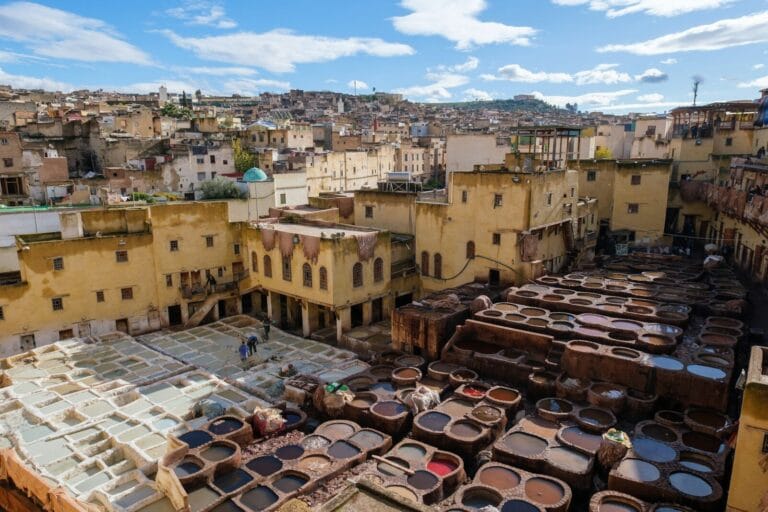
The Fes medina has around 9,000 alleys. You will get lost. Every visitor gets lost, including the guides who grew up here. So the honest question is not whether you can see Fes in one day, but how long to spend in Fes to properly feel the place instead of just crossing it off a list. The short version: two days works for the highlights, three days lets you slow down and pick up the food and craft side, and four or more opens the door to Meknes, Volubilis, and the Middle Atlas.
This guide walks through the real math of how much time Fes takes. What one day gets you. What two days changes. Where three days starts to pay off. When four or more is worth it. It also covers the practical stuff: what Fes is most known for, how to compare it against Marrakech and Tangier, what works with kids, where to stay in the medina versus the Ville Nouvelle, and which season gives you the best weather for walking those thousand year old streets.
- Explore Morocco with your kids stress-free! Private transport, kid-friendly hotels, and safe meals included. Plan Your Family Tour
- Experience the Atlas Mountains and Sahara Desert with hands-on fun for kids and comfort for parents. Customize Your Adventure
- Enjoy Morocco’s coasts and cities at a calm pace. Perfect for families with young children. Book Your Relaxed Tour
Quick takeaways
- Two full days is the sweet spot for most travelers. You cover the main sights of the Fes el Bali medina without a march-through pace.
- One day works as an express visit but you will miss the tanneries, the food scene, and Fes el Jdid entirely.
- Three days lets you slow down, add a cooking class, and start seeing the smaller crafts and neighborhoods.
- Four or more days opens up day trips to Volubilis, Meknes, Chefchaouen, and the Middle Atlas cedar forests.
- Fes is Morocco’s cultural capital, home to Al Quaraouiyine (founded 859 CE), recognized as the oldest continuously operating university in the world.
- The medina is UNESCO listed and the largest car-free urban area on the planet. Wear real walking shoes.
- Hire a licensed guide for day one. Even confident travelers get lost, and a guide saves hours and helps with the leather cooperatives around the tanneries.
Is 1 day enough in Fes?
No, one day is not really enough to see Fes properly, but it can work as an express visit if you have a tight itinerary and hire a private guide. With a full nine to ten hour day, you can cover the main medina highlights without breaking down.
The reason one day falls short is scale. The Fes el Bali medina spans roughly 250 hectares and contains around 9,000 alleys. It is the largest car-free urban area in the world. Even at a fast walking pace, you cannot cross it and see the major sites in less than five to six hours, and that leaves no time to sit down, eat properly, or take detours into the smaller souks and workshops that give Fes its character.
However, one day works in specific situations. If you are on a Marrakech to Chefchaouen route and Fes is a stopover, one day is better than skipping it entirely. If you have kids who tire quickly, one intense day may be all they can handle. If you are combining Fes with a longer stretch in Meknes, you can split the imperial city experience across both.
Practical takeaways for a one day Fes visit:
- Book a licensed guide for at least half a day (500 to 800 MAD)
- Enter through Bab Bou Jeloud, the blue gate
- Prioritize the Bou Inania Madrasa, the Chouara Tannery viewpoint, and Al Quaraouiyine’s exterior
- Eat lunch in the medina, not the new town, to save transit time
- Skip Fes el Jdid and the Ville Nouvelle on a one day visit
For families needing more breathing room, Morocco Family Vacation builds Fes into a longer, better-paced itinerary that respects kid stamina without cutting the main sights.
How long to spend in Fes: the honest breakdown
The right answer to how long to spend in Fes depends less on the city and more on your own travel style. Here is the practical breakdown that most first time visitors end up landing on after they arrive.
Half day (4 to 5 hours): Not recommended as a standalone visit. Works only as a stopover between Chefchaouen and Meknes if you literally have no other option. You will see one madrasa and one gate.
One full day (8 to 10 hours): Enough for the express highlights with a guide. You will see Bab Bou Jeloud, Bou Inania Madrasa, walk Talaa Kebira (the main medina street), see the Chouara Tannery from a leather shop terrace, and pass Al Quaraouiyine. You will not have time to eat properly.
Two full days: The recommended minimum for a real Fes visit. Day one covers Fes el Bali medina highlights. Day two lets you explore Fes el Jdid, the Mellah (Jewish quarter), Jnan Sbil gardens, and either do a cooking class or take an afternoon at a hammam.
Three days: The sweet spot for slower travelers and families. Day three lets you see the potters’ quarter at Ain Nokbi, do a longer food tour, and start visiting the smaller madrasas the tour groups skip.
Four to five days: Enough time to add day trips. Volubilis and Meknes together take one day. The Middle Atlas cedar forests and Ifrane take another. Chefchaouen as a very long day trip is possible but a stretch.
A week or more: Opens up a completely different kind of Fes visit. You can take a multi-day cooking course, work with an artisan cooperative, or use Fes as a base for exploring the whole northern half of Morocco.
Most travelers land at two or three days. That is the answer that works for the majority.
What is Fes most known for
Fes is the cultural and spiritual capital of Morocco. Founded in 789 CE by Idris I, it has been an intellectual center for over 1,200 years and it is the city most Moroccans point to when asked where their country’s traditional identity is strongest.
The medina, Fes el Bali, is what most people come to see. UNESCO listed in 1981, it is the largest car-free urban zone on the planet, with roughly 9,000 alleys, working souks, and residential neighborhoods that have been continuously occupied since the ninth century. You walk here. Donkeys and hand carts handle the freight.
Al Quaraouiyine is the other headline. Founded in 859 CE by a woman named Fatima al-Fihri, it is recognized by both UNESCO and the Guinness Book of Records as the oldest continuously operating university in the world. Non-Muslims cannot enter the prayer hall, but you can see the exterior and, sometimes, glimpse the courtyard from the surrounding streets.
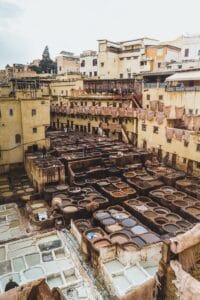
The tanneries are the visual signature of Fes. Chouara Tannery is the largest and most photographed, a grid of stone vats filled with pigmented dye where leather has been processed the same way for a thousand years. You view it from the terraces of surrounding leather shops. Shopkeepers hand you a sprig of mint to hold under your nose (the smell is real).
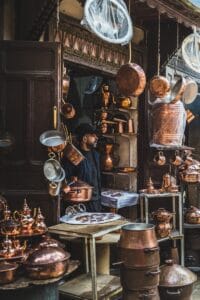
The crafts are what many visitors take home. Zellige tile work, Fassi ceramics (blue and white pottery), leather goods, brass lanterns, and hand-woven textiles all come from Fes workshops. The city is the training ground for the country’s most respected artisans.
The food deserves its own paragraph. Fassi cuisine, the local cooking style, has its own dishes that you find nowhere else in Morocco. Pastilla (a sweet and savory pigeon or chicken pie wrapped in pastry), harira soup, and mrouzia (lamb with prunes and honey) are the standouts.
One day in Fes: the express itinerary
If you have only one day and want to see the essential Fes, this is the sequence that works.
Morning (9:00 to 12:00): Enter the medina at Bab Bou Jeloud, the blue gate on the west side of Fes el Bali. Walk down Talaa Kebira, the medina’s main artery. First stop is the Bou Inania Madrasa, one of the finest examples of 14th century Marinid architecture in Morocco. Then keep walking. Pass the Nejjarine Fountain and the small carpenters’ souk.
Lunch (12:00 to 13:30): Cafe Clock or Nur Fes for a proper sit-down meal in the medina. Both are near the main circuit and cater to visitors without feeling touristy.
Afternoon (13:30 to 17:00): Head to the Chouara Tannery. Enter through one of the leather shops on the surrounding streets, climb to their rooftop terrace for the view, then browse the shop afterward if you want leather. Continue to Al Quaraouiyine and the surrounding book souk. Loop back through the spice market.
Late afternoon (17:00 to 19:00): Sit down at a rooftop cafe for mint tea. Al Fassia terrace or the terrace at Cafe Clock both give you sunset views over the medina.
Evening: Dinner at your riad. After a full medina day, you will not want to walk out again for food.
What you will miss on a one day visit
- Fes el Jdid (the newer 13th century medina)
- The Mellah and the Jewish cemetery
- The potters’ quarter at Ain Nokbi
- Jnan Sbil gardens
- Any cooking class, hammam, or workshop visit
Two days in Fes: the sweet spot
Two days is what most first time visitors settle on and what most guides recommend. Here is how to split them.
Day one: Full day in Fes el Bali (see one day itinerary above). Focus on the main medina circuit, the tanneries, the madrasas, and the souks.
Day two morning: Fes el Jdid and the Mellah. This is the 13th century royal city, built by the Marinids as an administrative center outside the old medina. Visit the Royal Palace (exterior only, the gates are the photo spot), then walk into the Mellah, the historic Jewish quarter with narrow streets, ornate wooden balconies, and the Jewish cemetery at the edge.
Day two lunch: Try a Fassi pastilla at a mid range restaurant like Restaurant Numero 7 or Riad Salam.
Day two afternoon: One of three options.
- Cooking class at Cafe Clock or the Fes Cooking School. Three to four hours, includes a market visit and a meal. Around 500 to 700 MAD per person.
- Hammam visit at Palais Amani or Riad Laaroussa for a two hour spa experience.
- Ain Nokbi potters’ quarter for a workshop tour outside the medina walls. Free entry, taxi 15 minutes each way.
Day two evening: Rooftop dinner. Two full days give you time to relax on the second evening rather than rush.
Why two days works
The pace is manageable. Kids can handle it. Adults do not burn out. You see the main sights without either skipping key ones or feeling like every hour is scheduled. If you only have a week for a full Morocco trip, two days in Fes is the correct amount.
Three days in Fes: adding depth
Three days is where Fes moves from a checklist to an experience. The third day is not about adding one more monument. It is about slowing down.
Options for day three:
- Longer food tour: Fes has more traditional dishes than any other Moroccan city. A five hour food tour visits ten to fifteen small stalls and restaurants and gives you a proper picture of Fassi cuisine.
- Artisan workshops: The zellige (tile) workshops in Ain Nokbi, the copper and brass workshops around Place Seffarine, and the small silk weaving cooperatives in the medina all welcome visitors.
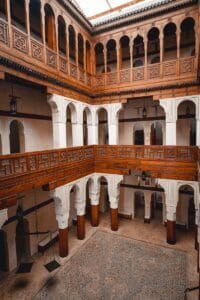
- Second madrasa circuit: Fes has half a dozen historic madrasas beyond Bou Inania. The al-Attarine Madrasa, built in 1325, is smaller than Bou Inania but often less crowded and equally decorated.
- Sefrou day trip: A small traditional town 45 minutes south of Fes, known for its waterfalls and cherry festival in June. Easy half day trip if you want a break from the medina.
- Slow morning: Sleep in, breakfast on your riad rooftop, wander the medina without a plan. Some of the best Fes memories come from these unstructured hours.
Three days also gives you flexibility if something goes wrong on day one or two. Missed a monument because it was closed for prayer? See it on day three. Kids melted down after the tannery? Adjust the plan.
For families with kids under ten, three days is more forgiving than two. Kids need midday rest, cannot walk medina distances without breaks, and get overwhelmed by the density of the souks. A three day Fes plan gives you the room to slow the pace without cutting sights.
Four or more days: day trips beyond the city
Four days in Fes opens the door to the surrounding region. The city itself does not need more than three days for most travelers, but Fes is well positioned as a base for northern Morocco day trips.
Volubilis and Meknes (full day, 1.5 hours each way). Volubilis is the largest Roman ruins in Morocco, with mosaics still visible in situ. Meknes is a smaller imperial city with the Mausoleum of Moulay Ismail and the Bab Mansour gate. Combine both in one long day.
Middle Atlas: Ifrane and Azrou (full day, 1 hour each way). Ifrane is the alpine style town nicknamed the Switzerland of Morocco. The Azrou cedar forest is home to wild Barbary macaque monkeys. Good day trip in any season.
Chefchaouen (very long day trip, 4 hours each way). Doable but tight. Better as an overnight if you have the flexibility. The blue painted mountain town is one of the most photographed places in Morocco.
Sefrou (half day, 45 minutes each way). The Sefrou Cherry Festival in June is small but genuine. Otherwise the town works as a short traditional counterpoint to the intensity of Fes.
Rabat (long day trip, 2.5 hours each way by train). The capital is worth seeing but does not fit comfortably as a day trip from Fes. Better as its own overnight if your itinerary allows.
The ideal four to five day Fes-based plan
- Day 1: Fes el Bali medina
- Day 2: Fes el Jdid + Mellah + cooking class
- Day 3: Volubilis + Meknes day trip
- Day 4: Ain Nokbi + slow medina afternoon
- Day 5 (optional): Middle Atlas day trip
Ready to Start Your Morocco Journey?
Let us help you design a smooth, affordable, and memorable journey crafted by local travel experts who know Morocco best.
Fes vs Marrakech: which one deserves more time?
Both cities take at least two full days each. If you have a week in Morocco and can only spend proper time in one of them, the choice comes down to what you are looking for.
Fes is better if:
- You want the deeper cultural and historical experience
- You prefer working craft workshops to polished shopping streets
- You care about the food (Fassi cuisine has more variety than Marrakchi)
- Crowds bother you (Fes gets fewer tour groups than Marrakech)
- You like getting lost and figuring out a place slowly
Marrakech is better if:
- You want a shorter travel window (Marrakech has better flight connections)
- You want easy access to the Atlas Mountains and the Sahara
- You want nightlife and rooftop bar culture
- You are traveling with people who need a break from full-on medina intensity
- You want the polished tourist experience with more English spoken
Most travelers do both. A common Morocco itinerary spends three nights in Marrakech and two or three in Fes. Between them, either take the train (roughly seven hours) or fly (one hour, cheaper than most trains). The overnight train no longer runs.
If forced to pick one, longtime Morocco travelers usually pick Fes. It rewards curiosity in a way Marrakech does not, and it feels less shaped by tourism. First time visitors often prefer Marrakech because it is more forgiving as an introduction.
Which is better for tourists, Fez or Tangier?
Fes and Tangier are almost opposites, and comparing them as tourist destinations requires knowing what you want out of the trip.
Fes is a walled medieval Islamic city with a working medina, university, and craft tradition going back over a millennium. The visit is entirely about the historical and cultural core. You need at least two days here to see it properly.
Tangier is a coastal port city with Mediterranean, Spanish, and international influences, a mix of old medina and modern seafront, and a much shorter list of major monuments. The visit is more about atmosphere, coffee culture, and the strait crossing to Spain. One to two nights is usually enough.
Which is better for tourists depends on you. Culture and craft travelers spend more time in Fes. Beach and coastal travelers, plus those combining Morocco with Spain, prefer Tangier. Photography travelers often visit both because they are visually so different.
If you have a Morocco itinerary that includes the north, most travelers do Fes for two to three days and Tangier for one to two nights. Chefchaouen sits between them geographically and pairs well with either.
Visiting Fes with kids
The Fes medina is intense for kids. Narrow alleys, crowds, working donkeys, unfamiliar smells at the tannery, and no cars to break up the sensory load. That said, plenty of families visit Fes successfully with kids of all ages, including toddlers.
What works with kids:
- Two day pacing minimum. One day is too rushed for children.
- Hire a licensed guide who has experience with kids. Not all do.
- Book a riad with a pool or a plunge pool. Midday retreat is not optional.
- Break up the medina into two hour bursts with cafe breaks in between.
- Cooking classes engage kids more than monument tours.
- The Ain Nokbi potters’ quarter is a hit with hands-on kids.
What does not work:
- Walking the medina in the July or August afternoon heat
- Strollers (baby carriers are the only workable option)
- Long tannery visits with kids under six (smell plus heights)
- Squeezing Volubilis onto a day when you have already done a medina morning
Fes with kids works best in spring or fall. Summer heat combined with medina density is a hard combination for children. Winter is fine, though January mornings can be cold.
Where to stay in Fes
Where you stay changes how you experience Fes. Two main options.
Riads inside the medina: Traditional courtyard houses converted into small guesthouses. This is the classic Fes stay. You wake up inside the old city and step out into the alleys directly. Popular options include Riad Laaroussa, Palais Amani, and Dar Bensouda. Downside: your luggage will be carried through the alleys on a hand cart, and taxis cannot reach the door.
Hotels in the Ville Nouvelle: Modern hotels in the French colonial district about 15 minutes by taxi from the medina. Easier for families with lots of luggage. Loses the medina immersion. Marriott Jnan Palace and Palais Faraj are the main options.
For most travelers, staying in a riad inside the medina is the correct choice. The whole experience of Fes is stronger when you step out of a wooden door into a 12th century alleyway rather than a hotel driveway. For families with three or more kids and heavy luggage, the Ville Nouvelle is more practical.
Neighborhoods within the medina worth knowing:
- Batha: Near the western gate. Easiest access, quieter side, good for first time visitors.
- Andalous: The eastern medina. More residential, fewer tourists, more atmosphere.
- Talaa Kebira area: Right on the main street. Convenient but noisier.
Best time to visit Fes
Two windows work best for Fes: spring (March to May) and autumn (September to November). Both give you mild temperatures, low rain, and manageable crowds.
Spring (March to May): Daytime highs 20 to 26 Celsius. Fes gardens are in bloom. The Fes Festival of World Sacred Music runs some years in June, extending the shoulder season.
Autumn (September to November): Similar temperatures to spring. Fewer tourists than spring. Ramadan sometimes lands in this window (dates shift each year); most restaurants stay open for tourists but the pace slows.
Summer (June to August): Hot. Daytime highs regularly hit 35 to 40 Celsius. The medina holds heat in the alleys. Walkable in the morning, brutal from noon to five. If you visit in summer, book a riad with a pool and rest through the middle of the day.
Winter (December to February): Cool and often rainy. Daytime highs 12 to 16 Celsius. Nights drop near freezing. The city empties out and prices drop. Manageable if you pack for cold weather and accept some rainy days.
For families, spring is the single best window. Kids handle 22 Celsius better than 38 Celsius, and there are enough tourists that riads run their full services but not so many that the medina feels crushed.
Need Help with Transportation in Morocco?
Book a reliable private driver for your Morocco family adventure today – personalized routes designed just for you, and get 30% off as a first-time visitor!
Is Fez a walkable city?
Yes, Fez is a walkable city, especially inside the historic medina. In fact, the old medina is largely car-free.
The ancient Fes el-Bali in Fes is designed for pedestrians, donkeys, and small carts rather than cars. Walking is the only way to explore its narrow streets.
Important tips:
Wear comfortable walking shoes
Use offline maps or hire a guide
Expect uneven cobblestones
Plan rest stops at cafés or riads
While the modern Ville Nouvelle has taxis and wider roads, the historic center is best explored on foot. Walking is part of the authentic Fez experience.
Where to Stay in Fes (Family Hotels & Riads)
Riads (Traditional Moroccan Guesthouses)
These are charming, often family-run accommodations with courtyards, rooftop terraces, and personal service that make stays memorable:
Riad Maison Bleue & Spa – Elegant riad with a central courtyard and spa services, ideal for families who want comfort and traditional Moroccan style within the medina.
Riad Fes – Relais & Châteaux – Luxury riad with spacious rooms, excellent service, and a central medina location perfect for sightseeing.
Riad Raouia Fez | HAMMAM & SPA – Mid-range riad offering comfortable rooms and traditional Moroccan design plus a hammam experience.
Riad Dar Bensouda – Stylish riad with guest-oriented service and classic décor, good for families wanting an authentic feel.
Riad Zamane Fès – Boutique & Spa – Boutique riad with a rooftop terrace and serene vibe, suitable for couples and families alike.
Riad El Amine Fes – Comfortable medina riad known for warm service and family-friendly hospitality.
Riad Salam fes – Well-rated riad with traditional Moroccan architecture, good for exploring the medina on foot.
Hotels (Modern Comfort & Facilities)
If you prefer more modern conveniences like larger rooms, easier access for taxis, and on-site amenities:
Fes Marriott Hotel Jnan Palace – Contemporary hotel with larger rooms and international standards, great for families who prefer easier access and service reliability.
Palais AMANI – Boutique hotel blending Moroccan style with modern amenities, located in a quieter part of the city centre.
Practical Travel Tips
Transportation: Petit taxis are affordable for short hops outside the medina. Inside the medina, you’ll walk mostly.
Food: Market snacks and cafés are plentiful introduce kids to tagine, couscous, and fresh juices.
Safety: Medina streets are safe but busy keep younger kids close.
Conclusion
How long to spend in Fes depends on what you want out of the trip. Two days give you the highlights. Three days let you slow down and start noticing the smaller crafts, the neighborhood cafes, the food. Four or more open the door to Volubilis, Meknes, and the Middle Atlas cedar forests.
Do not undersell Fes. The medina is the largest car-free urban area in the world and it has been continuously occupied for over 1,200 years. You will not see it all no matter how long you stay. What you will see, if you give it a proper stretch, is something no other Moroccan city delivers in the same way: a working medieval city that never had to be preserved because it never stopped functioning.
For families, three days is the pace that works. Kids need midday rest, cafe breaks, and a riad pool. Adults need time to sit down for pastilla and mint tea without feeling like they should be walking to the next monument. Three days gives you all of that without cutting the main sights.
Morocco Family Vacation designs Private Family Tours in Morocco for Kids, Teens & Toddlers. Plan your perfect family trip to Morocco with custom private tours built for families traveling with toddlers, kids, and teens. You get family friendly experiences, trusted local guides, and handpicked comfortable stays from the medinas all the way to the Sahara.
─── Your questions, our answers.
Frequently Asked Questions
Our dedicated team is here to answer your Morocco Travel questions and ensure a smooth, memorable journey through Morocco.
How many days in Fez is enough?
Two full days is enough for most first time visitors to see the main Fes el Bali medina sights, the tanneries, and one or two madrasas. Three days is the recommended amount if you want to slow the pace and add a cooking class, a hammam, or a workshop visit. If you are wondering how long to spend in Fes for a deeper trip, four to five days lets you add day trips to Volubilis, Meknes, and the Middle Atlas.
Is Fez or Marrakech better?
Fes is better for culture, craftsmanship, and food, with fewer tour groups. Marrakech is better for shopping, nightlife, easier flight connections, and quick access to the Atlas Mountains and Sahara. Most travelers visit both on a Morocco trip. If you can only pick one, first time visitors usually prefer Marrakech and repeat travelers usually prefer Fes.
Is Fes in Morocco worth visiting?
Yes, Fes is worth visiting. It is the cultural and spiritual capital of Morocco, home to Al Quaraouiyine (the oldest continuously operating university in the world, founded 859 CE), the largest car-free urban area on the planet, and the most active traditional craft workshops in the country. Skip Fes and you skip the most authentic version of Moroccan urban life.
What is the prettiest city in Morocco?
Prettiest is subjective, but the four most photographed Moroccan cities are Chefchaouen (blue painted mountain town), Fes (medieval medina with madrasas and craft workshops), Marrakech (pink walls and gardens), and Essaouira (white and blue coastal port). Chefchaouen wins on pure visual impact per square meter. Fes wins on layered detail over 1,200 years of history.

Kate Carter
Family Travel Blogger
Kate Carter is a mom and travel blogger who fell in love with Morocco’s culture and warmth. Through Morocco Family Vacation, she shares tips and stories to help travelers enjoy authentic, stress-free experiences. Join us along the way.
Table of Contents
Our Services
-
Private Family Tours
-
Custom Itineraries
-
Sahara Desert Tours
-
Chefchaouen & Northern Morocco Tours
-
Luxury Desert Camping
-
Multi-Day Tours (2–16 Days)
-
Atlas Mountains Trips
-
Cooking Classes & Market Visits
-
Photography & Heritage Tours
-
Airport Transfers & Private Transport
-
Custom Birdwatching Tour in Morocco
-
24/7 Tour Support & booking Flexibility
At Morocco Family Vacation, we create custom Morocco tour packages designed around your interests and travel style. As a dedicated and independent travel agency, we specialize in private Morocco tours offering memorable desert adventures, cultural experiences, and family friendly itineraries while delivering attentive, personalized service from start to finish.
Popular Tours
Latest Posts


#Morocco in February
#Morocco weather in February
#February temperatures in Morocco
#Weather in Morocco in February
#Morocco travel guide February