
Mountains from Ouarzazate to Zagora Morocco guide
Mountains from Ouarzazate to Zagora Morocco
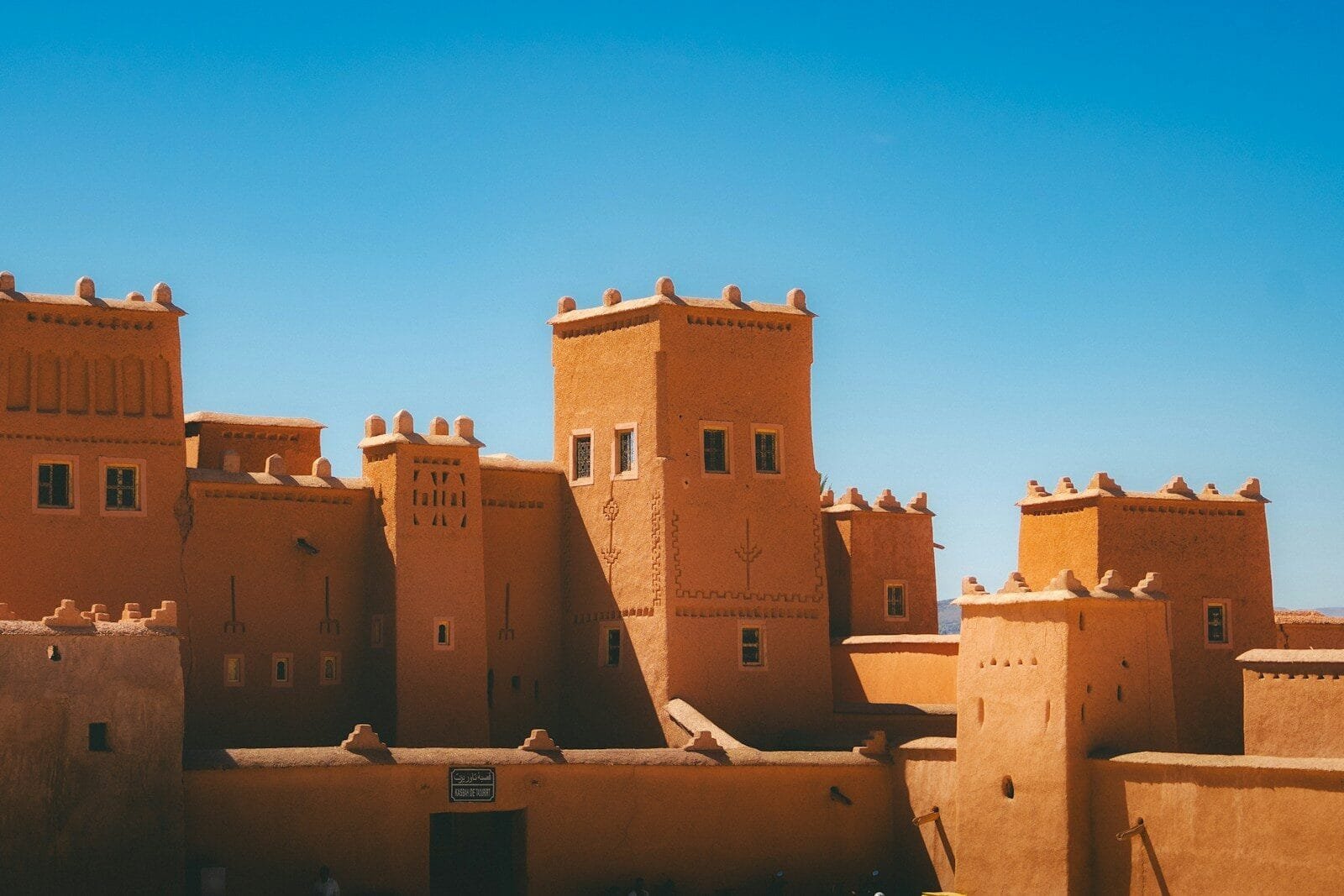
The road out of Ouarzazate to Zagora starts flat and dusty, then climbs. About an hour in, you crest a rocky pass at 1,660 meters and the whole scene below shifts into stripes of ochre, black, and green. That is the point where the mountains from Ouarzazate to Zagora Morocco stop being a line on a map and become the thing you came for.
This route, the N9 highway south, cuts through the Anti-Atlas range and drops into the Draa Valley, one of the longest palm oases in North Africa. Along the way you pass the strange tea glass silhouette of Jbel Kissane, the rocky spine of Jbel Saghro to the east, ancient earth walled kasbahs at Tamnougalt and Tansikht, and the beginnings of the Sahara at Tinfou.
This guide walks through the exact stops on that drive, which mountains you are actually seeing, how the route works with kids, when to go, where to stay, and how the trip fits into a longer Morocco itinerary from Marrakech to the desert.
5-Day Marrakech to Merzouga Family Tour
- Explore Morocco with your kids stress-free! Private transport, kid-friendly hotels, and safe meals included. Plan Your Family Tour
- Experience the Atlas Mountains and Sahara Desert with hands-on fun for kids and comfort for parents. Customize Your Adventure
- Enjoy Morocco’s coasts and cities at a calm pace. Perfect for families with young children. Book Your Relaxed Tour
Quick takeaways
- The mountains from Ouarzazate to Zagora Morocco are part of the Anti-Atlas range. You cross them via the N9 highway and the Tizi n’Tinififft pass at 1,660 meters.
- Distance is about 165 km. Direct drive time is 3 to 3.5 hours, but good stops turn it into a full day or an overnight in Agdz.
- Jbel Kissane dominates Agdz. The 1,485 meter rocky ridge looks like a row of tea glasses behind a teapot, which is what its Arabic name means.
- Jbel Saghro sits east of the route. The range rises to over 2,700 meters and separates the Draa Valley from the Dades.
- The Draa River runs alongside. At 1,100 kilometers, it is the longest river in Morocco, and the palm groves it feeds stretch continuously from Agdz to Zagora.
- Kasbahs are the second reason to slow down. Tamnougalt and Tansikht are 16th and 17th century clay fortresses still partly inhabited today.
- Family friendly with the right pace. Kids over five handle it well if you break the drive into short segments with photo stops and a swim in the Tizgui waterfalls.
Map of Morocco Atlas Mountains
Tap or click any pin to read about the place. Use the filters to focus on one range. Pinch or scroll to zoom.
Map data: © OpenStreetMap contributors. Custom places curated for family travelers.
What mountains are located near Ouarzazate?
Ouarzazate sits at the meeting point of three mountain systems: the High Atlas to the north, the Anti-Atlas to the south and west, and the Jbel Saghro range to the east. The city itself sits at 1,160 meters elevation on a wide plateau just south of the main High Atlas divide.
The High Atlas is the range you cross to reach Ouarzazate from Marrakech, over the famous Tizi n’Tichka pass at 2,260 meters. It runs east to west across most of central Morocco, with peaks over 4,000 meters.
The Anti-Atlas is the older, lower, more rugged range south of the High Atlas. It runs parallel and extends southwest toward the Atlantic near Agadir. The mountains from Ouarzazate to Zagora Morocco belong mostly to this range. The Tizi n’Tinififft pass at 1,660 meters, where the N9 highway drops into the Draa Valley, is the standard crossing point.
Jbel Saghro is the third range worth naming. This eastern extension of the Anti-Atlas rises to more than 2,700 meters and shelters the Draa Valley on one side and the Dades Gorge on the other. The town of N’Kob sits at its southern foot and is a common overnight stop for travelers heading east from the Draa toward Merzouga.
Practical takeaways:
The Anti-Atlas is the main range on any drive south of Ouarzazate
- Jbel Saghro is visible to the east and can be hiked with a guide
- The High Atlas is behind you as you head south, still visible on clear days
- Jbel Kissane at Agdz is the most photographed peak on the N9 route
- No 4WD is required for the standard N9 route, a regular car handles it fine
For families building a longer Morocco itinerary, Morocco Family Vacation designs private drives from Marrakech through Ouarzazate and into the Draa Valley, with kid friendly stops and comfortable riads at each waypoint.
The route in one glance: geography from Ouarzazate to Zagora
The drive is 165 kilometers on the N9 highway, mostly paved and in good condition. Direct time behind the wheel is about 3 hours, though most travelers stretch it to 5 or 6 hours with photo stops, or turn it into an overnight in Agdz.
The route breaks into three distinct sections.
Ouarzazate to the Tizi n’Tinififft pass (about 60 km, 1 hour): Flat plateau driving out of town, then a slow climb up the flanks of the Jbel Tifernine plateau. You pass the Aït Saoun Hills on the left. The road narrows and winds as you approach the pass, and the last few kilometers to the top are the most dramatic.
The pass down to Agdz (about 15 km, 30 minutes): You crest at 1,660 meters, and the whole Draa Valley opens below you. Palm groves in the distance, layered rock formations, the first tall silhouette of Jbel Kissane. Most drivers stop at the pass viewpoint for photos.
Agdz to Zagora (about 90 km, 1.5 hours): The road runs alongside the Draa River through nearly continuous palm groves. Kasbahs appear every few kilometers, some in ruins and some still inhabited. The Anti-Atlas ridges rise on both sides of the valley for most of the way. Zagora itself sits at 730 meters elevation, well below the pass.
Cell service is spotty on the middle stretch. Fuel stations are in Ouarzazate, Agdz, and Zagora. Between them, plan ahead.
Tizi n’Tinififft: the pass that opens the Draa Valley
The Tizi n’Tinififft is the single most memorable moment on the N9 drive. The pass sits at 1,660 meters elevation, roughly an hour south of Ouarzazate, and cuts through the Anti-Atlas ridgeline that separates the Ouarzazate plateau from the Draa Valley.
The climb up from the north is gradual. Long stretches of open plain with scattered acacia trees, the Aït Saoun Hills growing on the left, then a slow winding ascent through rocky canyons where the surrounding stone turns from red to almost black. Some Moroccan drivers call the pass approach the “lunar section” because of how bare the terrain is.
At the summit there is a small pull-off, usually with a couple of stone huts selling minerals, fossils, and rose quartz. Prices are inflated but the sellers are friendly if you are not in a hurry. The real reason to stop is the view south: the road dropping in tight switchbacks into the Draa Valley, with Jbel Kissane rising in the middle distance and palm oases marking the river bed below.
Practical driving tips
- Drive the pass in daylight the first time. The switchbacks are safe but tighter than they look on the map.
- Bring warm layers in winter. Even in December the pass can drop to 5 Celsius, while Ouarzazate is 15 Celsius the same afternoon.
- Watch for goats. Local herds cross the road without warning, especially near the summit.
- The road is paved and in good condition. A regular hatchback or sedan handles it fine.
Some sources list the pass at 1,693 or even 1,698 meters. The road sign at the top says 1,660 meters, which most local drivers trust. Elevation quibbles aside, this is the highest point on the drive.
Jbel Kissane: the tea glass mountain at Agdz
Jbel Kissane is the first mountain you will remember by name from this drive. It sits directly east of the town of Agdz and dominates every view of the Draa Valley from the west side.
The peak reaches 1,485 meters, which is not tall by Moroccan standards. What makes Jbel Kissane distinctive is its shape. The ridge is only 14 kilometers long and 1.8 kilometers wide at its widest, with a syncline formation that produced a series of jagged tooth-like formations along the summit. Locals named it “Kissane”, the Arabic word for tea glasses, because the ridge looks like a row of tall glasses standing behind a teapot.
You can climb it. A guided hike from Agdz to the summit and back takes six to eight hours, depending on fitness and heat. The trail is not marked, and there is no water on the mountain, so bring a local guide from town. Rates in 2026 run around 400 to 600 dirhams per group per day, plus tips.
For most travelers, the better move is a shorter walk along the base at sunrise or sunset. The light hitting the rock face turns it pink for about fifteen minutes each morning, which is when the photographers who know this area set up.
A note on hiking with kids
If you are traveling with children under twelve, skip the full summit and do a two hour desert edge walk from Agdz toward the ridge. Kids love the scale, the dry riverbeds, and the possibility of spotting a fennec fox or hedgehog print in the sand. Bring more water than you think you need. Even in November, the sun at midday is stronger than it looks.
Jbel Saghro: the eastern range you see on the horizon
Jbel Saghro is the range you keep glimpsing to the east as you drive south from Ouarzazate. Technically it is the eastern extension of the Anti-Atlas, though most Moroccans treat it as a range of its own. The highest peak, Amalou n’Mansour, reaches 2,712 meters.
The mountains here are older and more weathered than the High Atlas. Volcanic plugs, black basalt columns, and eroded red sandstone give Jbel Saghro a stripped-down look that photographers love. In winter, snow occasionally dusts the higher summits, though it never lasts.
For the average N9 driver going straight to Zagora, Jbel Saghro is scenery on the horizon. For travelers with a spare day or two, the range opens up into some of the most rewarding trekking in Morocco. The town of N’Kob, about 70 kilometers east of Agdz, is the standard trekking base. Multi day walks with mules and camp cooks cross the range toward Boumalne Dades in three to five days.
Ready to Start Your Morocco Journey?
Let us help you design a smooth, affordable, and memorable journey crafted by local travel experts who know Morocco best.
Detour worth considering
If you have an extra day, an overnight in N’Kob combined with a short 4WD tour into the Saghro foothills gives you a completely different feel from the Draa Valley itself. The rock formations are more dramatic, and the villages perched on ridges are among the last still built entirely of local mud brick. Ask any Agdz guide about arranging this. Costs run around 800 to 1,200 dirhams per day for a driver, guide, and vehicle.
You do not need to hike the range to appreciate it. Just knowing what you are looking at as you drive south makes the horizon read differently.
Kasbahs and villages between Ouarzazate and Zagora
The N9 mountain route is only half the story. The valley floor holds a chain of clay kasbahs and small villages that most travelers miss because they sit back from the highway.
Tamnougalt (75 km south of Ouarzazate, just past Agdz): A fortified 16th century village on a rocky promontory above the Draa. The Kasbah des Caïds, the seat of the Mezguita Berber tribal leaders, is now partly a museum and partly still occupied by families. The building shows how a caïd’s compound worked: a fortified outer wall, an inner ceremonial court, a courtyard well, and a rooftop terrace looking over the palmery. Entry fee is 30 dirhams. Scenes from the 2006 film “Babel” were shot here.
Tansikht (about halfway between Agdz and Zagora): A river crossing point with a bridge over the Draa, and the branching point for side roads east into Jbel Saghro. Nothing much to see in Tansikht itself, but it is a useful stop for tea and a bathroom break.
Tinzouline and Igdaoun: Smaller kasbah villages, less visited than Tamnougalt. Both preserve traditional Draa Valley architecture with earth red walls and palm log roofs.
Amazrou (just south of Zagora): Known for its former Jewish quarter and small jewelry workshops. Silver Berber pieces here are among the best in Morocco.
Tamgroute (18 km south of Zagora): Famous for its green pottery and the M’Nabha Zaouia, an old religious library holding manuscripts that go back nearly a thousand years. Worth the extra drive if you have time.
How to see the villages without stopping every ten minutes
The trick is to pick two or three villages max on the way down, and save the rest for the drive back. Trying to visit every kasbah between Agdz and Zagora in one day burns everyone out and blurs them together. Tamnougalt on day one, Tamgroute on day two is a common pattern.
Is Ouarzazate in the High Atlas Mountains?
Ouarzazate is not in the High Atlas Mountains. The city sits at 1,160 meters on the pre-Saharan plateau, just south of the High Atlas divide.
The Tizi n’Tichka pass at 2,260 meters, the main road connection from Marrakech, is the point where you cross the High Atlas. Once you descend the southern side and reach Ouarzazate, you have left the High Atlas behind. The mountains you see north of the city are the southern flanks of the High Atlas. The mountains south, east, and west of Ouarzazate are the Anti-Atlas and Jbel Saghro.
This distinction matters for a few reasons. Ouarzazate’s weather is drier and hotter than mountain towns like Imlil or Ouirgane. Snow rarely accumulates in Ouarzazate itself, even when the High Atlas peaks to the north are white. The vegetation shifts from cedar and juniper forests north of the pass to acacia and desert scrub around the city.
Practical takeaways:
- Marrakech to Ouarzazate crosses the High Atlas via the Tichka pass
- Ouarzazate itself is not in the High Atlas, it is in the pre-Sahara
- South of Ouarzazate you enter Anti-Atlas territory, including the N9 drive to Zagora
- The Tizi n’Tinififft pass at 1,660 meters is the Anti-Atlas crossing on that drive
For travelers building a route, this means Ouarzazate is a genuine climate break between the mountain cool of the Atlas and the desert heat of the Sahara.
Family tips for the mountains from Ouarzazate to Zagora Morocco
The N9 route works well for kids over five if you break it into segments. Trying to do the full 165 kilometers in one straight shot turns into a stress test for everyone. The better plan is Ouarzazate to Agdz on day one, overnight in a riad, and Agdz to Zagora on day two.
Day one segments:
- Ouarzazate to Tizi n’Tinififft pass: 1 hour driving. Stop at the top for photos, minerals, a stretch.
- Pass down to Tizgui waterfalls: 20 minutes driving. Optional swim in the small pool below the falls if the water is running.
- Tizgui to Agdz: 10 minutes. Check into your riad, mint tea, unpack.
- Late afternoon walk along the Draa toward Jbel Kissane. Sunset over the ridge.
Day two segments:
- Morning walk in the palm grove behind Agdz or a short Kasbah Tamnougalt visit.
- Agdz to Tansikht: 45 minutes driving. Bathroom break at the bridge.
- Tansikht to Zagora: 40 minutes driving through the tightest palm groves.
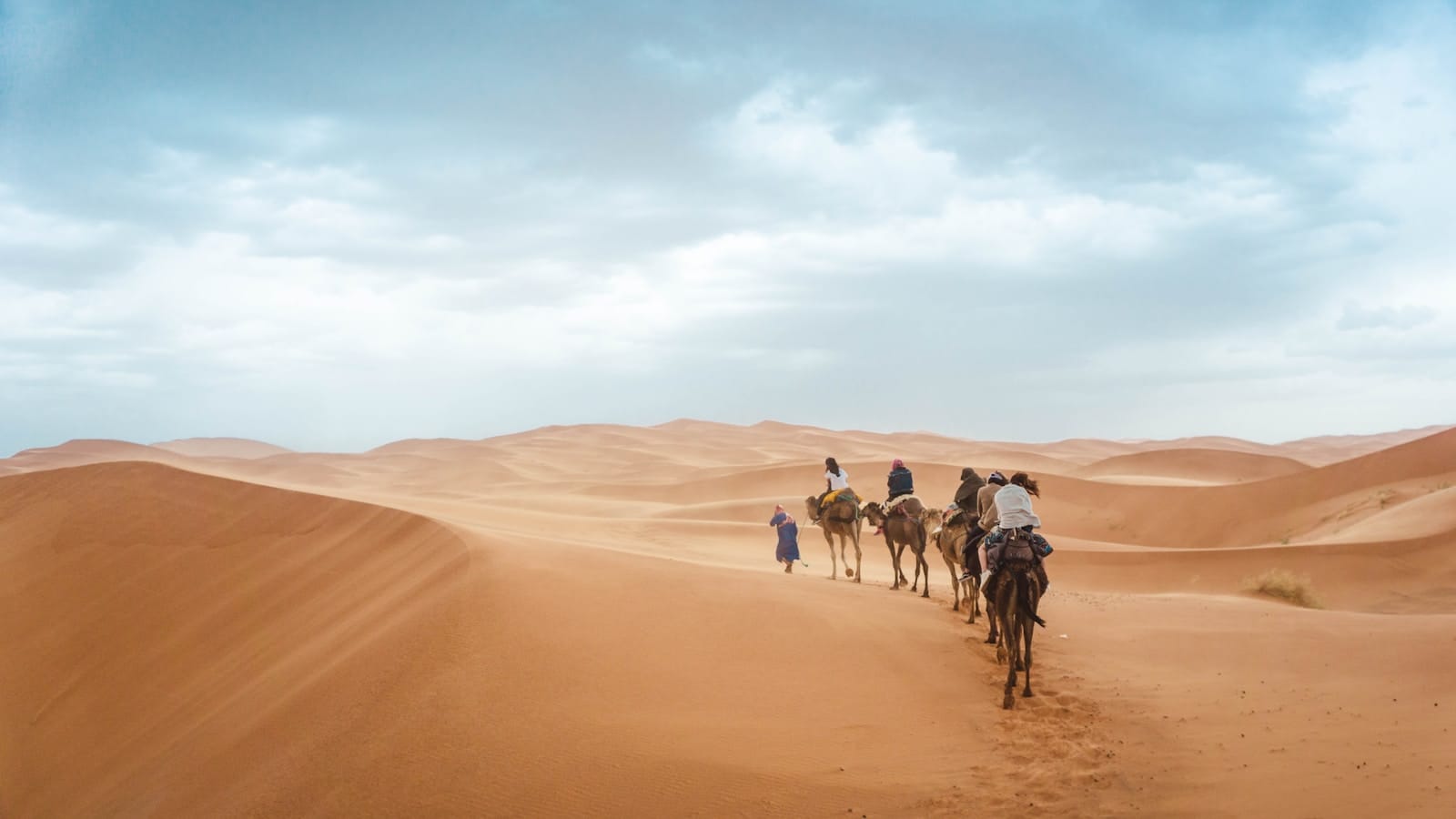
- Arrival in Zagora, optional camel ride at Tinfou dunes in the late afternoon.
What kids love
- The switchback drive up and down Tizi n’Tinififft (if they are not motion sick)
- The tea glass shape of Jbel Kissane which they will point out for the rest of the trip
- The Tizgui waterfalls for a cool swim
- The camel rides at Tinfou or Tamgroute
- Meeting Berber families at the kasbahs, where kids often play together across the language barrier
What to avoid with kids
- Midday driving in July and August. Cars without strong air conditioning become unbearable.
- Long stretches without a bathroom break. There are no formal rest stops between Ouarzazate and Agdz.
- Trying to hike Jbel Kissane with children under twelve. The trail is not marked and the sun is punishing.
When to go: seasons on the Ouarzazate to Zagora route
The mountains from Ouarzazate to Zagora Morocco change character with the seasons, and the drive has a genuine best season.
October through April is the sweet spot. Daytime temperatures at Agdz and Zagora run 22 to 28 Celsius (72 to 82 Fahrenheit). Nights cool enough for a sweater. The palm groves are at their greenest. Sky is often crystal clear thanks to the dry season pattern.
December and January get cold overnight. Zagora can drop to 5 Celsius (41 Fahrenheit), and desert camps at Tinfou get colder. If you plan a Sahara camp night in these months, ask about heated tents or extra blankets. The daytime driving is still comfortable, often 18 to 22 Celsius.
February and March are ideal for hiking. Jbel Kissane is climbable in these months. The Draa Valley almond trees bloom pink around February, which is one of the most photographed moments of the year in the region.
May through September gets progressively hotter. By July, Zagora hits 42 Celsius (108 Fahrenheit) or more during the day. Driving is uncomfortable, kasbah walking is impossible between 11 am and 5 pm, and hotel rates drop because most travelers avoid the region. If you must go in summer, drive early morning and late afternoon only, and plan pool time in the middle.
Ramadan shifts each year. Restaurants are limited during daylight hours, though tourist riads generally serve food normally. Ask ahead if this affects your trip.
For families with kids, October to April is the answer. The trip works. The weather cooperates. The palm groves stay lush. And the mountain views read most clearly against a blue sky.
Where to stay along the N9 route
The two natural bases are Agdz and Zagora. Both work, and the right choice depends on your pace and what you plan to do the next day.
In Agdz
Agdz is smaller, quieter, and set right at the foot of Jbel Kissane. The town has around a dozen riads and small guesthouses. Standouts:
- Kasbah Azul: A restored kasbah with a plunge pool and palm garden. Mid range.
- Dar Qamar: Traditional riad in the town, family run.
- Bab El Oued: More basic but well located for walking the palmery.
Prices in 2026 run 400 to 900 dirhams per night for a double room with breakfast. Dinner is usually 100 to 150 dirhams extra per person, home cooked tagines and couscous.
In Zagora
Zagora is bigger, more geared toward desert tours, and closer to the Sahara. Standouts:
- Riad Lamane: Full pool, garden, camel connections. Higher end.
- Kasbah Ziwana: Traditional and reasonably priced.
- Villa Zagora: A restored old house with a small pool.
If your goal is a Sahara camp night at Tinfou or Erg Chegaga, Zagora is the easier launch. Camp rates in 2026 run 600 to 1,500 dirhams per person including transfer and dinner.
Desert camps at Tinfou and Erg Chegaga
Tinfou dunes are small and easy to reach, just 30 minutes south of Zagora. Camps there are family friendly and good for a single night with kids under ten.
Erg Chegaga is the real dune experience. You need a 4WD and a guide, and the drive is another 4 to 5 hours from Zagora. Overnight camps sit deep in the dunes with genuine isolation. Better for teens and adults than for young children, unless the family loves camping.
Need Help with Transportation in Morocco?
Book a reliable private driver for your Morocco family adventure today – personalized routes designed just for you, and get 30% off as a first-time visitor!
What to pack and photography tips
The drive rewards a small, focused kit rather than a full loadout. Space in most rental cars is tighter than you think.
Essentials for the drive
- Sunglasses with strong UV filtering (the desert sun off pale stone is brutal)
- Wide brimmed hat
- Refillable water bottle, filled at each stop
- Layers: a light sweater and a windbreaker even in warm months
- Solid closed shoes if you plan any walking around Jbel Kissane
- A basic first aid kit
- Cash in dirhams, small bills for kasbah entry and roadside stalls
For photography
- Wide angle lens for the pass and the palm groves
- Zoom lens for Jbel Kissane detail and kasbah architecture
- Polarizer to cut haze on midday shots
- Extra battery, the desert air drains them faster than you expect
The best light windows on this drive:
- Sunrise from the west side of Agdz, looking east at Jbel Kissane
- Late afternoon at the Tizi n’Tinififft pass viewpoint
- Blue hour at Kasbah Tamnougalt
- Dawn at the Tinfou dunes if you are camping
Drone use is restricted in Morocco. Officially, you need a permit from the Ministry of the Interior, and most travelers do not have one. Bringing a drone through customs can result in seizure. Ground level shooting is the safe move.
On dust and cars
Sand and fine dust are constant. Roll up the windows during dust flurries, and keep a lens cloth in an accessible pocket. Rental cars in this region often come with minor sand damage already, so a small extra scratch or dusting is not something to worry about.
Final thoughts
The mountains from Ouarzazate to Zagora Morocco make one of the most rewarding drives in the country. The Anti-Atlas rises, drops, and opens onto the Draa Valley in the space of a single afternoon. The kasbahs at Tamnougalt and Tinzouline sit where they have for four centuries. Jbel Kissane keeps watch over Agdz, exactly as it does in every travel photo you have seen. And Zagora, at the southern end, becomes the door you walk through toward the Sahara.
For families, the trip works in two full days with an Agdz overnight. For couples with more time, three days lets you add Jbel Saghro trekking or a real dune camp at Erg Chegaga. For solo travelers with a rental car and a camera, it is one of the best long weekends Morocco offers.
The traps to avoid: rushing the drive, skipping the pass viewpoint, trying to see every kasbah, and going in July or August without air conditioning.
The upsides: kasbahs that still function as villages, a mountain pass with a real geographic threshold, palm groves that stretch for 90 kilometers, and a night sky at Tinfou that most travelers do not forget.
Morocco Vacation Planner designs Private Family Tours in Morocco for Kids, Teens & Toddlers. Plan your perfect family trip to Morocco with custom private tours built for families traveling with toddlers, kids, and teens. You get family friendly experiences, trusted local guides, and handpicked comfortable stays from the medinas all the way to the Sahara.
─── Your questions, our answers.
Frequently Asked Questions
Our dedicated team is here to answer your Morocco Family Travel questions and ensure a smooth, memorable journey through Morocco.
What mountains are located near Ouarzazate?
Ouarzazate is surrounded by three ranges. The High Atlas rises to the north, with the Tizi n’Tichka pass at 2,260 meters connecting it to Marrakech. The Anti-Atlas runs south and west of the city, and the Tizi n’Tinififft pass at 1,660 meters is the standard crossing on the drive to Zagora. Jbel Saghro extends east and is the eastern continuation of the Anti-Atlas.
Is Ouarzazate in the High Atlas Mountains?
No, Ouarzazate is not in the High Atlas. The city sits at 1,160 meters on the pre-Saharan plateau, just south of the High Atlas divide. You cross the High Atlas via the Tichka pass on the drive from Marrakech, then descend into the Ouarzazate plateau. From there south, the mountains from Ouarzazate to Zagora Morocco are Anti-Atlas and Jbel Saghro terrain.
What are the most beautiful mountains between Ouarzazate and Zagora?
Jbel Kissane at Agdz is the most recognizable, with its tea glass silhouette overlooking the Draa Valley at 1,485 meters. The rocky sections of the Tizi n’Tinififft pass are the most dramatic driving stretch. And Jbel Saghro to the east, though visible only in the distance from the N9, has the most striking volcanic and sandstone formations for anyone with time for a side trip.
Can you get altitude sickness in Morocco on this route?
Altitude sickness is very unlikely on the drive from Ouarzazate to Zagora. The highest point on the route is the Tizi n’Tinififft pass at 1,660 meters, and you spend only minutes at that elevation. Real altitude sickness generally starts above 2,500 meters. If you climb Jbel Kissane at 1,485 meters or trek Jbel Saghro up to 2,700 meters, drink extra water and take it slow, but symptoms are still rare.
Is it worth going to Ouarzazate?
Yes, Ouarzazate is worth a stop, especially as a base for exploring further south. The city has the Atlas Film Studios where Gladiator, Kingdom of Heaven, and Game of Thrones were partly filmed, plus the nearby Ait Ben Haddou UNESCO kasbah 30 minutes north. From Ouarzazate you can reach the Draa Valley, the Dades Gorge, and the Sahara without long backtracking. Most travelers spend one night, use it as a launch pad for the drive to Zagora, and enjoy the change in scenery.

Kate Carter
Family Travel Blogger
Kate Carter is a mom and travel blogger who fell in love with Morocco’s culture and warmth. Through Morocco Family Vacation, she shares tips and stories to help travelers enjoy authentic, stress-free experiences. Join us along the way.
Table of Contents
Our Services
-
Private Family Tours
-
Custom Itineraries
-
Sahara Desert Tours
-
Chefchaouen & Northern Morocco Tours
-
Luxury Desert Camping
-
Multi-Day Tours (2–16 Days)
-
Atlas Mountains Trips
-
Cooking Classes & Market Visits
-
Photography & Heritage Tours
-
Airport Transfers & Private Transport
-
Custom Birdwatching Tour in Morocco
-
24/7 Tour Support & booking Flexibility
At Morocco Family Vacation, we create custom Morocco tour packages designed around your interests and travel style. As a dedicated and independent travel agency, we specialize in private Morocco tours offering memorable desert adventures, cultural experiences, and family friendly itineraries while delivering attentive, personalized service from start to finish.
Popular Tours
Latest Posts

#Morocco in February
#Morocco weather in February
#February temperatures in Morocco
#Weather in Morocco in February
#Morocco travel guide February