What Ethnicity Is Amazigh? Understanding the Amazigh People
What Ethnicity Is Amazigh?
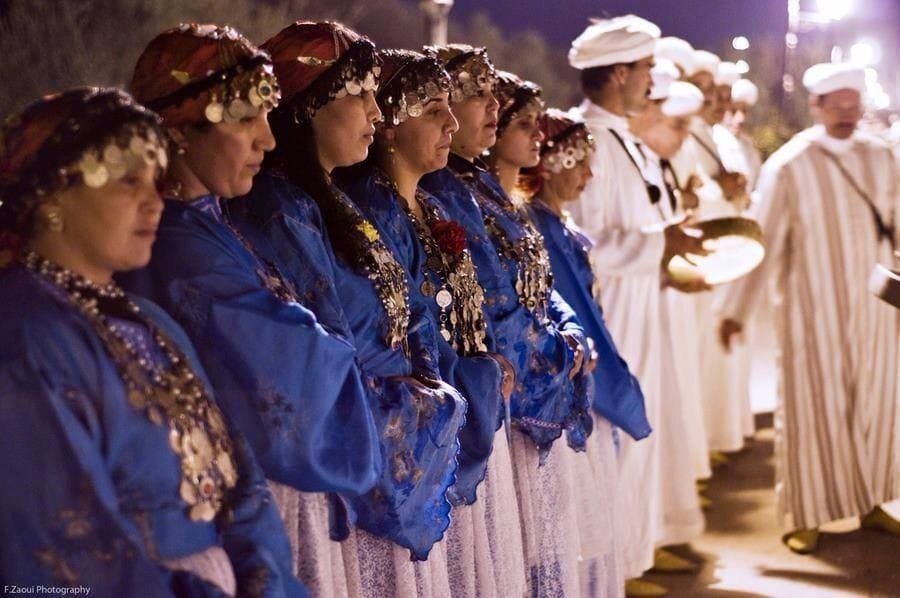
If you are wondering what ethnicity is Amazigh, the simplest answer is that the Amazigh are an Indigenous ethnic and cultural population of North Africa. They are often called Berbers in English, although many people prefer the name Amazigh, with Imazighen used as the plural.
Amazigh communities have lived across North Africa for thousands of years. Today, they are found particularly in Morocco and Algeria, as well as in Tunisia, Libya, Egypt, Mauritania, Mali and Niger. They have their own related languages, cultural traditions and regional identities.
For travelers visiting Morocco with kids, understanding the Amazigh people helps explain much of what you see in the Atlas Mountains, southern Morocco, the Rif and the Sahara.
TL;DR,Quick Facts About the Amazigh People
- Amazigh refers to an Indigenous ethnic and cultural population of North Africa.
- The plural of Amazigh is commonly written as Imazighen.
- The older English term is Berber, although Amazigh is generally preferred by many people.
- Amazigh languages belong to the Afro Asiatic language family.
- Morocco recognizes Amazigh and Arabic as official languages.
- Moroccan Amazigh communities include speakers of Tarifit, Tamazight and Tachelhit.
- Most Amazigh people in Morocco are Muslim, but religion and ethnicity are separate parts of identity.
- The Tifinagh character ⵣ has become a widely recognized Amazigh identity symbol.
- Amazigh tattoos meaning and symbols
What Ethnicity Is Amazigh?
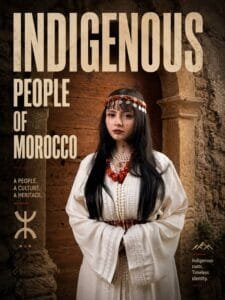
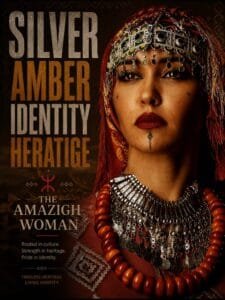
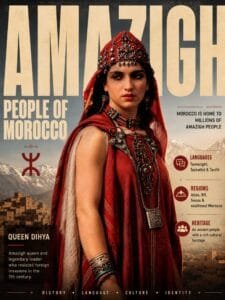
Amazigh, also called Berber, are the indigenous people of North Africa. They lived in the region before Arabs arrived, and today Amazigh communities are found mainly in Morocco, Algeria, Tunisia, Libya, and parts of Mali, Niger, and Egypt. In Morocco, Amazigh people make up a large part of the population, with groups like the Riffians in the north, tribes in the Middle Atlas, and the Chleuh in the south. Each group has its own dialect, but they share the Tamazight language, now official in Morocco alongside Arabic. Amazigh culture shows up in music, jewelry, and textiles across the country. It’s an ethnic identity tied to shared history and language, not one look or bloodline.
What Is Amazigh?
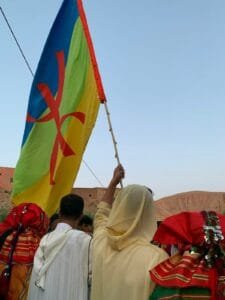
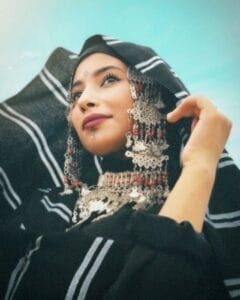
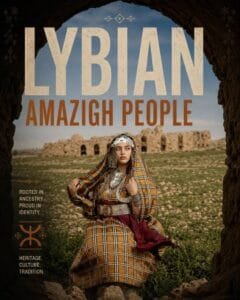
Amazigh is the name used for an Indigenous population of North Africa and for the wider cultural and linguistic identity associated with them. The word is also commonly used in connection with the Amazigh languages.
There is not one single Amazigh community with identical customs everywhere. Amazigh populations developed in different parts of North Africa and have distinct regional languages, histories, clothing, music, architecture and traditions.
In Morocco, important Amazigh communities include the Riffians of the Rif, Central Atlas Amazigh communities and Tachelhit speaking communities in the south and southwest.
This is why asking what are Amazigh people is slightly different from asking about one nationality. Amazigh identity crosses modern national borders.
What Does Amazigh Mean?
The meaning of Amazigh is commonly explained as “free person” or “free people,” although translations and interpretations can vary depending on linguistic and historical context.
The collective plural Imazighen is also widely used.
The word Berber has a much longer history in English and French writing, but it is an outside name rather than the preferred self designation for many Amazigh people. The British government language guide, for example, describes Amazigh as the people or ethnicity and notes that Berber can be considered antiquated or pejorative.
Is the name Amazigh original?
Amazigh is an indigenous self designation used by Amazigh communities. However, different communities have also historically used their own regional names and tribal identities.
So it is more accurate to understand Amazigh as a broad collective identity rather than assume that every community has always used exactly the same name.
Where Is Amazigh?
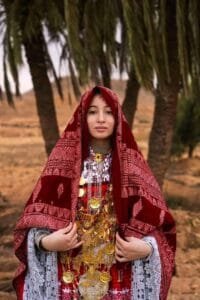
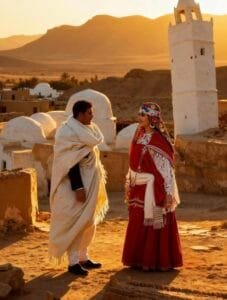
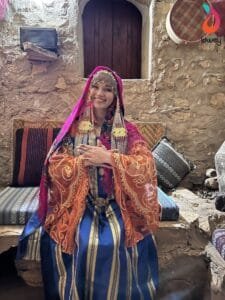
The Amazigh homeland covers a large part of North Africa.
Amazigh communities are found across:
- Morocco
- Algeria
- Tunisia
- Libya
- Egypt
- Mauritania
- Mali
- Niger
In Morocco, Amazigh communities are especially associated with the Rif Mountains, Middle Atlas, High Atlas, Anti Atlas and Souss regions. Amazigh languages are also spoken in parts of southeastern Morocco and other areas.
The exact size of the Amazigh population is difficult to calculate because ethnicity, ancestry, language and self identification do not always produce the same numbers.
Are Moroccans Amazigh?
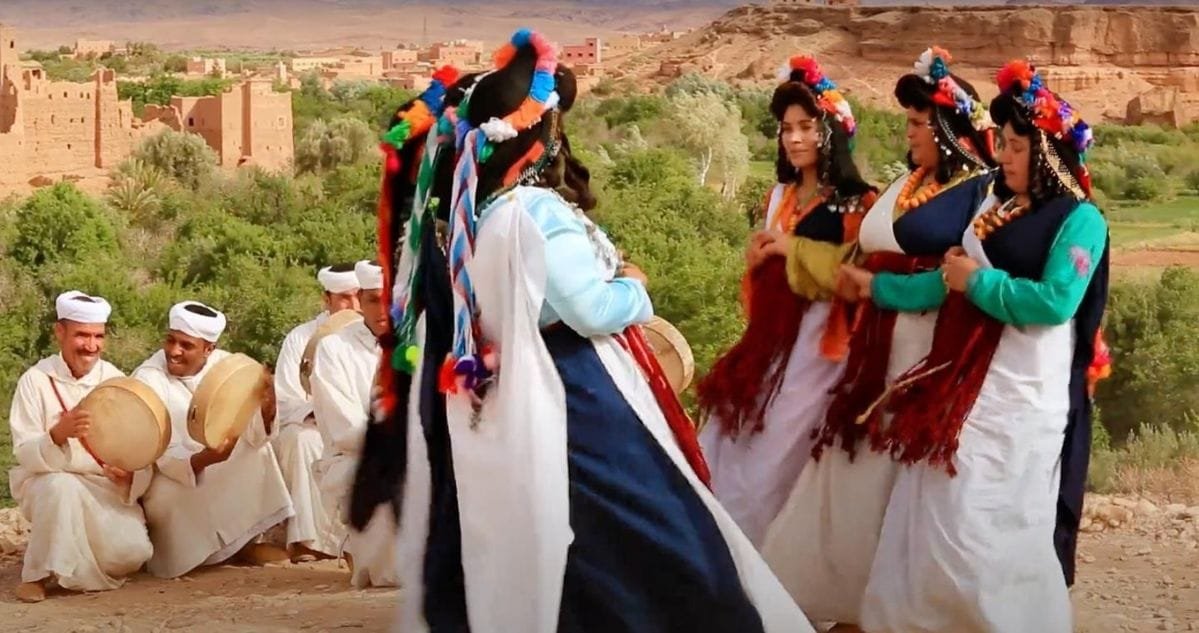
Some Moroccans identify as Amazigh, while others identify as Arab, Arab Amazigh, Moroccan without a specific ethnic label, or another identity.
There is also considerable overlap between Amazigh ancestry and Arabic speaking Moroccan identity. Speaking Darija does not automatically mean that someone has no Amazigh ancestry.
Morocco’s own official institutions describe the country’s identity as having multiple cultural and historical components. The Royal Institute of Amazigh Culture was established to preserve and promote Amazigh language and culture, and Morocco’s Constitution recognizes Amazigh as an official language alongside Arabic.
The 2024 Moroccan census reported that 24.8% of the population used an Amazigh language, including Tachelhit at 14.2%, Tamazight at 7.4% and Tarifit at 3.2%. Language use, however, should not be treated as a direct measurement of ethnic ancestry.
What Do Amazigh People Speak?
Amazigh people speak several related languages and regional varieties rather than one identical language spoken everywhere.
In Morocco, the three major Amazigh language varieties are generally identified as:
- Tachelhit
- Central Atlas Tamazight
- Tarifit
Amazigh languages belong to the Afro Asiatic language family. Tifinagh is the writing system officially adopted for Amazigh in Morocco.
Arabic, especially Moroccan Darija, is also widely spoken among Amazigh Moroccans. Many people are multilingual and may use Amazigh with family members, Darija in everyday public life, and French or another language for work or education.
Morocco’s National Tourist Office confirms that Arabic and Amazigh are the country’s two official languages and identifies Tifinagh as the alphabet used for Amazigh.
How Do You Pronounce Amazigh?
In English, Amazigh is commonly approximated as ah mah zeer, although English pronunciation does not perfectly reproduce the sounds of the original word.
The final sound is closer to the sound represented by the Amazigh letter ɣ, which can be unfamiliar to English speakers.
If you are traveling in Morocco, simply making a respectful effort to pronounce the word is enough. You will also encounter the terms Imazighen and Tamazight.
Are Berbers Muslims?
Most Amazigh people in Morocco and much of North Africa are Muslim.
However, being Amazigh does not mean being Muslim. Amazigh describes an ethnic, cultural and linguistic identity, while Islam is a religion.
Over many centuries, Amazigh communities became deeply connected with Islam, and Islamic traditions are now part of everyday life in many Amazigh communities. Morocco’s Amazigh heritage therefore cannot be separated completely from the country’s wider Islamic history.
Is Amazigh African or Arab?
Amazigh people are African because their historic homeland is North Africa.
That does not mean Amazigh identity and Arab identity are mutually exclusive for every individual. Centuries of migration, intermarriage, language change and cultural exchange have created complex identities across North Africa.
A Moroccan can have Amazigh ancestry while speaking Arabic. Another Moroccan may identify strongly as Amazigh and speak an Amazigh language. Someone else may describe themselves as both Arab and Amazigh.
It is better to understand these identities as overlapping parts of North African history rather than two completely separate categories.
Ready to Plan Your Morocco Family Adventure?
Book your Morocco family adventure today with our expert planners personalized itineraries designed just for you, and get 30% off as a first-time visitor!
Are Amazigh People Considered White?
The question of whether Amazigh people are white is difficult because “white” is a modern racial category that does not accurately describe the diversity of North African populations.
Amazigh people are an Indigenous North African population, not a single physical type. Skin tones, hair, facial features and other physical characteristics vary considerably between communities and individuals.
For the same reason, asking whether Berbers are originally black does not have a single yes or no answer. North Africa has experienced population movement and genetic exchange with Europe, the Middle East and sub Saharan Africa over thousands of years.
Genetic research shows substantial variation among Amazigh populations themselves, with different communities having different histories of admixture.
Who Are Amazigh People Genetically Closest To?
There is no single population that can accurately be described as the genetic “closest” group to all Amazigh people.
Research shows that North African populations have a complex demographic history involving ancient local ancestry and later gene flow from neighboring regions, including the Middle East, Europe and sub Saharan Africa. Amazigh populations themselves also show significant geographic genetic variation.
Genetics can tell us about population history, but it does not determine someone’s cultural identity. A DNA result cannot tell someone whether they are culturally Amazigh, Arab or both.
What Do Amazigh People Look Like?
There is no single Amazigh appearance.
Amazigh communities are spread across a huge geographic area, from Mediterranean mountain regions to the Sahara. People therefore have a wide range of appearances.
It is better not to use physical appearance as a way to determine whether someone is Amazigh.
For travelers, the more useful clues to Amazigh culture are language, local traditions, architecture, music, textiles, food, names and community history.
What Are Amazigh Traditional Clothes?
Traditional Amazigh clothing differs considerably between regions.
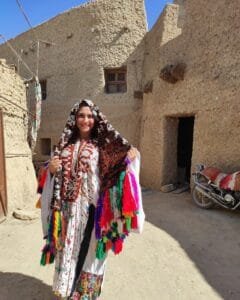
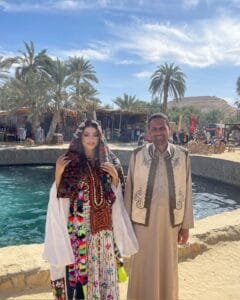
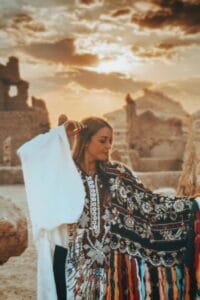
In Morocco, clothing can include woven wool garments, colorful textiles, embroidered dresses, head coverings, silver jewelry and distinctive regional designs. Women’s clothing in particular can vary between the Rif, Atlas Mountains and southern Morocco.
Jewelry is also important in many Amazigh traditions. Silver pieces may have decorative, family or symbolic significance, although meanings are not identical across every community.
If you visit an Amazigh village or cultural cooperative, it is worth asking about the specific regional tradition rather than assuming that one style represents all Amazigh people.
What Is the Amazigh Symbol?
The character ⵣ is one of the best known modern symbols associated with Amazigh identity.
It comes from the Tifinagh writing system and represents the letter “Z.” The Royal Institute of Amazigh Culture describes ⵣ as having become an identity symbol of Amazigh people.
You may see the symbol on flags, jewelry, artwork, clothing, signs and cultural products in Morocco and other parts of North Africa.
Do Berbers Consider Themselves Arab?
There is no universal answer.
Some people with Amazigh ancestry identify as Amazigh. Some identify as Arab. Some identify with both identities, while others primarily identify as Moroccan, Algerian, Tunisian or another national identity.
Identity can also change between generations. A family may have Amazigh ancestry but speak Arabic at home, while another family in the same broader region may continue speaking an Amazigh language.
This is one reason it is misleading to divide every person in Morocco into a simple Arab or Amazigh category.
Which Country Has the Most Amazigh People?
Morocco and Algeria are generally considered the countries with the largest Amazigh populations, although exact comparisons are difficult because countries measure ethnicity and language differently.
Morocco has particularly large Amazigh communities across several regions, while Algeria has major Amazigh populations including Kabyle, Chaoui, Mozabite and Tuareg communities.
There are also Amazigh communities in Tunisia, Libya and Egypt, including the Siwa Oasis, as well as Tuareg communities across the Sahara and Sahel. IRCAM research notes the geographic reach of Amazigh languages from North Africa into Saharan regions and the Siwa oasis in Egypt.
Are Egyptians Amazigh?
Most Egyptians are not Amazigh, but Egypt does have an Amazigh community in the Siwa Oasis in the country’s western desert.
The Siwa Amazigh have their own language and cultural traditions. Their presence is an example of why Amazigh history extends beyond the borders of Morocco and Algeria.
For travelers visiting Egypt, Siwa provides one of the clearest examples of Amazigh culture outside the central Maghreb.
What Are Some Common Amazigh Surnames?
There is no universal list of Amazigh surnames.
Names can reflect geographic origins, tribal affiliations, family history, occupations or Arabic and Islamic naming traditions. Many Moroccan surnames are shared across communities, making it unreliable to identify someone’s ethnicity from a surname alone.
Regional names such as Aït followed by another name can sometimes reflect Amazigh tribal or community traditions, but the meaning depends on the specific name and historical context.
How Do You Say "Hi" in Amazigh?
In Amazigh (Tamazight), a common way to say “hi” or “hello” is “Azul”. It’s used across most Amazigh-speaking regions in Morocco, whether you’re in the Rif, the Middle Atlas, or the Souss area, making it one of the most recognized Amazigh words even among non-speakers. Azul works for both formal and casual greetings, similar to how “hello” works in English.
If you want to greet a group or add warmth, you might hear “Azul fellawen” (hello to you all). Learning this one word goes a long way with local guides, shop owners, or families in Amazigh villages, and it’s often the first word visitors pick up when traveling through Morocco’s mountain and rural regions where Tamazight is widely spoken at home.
What Is the Difference Between Arabs and Amazigh?
The main difference is historical, cultural and linguistic identity.
Amazigh peoples are Indigenous to North Africa and have their own related languages and cultural traditions. Arab identity in North Africa developed through Arab invasion, Islamic expansion, language change and centuries of cultural interaction.
The two histories have been connected for well over a thousand years. Many North Africans have both Arab and Amazigh ancestry or identify with aspects of both cultures.
So the difference is not simply about appearance or genetics. Language, family history, culture and personal identification all matter.
Need Help with Transportation in Morocco?
Book a reliable private driver for your Morocco family adventure today – personalized routes designed just for you, and get 30% off as a first-time visitor!
What Does Amazigh Culture Mean for Travelers in Morocco?
Travelers encounter Amazigh culture throughout Morocco, particularly in mountain and southern regions.
The Atlas Mountains are home to many Amazigh communities, and visitors may encounter Amazigh architecture, village traditions, weaving, agriculture, music and local food.
The Moroccan National Tourist Office specifically highlights Amazigh traditions and culture in destinations connected with the Atlas, Souss and desert regions.
If you are traveling with children, these encounters can be a useful way to explain that Morocco is not culturally uniform. A visit to a village cooperative, a mountain community or a local market can provide a more concrete understanding of the country’s linguistic and cultural diversity.
Final Answer: What Ethnicity Is Amazigh?
The Amazigh are an Indigenous North African ethnic and cultural population with a long history across Morocco, Algeria and other parts of North Africa.
They are not defined by one appearance, religion or nationality. Amazigh identity is connected to communities, languages, cultural traditions and personal identification.
In Morocco, Amazigh heritage is an important part of the country’s identity. Amazigh and Arabic are both official languages, and Amazigh culture remains visible in the Atlas Mountains hiking, Rif, Souss, southern Morocco and many other parts of the country.
For travelers, learning about the Amazigh people offers a better understanding of Morocco beyond its famous cities and tourist attractions. It also helps explain why language, food, architecture, music and traditions can vary so much from one region to another.
For families who want to experience Morocco’s variety in one trip, from imperial cities to the desert and coast, a well-paced multi-day itinerary is the easiest way to see it all without rushing. Our 10 day Morocco family tour covers a mix of regions with private transport and family-friendly stops built in, so kids and grandparents alike can enjoy the journey at a comfortable pace.
─── Your questions, our answers.
Frequently Asked Questions
Our dedicated team is here to answer your Morocco Travel questions and ensure a smooth, memorable journey through Morocco.
What ethnicity is Amazigh?
Amazigh refers to an Indigenous ethnic and cultural population of North Africa. Amazigh communities have their own related languages, traditions and regional identities and live across several North African countries.
Are Moroccans Amazigh?
Some Moroccans identify as Amazigh, while others identify as Arab, both Arab and Amazigh, or primarily Moroccan. Amazigh ancestry and Arabic language use can overlap.
Are Amazigh people African?
Yes. Amazigh people are Indigenous to North Africa, which is part of the African continent. Their communities have a long history across the Maghreb and Sahara.
Are Amazigh people Arab?
Amazigh and Arab are distinct historical and cultural identities, but some North Africans identify with both. Centuries of interaction, migration and intermarriage mean that individual identities can be complex.
Are Berbers Muslims?
Most Amazigh people in Morocco and much of North Africa are Muslim. However, Amazigh describes an ethnic and cultural identity, while Islam is a religion.
What language do Amazigh people speak?
Amazigh people speak several related Amazigh languages and regional varieties. In Morocco, major varieties include Tarifit, Central Atlas Tamazight and Tachelhit.
What is the Amazigh symbol?
The character ⵣ is the best known modern symbol associated with Amazigh identity. It is a Tifinagh letter representing Z and has become an important cultural symbol.

Kate Carter
Family Travel Blogger
Kate Carter is a mom and travel blogger who fell in love with Morocco’s culture and warmth. Through Morocco Family Vacation, she shares tips and stories to help travelers enjoy authentic, stress-free experiences. Join us along the way.
Table of Contents
Our Services
-
Private Family Tours
-
Custom Itineraries
-
Sahara Desert Tours
-
Chefchaouen & Northern Morocco Tours
-
Luxury Desert Camping
-
Multi-Day Tours (2–16 Days)
-
Atlas Mountains Trips
-
Cooking Classes & Market Visits
-
Photography & Heritage Tours
-
Airport Transfers & Private Transport
-
Custom Birdwatching Tour in Morocco
-
24/7 Tour Support & booking Flexibility
At Morocco Family Vacation, we create custom Morocco tour packages designed around your interests and travel style. As a dedicated and independent travel agency, we specialize in private Morocco tours offering memorable desert adventures, cultural experiences, and family friendly itineraries while delivering attentive, personalized service from start to finish.
Popular Tours
Latest Posts
get in touch
#LawnCare
#Succulents
#GardenGoals
#Autumn
#SummerLandscaping